
Metrolinx Launches Body Cameras Toronto Security Plan
Metrolinx launched body cameras and expanded security personnel across Toronto this week, deploying special constables and police to enhance safety ahead of the 2026 FIFA World Cup.
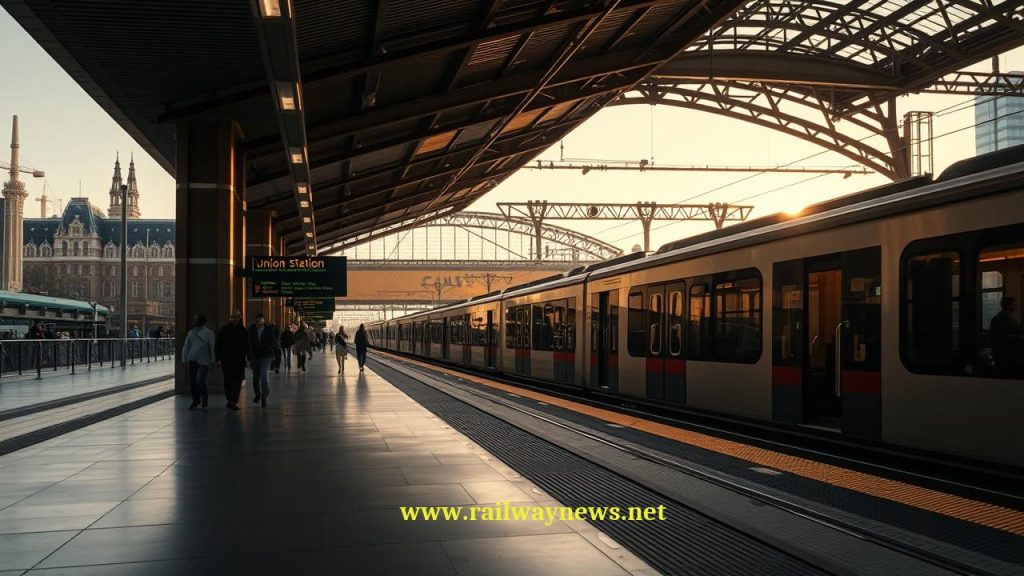
⚡ In Brief: Metrolinx is increasing its police and special constable presence across Toronto’s Union Station and the Greater Toronto and Hamilton Area, deploying body cameras for front-line staff to enhance security ahead of a busy summer season and the 2026 FIFA World Cup.
TORONTO, CANADA – Metrolinx, in partnership with the Toronto Police Service, is deploying additional security personnel across its network this week in anticipation of increased summer ridership. The initiative includes more on-duty special constables and police officers at Union Station and other transit stops, along with the introduction of body-worn cameras for security and front-line transit staff.
What Does This Regulation Cover?
The enhanced security policy is designed to improve coordination between Metrolinx and city police, aiming to lower incident response times and increase passenger confidence. The plan involves deploying specially trained Metrolinx special constables, who undergo province-mandated police and de-escalation training, alongside additional Toronto police officers. A key component of the new policy is the equipping of security and front-line staff with body cameras, a measure intended to improve accountability and evidence collection. The total number of additional officers being deployed or hired has not been disclosed.
Key Regulatory Data
| Parameter | Value |
|---|---|
| Regulation / Policy Name | Enhanced Transit Safety and Security Plan |
| Total Value | Not disclosed |
| Parties Involved | Metrolinx, Toronto Police Service |
| Timeline / Completion | Implementation begins this week; ongoing hiring planned |
| Country / Corridor | Canada / Greater Toronto and Hamilton Area |
How Does This Compare to Global Standards?
Metrolinx’s strategy of increasing visible security personnel mirrors a recent approach by the Chicago Transit Authority (CTA) in the United States. The CTA boosted the presence of security guards and police, which has been credited with a reduction in crime on its system and fewer assaults against transit workers (Source: Chicago Tribune, 2024). While Metrolinx focuses on personnel, other operational risks remain a concern for major hubs, as seen in Denver where a vehicle blocking tracks recently forced a temporary shutdown of rail lines into its Union Station, highlighting the need for broad contingency planning (Source: CBS News, 2024).
Editor’s Analysis
This security enhancement at Metrolinx is a foundational measure to prepare its network for large-scale international events like the 2026 FIFA World Cup. While this policy addresses physical safety, it is part of a wider global trend where transit agencies are modernizing to improve the overall passenger journey. Projects elsewhere, such as the deployment of 5G connectivity for metro lines in Mumbai and Saudi Arabia, show that network upgrades are increasingly focused on both security and digital infrastructure to meet modern rider expectations (Source: Developing Telecoms, 2024). Metrolinx’s focus on safety can be seen as the first step in a broader effort to ensure its system is resilient and reliable for future growth.
FAQ
Q: Why is Metrolinx increasing security now?
A: The measures are being implemented in anticipation of a busy summer ridership season and to prepare for major future events, including the 2026 FIFA World Cup matches scheduled to be held in Toronto.
Q: How many new officers are being hired?
A: The specific number of additional officers or special constables being deployed has not been disclosed by Metrolinx. The agency has only stated its plan to hire more officers in the coming months.
Q: Are other major transit systems taking similar security measures?
A: Yes, this approach is similar to that of the Chicago Transit Authority (CTA), which increased its security presence and subsequently reported a decrease in both system-wide crime and assaults on its employees.

Railway infrastructure, rolling stock and transport technologies specialist focused on global rail industry developments, high-speed rail systems, signaling technologies and freight transportation. Covering railway investments, public transport modernization, rail operations and international mobility projects across Europe, Asia and North America.
RELATED POSTS

October 8, 2026 1:15 pm
Alstom secured a €1bn contract to build 13 automated trains,...

October 4, 2026 5:14 pm
Alstom secured a CA$4.7 billion order from VIA Rail Canada...

October 5, 2026 6:12 pm
AECOM and Jacobs secured a contract in September 2026 to...

October 1, 2026 12:13 am
Illinois approved $1.5 billion annually for the Northern Illinois Transit...

October 4, 2026 11:08 pm
Sound Transit confirmed the September 30 opening of Seattle Pinehurst...

October 5, 2026 1:13 pm
New York MTA confirmed a late 2026 DEIS release for...