
Renfe Delivers First 5 High-Capacity Trains Madrid by Summer
Renfe delivered five of 79 new high-capacity suburban trains for Madrid’s network by summer, part of a €1.3 billion modernization contract.
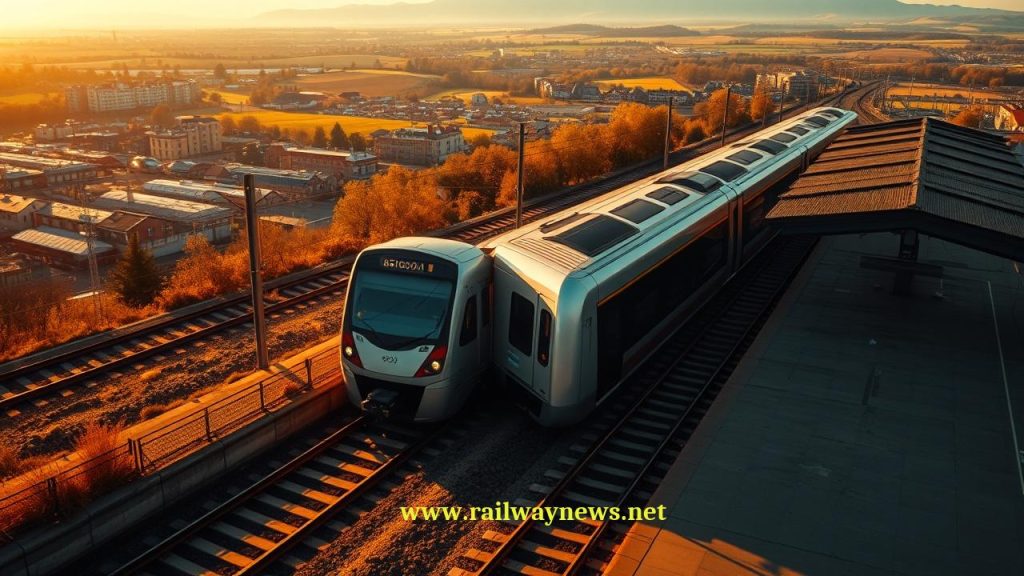
⚡ In Brief: Spain’s national operator Renfe is set to introduce the first five of 79 new high-capacity suburban trains for Madrid’s network by the end of summer, part of a EUR 1.3 billion fleet modernization contract.
ALBACETE, SPAIN – Minister of Transport Óscar Puente announced on April 20 that the first five of 79 new high-capacity commuter trains will enter service on Renfe’s Madrid network by the end of summer. The delivery is the initial phase of a EUR 1.3 billion contract designed to significantly increase passenger capacity on the suburban system.
What Does This Contract Cover?
The total procurement covers 79 high-capacity electric multiple units (EMUs) for Renfe’s Iberian gauge suburban services, split between an initial 2021 order for 59 trains and a subsequent 2022 order for 20 more. The trains feature a mixed configuration of single- and double-deck cars, allowing them to be adapted for fluctuating demand in 100-meter and 200-meter formations. The larger 200-meter units can carry up to 1,884 passengers, representing a 20% capacity increase over existing rolling stock, and will operate at a maximum speed of 140 km/h.
Key Contract Data
| Parameter | Value |
|---|---|
| Contract Name | Renfe High-Capacity Suburban Fleet Renewal |
| Total Value | EUR 1.3 billion (for 79 units) |
| Parties Involved | Renfe, Spanish Ministry of Transport. (Manufacturer not disclosed in source material) |
| Timeline / Completion | First 5 units by end of summer; full delivery in phases. Final completion date not disclosed. |
| Country / Corridor | Spain / Madrid Suburban Network (initially) |
How Does This Compare to Similar Contracts?
This EUR 1.3 billion investment in commuter rail runs parallel to Spain’s separate, high-profile focus on expanding its high-speed rail network in 2025, indicating a dual investment strategy addressing both long-distance connectivity and urban mobility. While the contract focuses on high-capacity suburban transit, other European operators are also pursuing significant fleet modernizations. For example, Switzerland’s Gornergrat Bahn recently ordered additional Stadler POLARIS trains for its specialized Alpine routes, with delivery scheduled from autumn 2028, highlighting a continent-wide trend in rolling stock investment (Source: Global Railway Review).
Editor’s Analysis
This procurement is a critical investment in Spain’s essential suburban networks, which carry the bulk of daily passenger traffic. While the new hardware addresses capacity and comfort, Renfe faces parallel challenges in its digital passenger interface. The operator continues to receive criticism for user-unfriendly booking systems, an issue the European Commission aims to address with its Single Ticketing Package (Source: Entity Verification Data). Successfully deploying these modern trains without improving the digital customer experience could limit the overall perceived improvement in service quality.
FAQ
Q: What is the total investment in this new train fleet?
A: The contract for the 79 new trains is valued at EUR 1.3 billion. This is part of a wider national rolling stock modernization program with a total investment of approximately EUR 3.5 billion.
Q: When will all the new trains be in service?
A: The first five units will enter service by the end of summer. The full fleet of 79 trains will be delivered in phases, with a total of 17 units expected by the end of this year, but a final completion date for the entire order was not disclosed.
Q: How will these trains improve the passenger experience?
A: The trains increase capacity by up to 20% and feature modern amenities like USB ports, improved accessibility for people with reduced mobility, and dedicated spaces for bicycles and strollers. Level-floor boarding at most doors is also designed to reduce stop times and improve flow.

Railway infrastructure, rolling stock and transport technologies specialist focused on global rail industry developments, high-speed rail systems, signaling technologies and freight transportation. Covering railway investments, public transport modernization, rail operations and international mobility projects across Europe, Asia and North America.
RELATED POSTS

October 8, 2026 1:15 pm
Alstom secured a €1bn contract to build 13 automated trains,...

October 1, 2026 7:09 am
United States regulators confirmed a September 30 deadline for the...

October 8, 2026 12:18 pm
Siemens Mobility signed an agreement with VinSpeed to supply 350...

October 4, 2026 5:14 pm
Alstom secured a CA$4.7 billion order from VIA Rail Canada...

October 5, 2026 6:12 pm
AECOM and Jacobs secured a contract in September 2026 to...

October 1, 2026 12:13 am
Illinois approved $1.5 billion annually for the Northern Illinois Transit...