
Czech Slovak Train Drivers Signs Petition Against In-Cab Cameras
1,554 Slovak drivers and Czech unions signed a petition opposing mandatory in-cab cameras, arguing unaddressed structural safety issues persist.
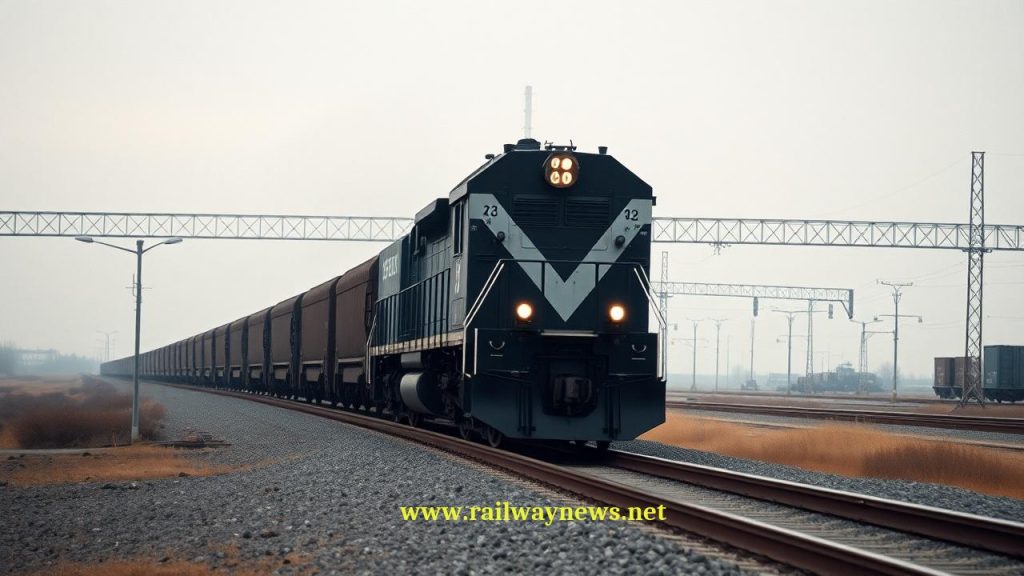
⚡ In Brief: Train drivers’ unions in the Czech Republic and Slovakia, with 1,554 Slovak drivers signing a petition, are opposing government plans for mandatory in-cab cameras, arguing the measure is a “smokescreen” for unaddressed structural safety issues.
[PRAGUE/BRATISLAVA] – Train drivers’ unions in the Czech Republic and Slovakia are formally protesting government proposals to mandate video camera installation inside locomotive cabs. In Slovakia, 1,554 of 1,809 drivers from state operators—over 85% of the workforce—have signed a petition against the measure. The unions contend the move is counterproductive, diverting resources from more critical safety and operational problems.
What Does This Regulation Cover?
The proposed policy requires the installation of video cameras within the driver’s cabin for continuous monitoring of personnel. The Czech Federation of Train Drivers has publicly stated this initiative fails to address fundamental issues reported by staff for years, including information overload from in-cab systems that detracts attention from the track. Drivers argue that existing train recording systems, which log speed and braking data, along with forward-facing cameras that monitor the track, already provide sufficient safety oversight.
Key Regulatory Data
| Parameter | Value |
|---|---|
| Regulation / Policy Name | Proposed Mandate for In-Cab Video Cameras |
| Total Value | Not disclosed |
| Parties Involved | Federation of Train Drivers (Czech Republic), Slovakian train drivers’ unions, Czech & Slovak transport authorities |
| Timeline / Completion | Not disclosed |
| Country / Corridor | Czech Republic, Slovakia |
How Does This Compare to Global Standards?
The unions’ stance that cameras are a superficial fix contrasts with a wider transport industry trend where such technology is part of a larger safety ecosystem. Global fleet management standards increasingly incorporate in-vehicle cameras with AI-driven analysis and real-time data feeds to enable proactive risk management and driver coaching (Source: Forbes, 2026). However, the drivers’ concerns about the technology’s limitations are valid; independent reports confirm that camera-based systems can face operational challenges from weather and require significant oversight, indicating they are not a complete solution on their own (Source: CleanTechnica, GovTech, 2026).
Editor’s Analysis
This conflict highlights a growing divergence between top-down technology mandates and the operational priorities of frontline staff. While authorities view cameras as a straightforward safety measure, the unions’ unified opposition suggests that core investment in improving working conditions and reducing cognitive load is being neglected. The Czech railway’s planned €285 million capital expenditure for 2025, which focuses on logistics, AI, and materials development, underscores this disconnect, as it does not appear to address the specific human-factor issues raised by drivers (Source: TITAN Group, 2026).
FAQ
Q: Why are train drivers specifically against in-cab cameras?
A: Drivers argue the cameras are a distraction from solving deeper problems like staff information overload and poor working conditions. They believe existing systems, such as data recorders and forward-facing cameras, already provide adequate operational monitoring.
Q: Has the cost of implementing the camera systems been announced?
A: No, the total investment required for the proposed camera installation and the associated monitoring infrastructure has not been publicly disclosed by authorities in either the Czech Republic or Slovakia.
Q: What are the Czech railway authorities investing in instead?
A: The Czech railway’s announced 2025 capital expenditure of €285 million is directed at growth initiatives like aggregates reserve expansion, digital and logistics infrastructure, and AI-powered solutions. These investments do not directly target the in-cab working condition improvements requested by the unions (Source: TITAN Group, 2026).

Railway infrastructure, rolling stock and transport technologies specialist focused on global rail industry developments, high-speed rail systems, signaling technologies and freight transportation. Covering railway investments, public transport modernization, rail operations and international mobility projects across Europe, Asia and North America.
RELATED POSTS

September 6, 2026 5:19 am
Hitachi delivered Taiwan's first N700ST high-speed train from Japan in...

September 5, 2026 4:19 pm
CPK launched formal tender talks with four consortia to design...

September 5, 2026 7:14 pm
HS2 Ltd signed renegotiated civils contracts with EKFB and Align...

September 6, 2026 6:17 am
Hungary ordered a national ban on most freight trains from...

September 6, 2026 1:17 am
Hitachi Toshiba Supreme Consortium confirmed the first of 12 N700ST...
September 5, 2026 6:17 pm
Universal Signalling won a deal to install its U-Cross system...