
Ukrainian Railways Launches Mobile Power Hubs for 40 People
Ukrainian Railways launched mobile ‘trains of invincibility’ from repurposed rolling stock, providing heat, power, internet for 40 people nationwide.
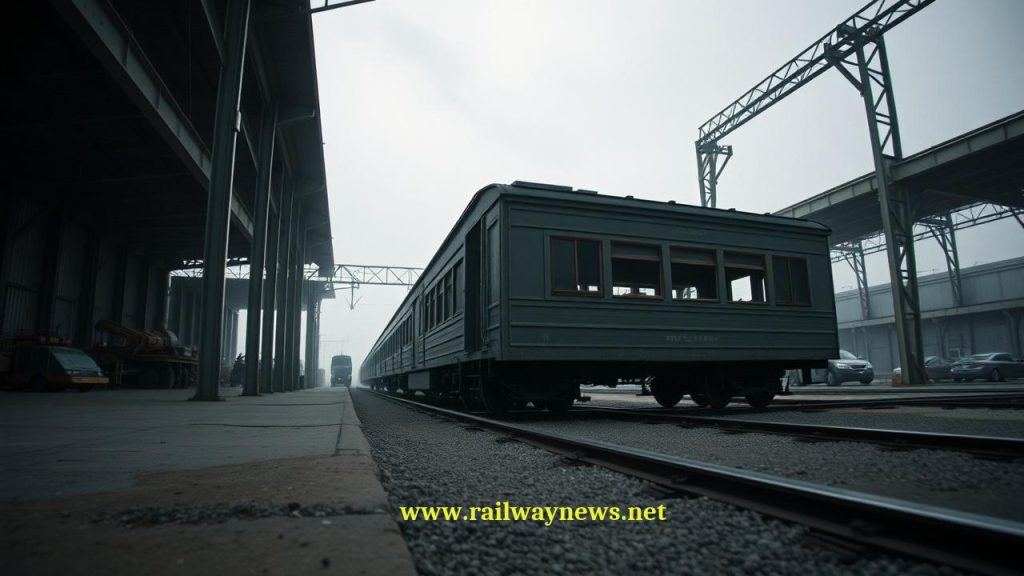
⚡ In Brief: Ukrainian Railways is repurposing non-operational rolling stock into mobile “trains of invincibility,” which function as autonomous hubs providing heat, power, and internet for approximately 40 people per carriage in cities affected by energy grid attacks.
KYIV, UKRAINE – In response to persistent attacks on the national energy grid, Ukrainian Railways has launched an initiative to convert out-of-service passenger carriages into mobile resilience hubs. These “trains of invincibility” provide heat, electricity, and internet to local populations, accommodating around 40 people per car during power outages. The program began in the Kyiv region and has since been expanded nationwide.
What Is the Full Scope of This Project?
The project utilizes existing, non-operational rolling stock, converting carriages into self-sufficient hubs capable of functioning independently of local power grids. The key strategic advantage is their mobility, allowing regional authorities to request their rapid deployment to areas most severely impacted by outages. Beyond technical support, these spaces offer humanitarian aid, providing families with facilities to charge devices, heat food, and access children’s play areas, creating a temporary sense of normalcy.
Key Project Data
| Parameter | Value |
|---|---|
| Project / Contract Name | Trains of Invincibility |
| Total Value | Not disclosed |
| Parties Involved | Ukrainian Railways, regional authorities, unspecified partner organizations |
| Timeline / Completion | Ongoing |
| Country / Corridor | Ukraine (nationwide) |
How Does This Compare to Similar Projects?
This initiative represents an agile, low-cost repurposing of existing assets for immediate humanitarian relief, contrasting with large-scale, planned infrastructure investments seen elsewhere. For example, the London Construction Programme recently named firms for a £3bn framework focused on new-build construction and retrofitting public sector buildings over five years (Source: Construction News, 2026). While both serve public needs, the Ukrainian project is a reactive, mobile solution, whereas the London framework is a proactive, long-term capital investment. Additionally, this defensive use of rail assets for civil resilience stands in sharp contrast to the simultaneous offensive targeting of Russian rail logistics, such as attacks on rail ferries in the Kerch Strait to disrupt military supply chains (Source: Maritime Executive).
Editor’s Analysis
The “trains of invincibility” project highlights a dual strategy for railway assets in modern conflict: ensuring domestic civil resilience while also being used to disrupt enemy logistics. This repurposing of rolling stock underscores the railway’s function as a critical national lifeline, capable of adapting to provide essential services beyond transportation. The ongoing instability in the regional rail freight market, heavily influenced by strategic attacks on infrastructure like the Kerch Bridge, suggests that such dual-use strategies—combining civilian support with military-logistical objectives—will continue to define the role of railways in the region (Source: Ukraine rail freight market analysis).
FAQ
Q: What is the primary advantage of these trains over fixed shelters?
A: Their main advantage is mobility. Unlike static heating centers, Ukrainian Railways can rapidly relocate these carriages to different cities or regions as the severity of power outages changes across the country.
Q: How many people can one “train of invincibility” support?
A: Each converted carriage is designed to accommodate approximately 40 people at one time. The total number of carriages converted for the program nationwide has not been disclosed.
Q: Has this project been directly affected by military attacks?
A: Yes, one such carriage was reportedly hit in an attack in February while civilians were sheltering inside. According to the source, railway workers resumed train traffic as soon as the security situation allowed.

Railway infrastructure, rolling stock and transport technologies specialist focused on global rail industry developments, high-speed rail systems, signaling technologies and freight transportation. Covering railway investments, public transport modernization, rail operations and international mobility projects across Europe, Asia and North America.
RELATED POSTS
September 6, 2026 5:19 am
Hitachi delivered Taiwan's first N700ST high-speed train from Japan in...

September 5, 2026 4:19 pm
CPK launched formal tender talks with four consortia to design...

September 5, 2026 7:14 pm
HS2 Ltd signed renegotiated civils contracts with EKFB and Align...
September 6, 2026 6:17 am
Hungary ordered a national ban on most freight trains from...

September 6, 2026 4:12 am
Alstom delivered the first of 100 new G Class trams...
September 6, 2026 1:17 am
Hitachi Toshiba Supreme Consortium confirmed the first of 12 N700ST...