
Budapest-Belgrade Railway Confirms ETCS Delays Hungary
Hungary confirmed ETCS delays on its €2.7 billion Budapest-Belgrade railway, limiting freight operations to one train per direction.
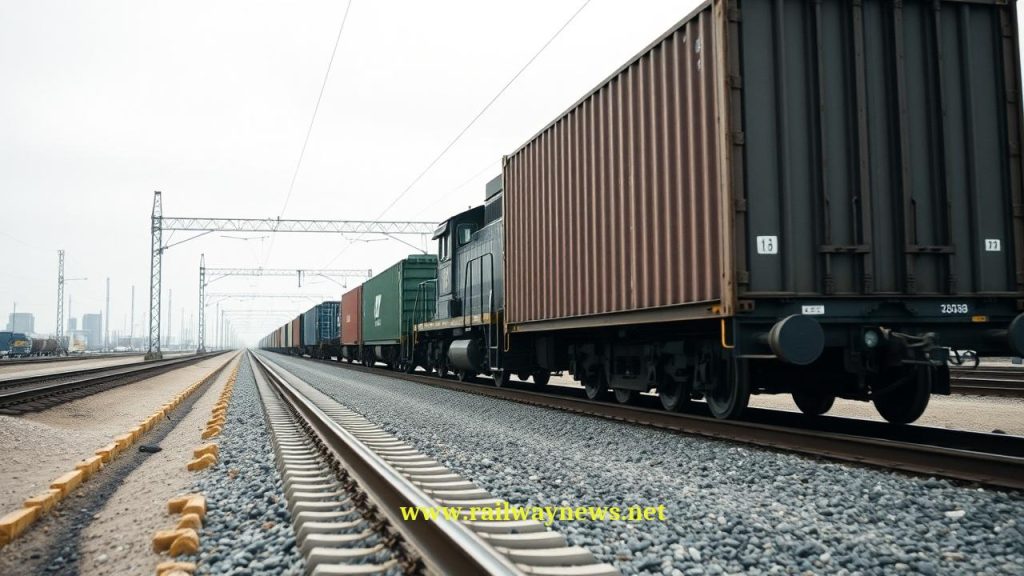
⚡ In Brief: Freight traffic on Hungary’s newly modernized €2.7 billion Budapest-Belgrade railway section commenced on February 27, but is severely restricted by a non-operational ETCS signalling system, limiting operations to one train per direction along the 160 km line.
BUDAPEST, HUNGARY – Freight services were launched on February 27 on the Hungarian section of the modernized Budapest–Belgrade railway line, a 166 km route costing an estimated €2.7 billion. However, operations between Budapest-Ferencváros and Kelebia are critically constrained due to the new European Train Control System (ETCS) not being operational. Consequently, speeds are limited to 100 km/h and capacity is reduced to a single train per direction on the entire section at any one time.
What Is the Full Scope of This Project?
The project involves the detailed upgrade of the 166 km line to a double-track, electrified railway designed for speeds up to 160 km/h. The modernization is a key component of the international corridor connecting the Chinese-operated Port of Piraeus in Greece with Central Europe, funded primarily by a loan from the Export-Import Bank of China. A critical technical specification is the exclusive implementation of the ETCS signalling standard without a parallel national backup system, mandating that all rolling stock operating on the line must be equipped with a compatible ETCS onboard unit.
Key Project Data
| Parameter | Value |
|---|---|
| Project / Contract Name | Budapest-Belgrade Railway Modernisation (Hungarian Section) |
| Total Value | Approx. €2.5–2.7 billion (1,000 billion forints) |
| Parties Involved | Hungarian State Railways (MÁV), Government of Hungary, China Export-Import Bank |
| Timeline / Completion | Freight launch Feb 2024; full operational capability not disclosed. |
| Country / Corridor | Hungary / Piraeus-Budapest Corridor |
How Does This Compare to Similar Projects?
The reported cost for the Hungarian section equates to approximately €15.7 million per kilometre, a figure that is substantially higher than the Serbian portion of the same line but aligns with other major European rail projects built to EU standards. For comparison, the Rail Baltica greenfield project has a projected average cost of approximately €15.5 million per kilometre across its entire length, including complex structures and systems compliant with EU Technical Specifications for Interoperability (TSIs). The cost disparity with Serbia reflects the stringent EU requirements for safety, environmental standards, and the mandatory implementation of ETCS, which is part of a broader regional push for signalling modernization. (Source: Rail Baltica, 2023).
Editor’s Analysis
The decision to install ETCS without a fallback national signalling system (a “zero-legacy” approach) is a bold but high-risk strategy intended to accelerate technological adoption. The current operational paralysis demonstrates the profound risk of such implementations when system certification and commissioning are delayed, turning a multi-billion-euro high-speed asset into a low-capacity single-track line. This situation undermines the project’s primary objective of enhancing freight efficiency and highlights a critical vulnerability for similar EU-funded corridor upgrades, where software and regulatory approval can lag far behind physical construction. The continued growth of the regional signalling market suggests pressure to resolve these issues is high, as interoperability is key to network success. (Source: Serbia Railway Signalling Market reports, 2024).
FAQ
Q: Why is train traffic so limited on the new line?
A: The new European Train Control System (ETCS) is not yet certified and operational. Without this automated signalling, safety regulations permit only one train at a time in each direction on the 160 km section to prevent potential collisions.
Q: What is the total cost and who is financing the project?
A: The Hungarian section costs approximately €2.7 billion (1,000 billion forints). The project is primarily financed through a substantial loan from the Export-Import Bank of China as part of a broader strategic infrastructure initiative.
Q: When will full passenger and freight services begin?
A: A date for the full launch of commercial passenger and freight services has not been officially confirmed. Operations will remain severely restricted until the ETCS system is completed, tested, and receives all necessary regulatory authorizations.

Railway infrastructure, rolling stock and transport technologies specialist focused on global rail industry developments, high-speed rail systems, signaling technologies and freight transportation. Covering railway investments, public transport modernization, rail operations and international mobility projects across Europe, Asia and North America.
RELATED POSTS

October 1, 2026 7:09 am
United States regulators confirmed a September 30 deadline for the...

October 8, 2026 1:15 pm
Alstom secured a €1bn contract to build 13 automated trains,...

October 4, 2026 5:14 pm
Alstom secured a CA$4.7 billion order from VIA Rail Canada...

October 1, 2026 12:13 am
Illinois approved $1.5 billion annually for the Northern Illinois Transit...

October 6, 2026 2:14 am
Union Pacific launched export rail shipments with Ferromex to deliver...

October 1, 2026 6:10 am
Amtrak approved a System Expansion Committee on July 30 to...