
ÖBB Rail Cargo Expands: New Routes Boost Romania Rail Freight
ÖBB Rail Cargo Group expands its European network with new high-frequency routes, enhancing rail freight to Romania and key logistics hubs for improved supply chain resilience.
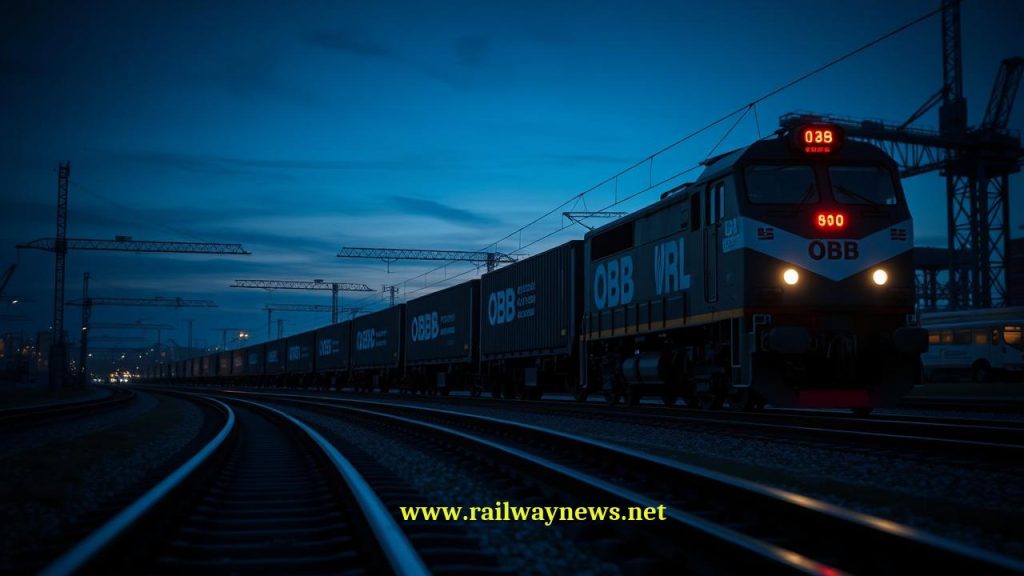
VIENNA, Austria – ÖBB Rail Cargo Group (RCG) has announced a significant expansion and restructuring of its European intermodal network, launching new high-frequency connections to Romania and key logistics hubs in Germany, Austria, and the Netherlands. This strategic enhancement aims to fortify rail freight corridors and improve service resilience in response to evolving customer demands and persistent market volatility.
| Category | Details |
|---|---|
| Company | ÖBB Rail Cargo Group (RCG) |
| New Key Routes | Liège–Curtici, Duisburg–Curtici, Duisburg–Rotterdam, Salzburg–Offenbach |
| Service Type | TransFER (Fixed-schedule intermodal freight trains) |
| Frequency (Liège–Curtici) | Seven round trips per week |
| Strategic Focus | Connecting Romanian market to Benelux/North Sea ports and German industrial centers |
| Technical Specifications | Specific rolling stock and capacity details have not been disclosed by the operator. |
Main Body:
ÖBB Rail Cargo Group is overhauling its intermodal services to Romania by establishing two powerful new corridors to the Curtici terminal, a key logistics gateway in the region. The former Genk–Curtici service is being replaced by a high-frequency TransFER Liège–Curtici connection, running seven round trips per week. Simultaneously, a new TransFER Duisburg–Curtici link will be introduced with three weekly round trips, catering specifically to continental freight flows. According to Christoph Grasl, Chief Commercial Officer of ÖBB Rail Cargo Group, “The continuous development of our TransFER connections shows how consistently we align our services with customer needs. With direct and reliable connections, we are improving access to key logistics hubs and creating attractive conditions for the transfer of freight transport to rail.”
The operational model for these new routes is RCG’s established TransFER system, which functions with fixed timetables and predetermined stops, mirroring the reliability of passenger transport. This service model allows customers to book capacity for both conventional wagons and intermodal units like containers, trailers, and swap bodies. While specific details on traction, wagon types, or terminal capacity upgrades were not provided, the TransFER product is an end-to-end solution. RCG’s offering extends beyond rail transport to include crucial first and last-mile road haulage, transshipment services, warehousing, and customs management, providing a detailed logistics package.
This network expansion occurs as the broader logistics industry grapples with significant disruption and market uncertainty. Industry analysis points to a volatile landscape where shifting tariffs and uneven freight demand are the new norm, compelling carriers to build more resilient and efficient networks. By strengthening connections through Liège—a central hub with seamless access to the North Sea ports of Rotterdam, Antwerp, and Zeebrugge—and Duisburg, Europe’s largest inland port, ÖBB is proactively building a more robust network. This move is designed to offer shippers a stable and environmentally friendly alternative to road transport amidst ongoing supply chain pressures.
Key Takeaways
- Enhanced Romania Connectivity: The new Liège–Curtici and Duisburg–Curtici routes significantly boost rail freight capacity and service frequency between Romania and Western Europe.
- Strengthened European Hubs: The initiative reinforces the strategic importance of Liège and Duisburg as central nodes in RCG’s network, linking seaports with key inland markets.
- New West-European Links: RCG is also launching new direct TransFER services between Duisburg and the Port of Rotterdam, as well as a non-stop connection between Salzburg, Austria, and Offenbach, Germany.
Editor’s Analysis
ÖBB Rail Cargo Group’s latest network expansion is a calculated move that addresses the dual pressures of market demand and supply chain fragility. By replacing a single route with two higher-capacity corridors into Romania and simultaneously forging new links between major economic centers like Duisburg, Rotterdam, and Salzburg, RCG is not merely adding services—it is architecting a more resilient and interconnected European rail freight ecosystem. This strategy directly counters the volatility seen in other freight modes by offering the fixed schedules and reliability inherent in its TransFER model. In an era where sustainability and supply chain stability are paramount, this investment solidifies rail’s position as the backbone of continental logistics and positions RCG as a key enabler of the modal shift from road to rail.
Frequently Asked Questions
- What are the main new routes announced by ÖBB Rail Cargo Group?
- The primary new routes are TransFER Liège–Curtici (Romania), TransFER Duisburg–Curtici (Romania), TransFER Duisburg–Rotterdam (Netherlands), and TransFER Salzburg–Offenbach (Germany).
- What is a TransFER service?
- TransFER is ÖBB Rail Cargo Group’s brand for freight trains that operate on fixed schedules with pre-determined stops, similar to passenger train services. They are designed for transporting both conventional wagons and intermodal units like containers.
- Why is the new connection to Liège, Belgium, significant?
- Liège is a major logistics hub in the Benelux region, offering highly efficient connections to the key North Sea ports of Rotterdam, Antwerp, and Zeebrugge. This new route provides the Romanian market with improved access to global maritime shipping lanes.

Railway infrastructure, rolling stock and transport technologies specialist focused on global rail industry developments, high-speed rail systems, signaling technologies and freight transportation. Covering railway investments, public transport modernization, rail operations and international mobility projects across Europe, Asia and North America.
RELATED POSTS
September 6, 2026 5:19 am
Hitachi delivered Taiwan's first N700ST high-speed train from Japan in...

September 5, 2026 4:19 pm
CPK launched formal tender talks with four consortia to design...

September 5, 2026 7:14 pm
HS2 Ltd signed renegotiated civils contracts with EKFB and Align...

September 6, 2026 4:12 am
Alstom delivered the first of 100 new G Class trams...
September 6, 2026 1:17 am
Hitachi Toshiba Supreme Consortium confirmed the first of 12 N700ST...
September 5, 2026 6:17 pm
Universal Signalling won a deal to install its U-Cross system...