
Alberta’s Hydrogen Rail Revolution: CPKC & ATCO’s Green Leap
This article details the successful implementation of two hydrogen refuelling stations in Alberta, Canada, built through partnership between CPKC and ATCO EnPower, marking a significant step forward for railway industry sustainability by showcasing the feasibility and practical application of hydrogen fuel in heavy-duty rail transportation.
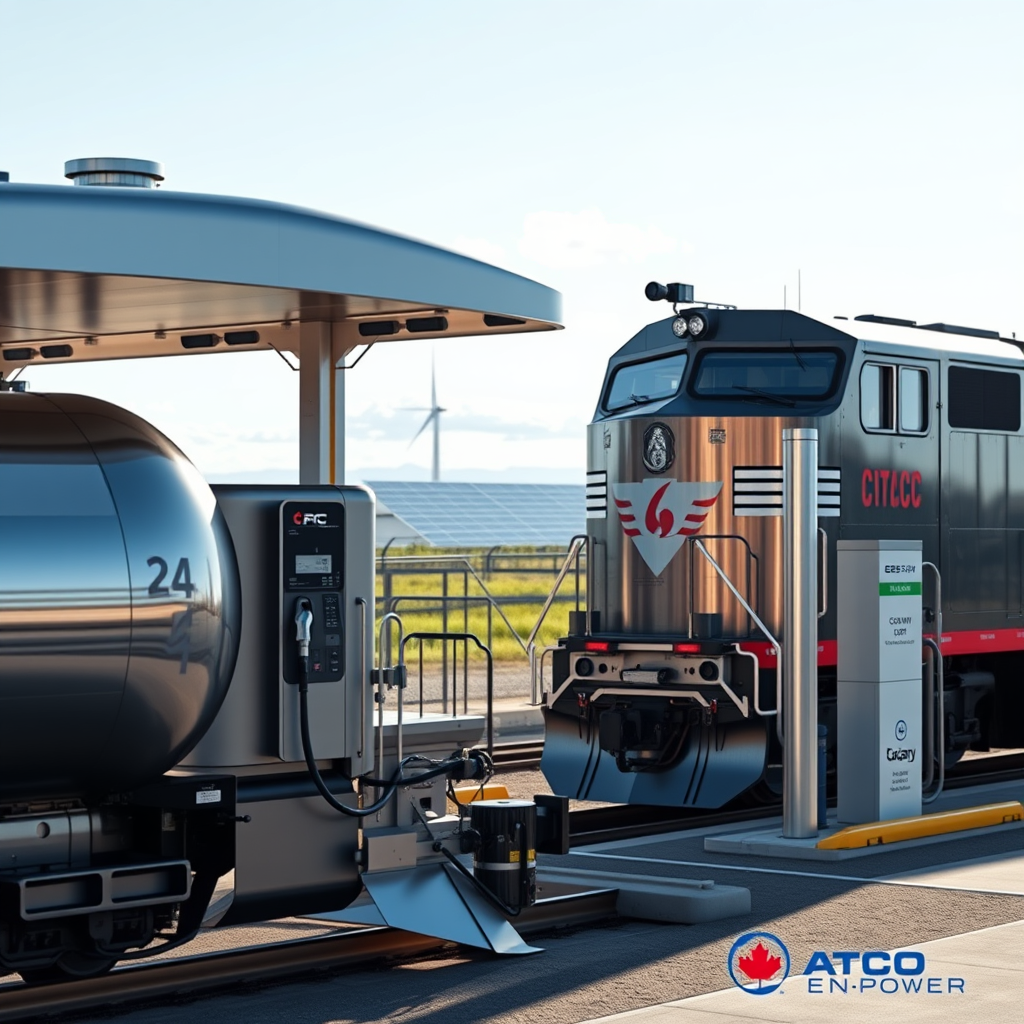
This article explores the significant development of two hydrogen refuelling stations in Alberta, Canada, built in partnership between Canadian Pacific Kansas City (CPKC) and ATCO EnPower. This project represents a crucial step forward in the railway industry’s transition towards sustainable and emission-free operations. The implementation of hydrogen fuel cell technology in locomotives is a complex undertaking, encompassing the design, construction, and operation of specialized refuelling infrastructure, as well as the retrofitting of existing locomotive fleets. The success of this initiative, detailed below, provides valuable insights into the feasibility and practical application of hydrogen fuel in heavy-duty rail transportation, setting a precedent for future large-scale deployments across North America and beyond. This case study analyzes the technical aspects of the refuelling infrastructure, the logistical challenges overcome, and the potential impact on the railway industry’s environmental footprint. Finally, we will consider the broader implications for the future of sustainable freight transportation.
Hydrogen Refuelling Infrastructure: A Technological Deep Dive
The collaborative effort between CPKC and ATCO EnPower resulted in the construction of two state-of-the-art hydrogen refuelling stations located in Calgary and Edmonton. Each station incorporates a 1 MW electrolyser (a device that uses electricity to split water into hydrogen and oxygen), a compression system, storage tanks, and dispensing equipment specifically engineered for the unique requirements of locomotive refuelling. The Calgary station uniquely integrates renewable energy sources by partially utilizing power generated from CPKC’s existing 5 MW solar power facility, showcasing a commitment to a fully sustainable fuel production process. This integration of renewable energy is a critical element in minimizing the overall carbon footprint of the hydrogen production.
ATCO EnPower’s Role: Engineering, Construction, and Operations
ATCO EnPower, a subsidiary of Canadian Utilities, played a pivotal role in the project, overseeing the engineering, procurement, and construction (EPC) of both refuelling stations. Their expertise extended beyond the physical infrastructure; ATCO EnPower is also responsible for ongoing operations and maintenance, ensuring the stations’ consistent and reliable performance. This detailed involvement demonstrates the importance of a skilled and experienced partner in successfully deploying such complex and innovative technologies within the rail transport sector. The long-term operational responsibilities undertaken by ATCO EnPower underscore the commitment to the project’s long-term viability and success.
CPKC’s Hydrogen Locomotive Programme: A Pathway to Decarbonization
The refuelling stations are integral to CPKC’s broader Hydrogen Locomotive Programme. This initiative focuses on retrofitting existing diesel locomotives with hydrogen fuel cells, replacing the conventional internal combustion engines with a cleaner, emission-free alternative. The successful completion of the refuelling stations marks a significant milestone in the programme’s progression. The ongoing testing phase of these hydrogen locomotives will provide invaluable operational data and inform the future scaling and deployment of this technology across CPKC’s extensive rail network, spanning the US, Canada, and Mexico.
Environmental Impact and Future Implications
CPKC’s commitment to reducing its environmental impact is evident in its introduction of an enhanced carbon emissions calculator in 2023, providing a tool to estimate greenhouse gas (GHG) reductions compared to traditional trucking. The hydrogen refuelling stations represent a tangible step towards achieving these emission reduction goals. The success of this project serves as a blueprint for future initiatives within Canada and potentially beyond, demonstrating the feasibility and practicality of hydrogen fuel cell technology in heavy-duty transportation. This initiative also underscores the importance of collaboration between energy providers and transportation companies in accelerating the transition to a more sustainable future.
Conclusions
The successful completion of the two hydrogen production and refuelling stations in Alberta marks a pivotal moment for sustainable freight transportation. This collaborative effort between CPKC and ATCO EnPower showcases the viability of hydrogen fuel cell technology for decarbonizing the railway industry. The meticulous planning and execution of the project, from the design and construction of the refuelling infrastructure to the integration of renewable energy sources and the ongoing operational management, represent a significant advancement in the field. The initiative is not merely a technological achievement but a demonstration of a commitment to environmental stewardship and the development of a more sustainable future for freight transportation. The detailed operational data gathered from testing the retrofitted hydrogen locomotives will be crucial in shaping the future development and deployment of this technology across wider railway networks. The blueprint established by this project serves as a template for other railway companies seeking to reduce their carbon footprint and transition to cleaner energy sources. This innovative approach has the potential to significantly reduce greenhouse gas emissions within the rail transport sector, contributing to a greener and more sustainable future for the global transportation industry.

Railway infrastructure, rolling stock and transport technologies specialist focused on global rail industry developments, high-speed rail systems, signaling technologies and freight transportation. Covering railway investments, public transport modernization, rail operations and international mobility projects across Europe, Asia and North America.
RELATED POSTS

October 8, 2026 1:15 pm
Alstom secured a €1bn contract to build 13 automated trains,...

October 1, 2026 7:09 am
United States regulators confirmed a September 30 deadline for the...

October 8, 2026 12:18 pm
Siemens Mobility signed an agreement with VinSpeed to supply 350...

October 4, 2026 5:14 pm
Alstom secured a CA$4.7 billion order from VIA Rail Canada...

October 5, 2026 6:12 pm
AECOM and Jacobs secured a contract in September 2026 to...

October 4, 2026 11:08 pm
Sound Transit confirmed the September 30 opening of Seattle Pinehurst...