
Why EN 15611 Is Key To European Rail Safety & Interoperability
Unpack EN 15611: the vital standard for railway relay valves. It guarantees rapid, uniform, and safe pneumatic braking across Europe through rigorous design and testing.
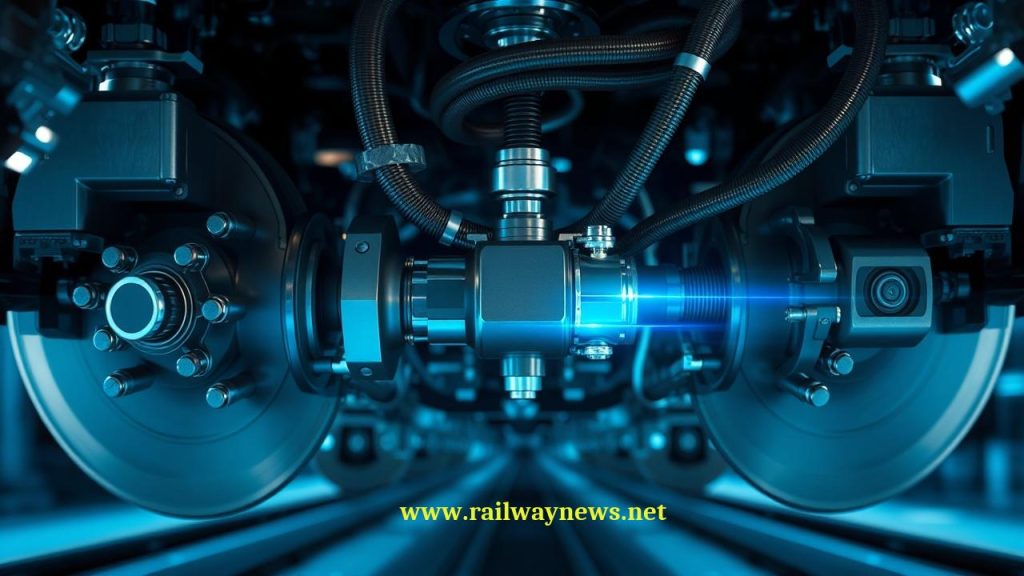
An In-Depth Technical Guide to EN 15611: Relay Valves in Railway Braking Systems
EN 15611 is the European Standard that specifies the requirements for the design, manufacture, and testing of relay valves used in the pneumatic braking systems of mainline railway vehicles. This standard is fundamental to ensuring the safety, reliability, and interoperability of braking systems across the European rail network.
Relay valves are critical pneumatic devices that accelerate the application and release of air brakes. In a long train, the brake pipe signal initiated by the driver would take a significant amount of time to travel to the last vehicle, resulting in slow and uneven braking. A relay valve overcomes this by using a local supply of compressed air from an auxiliary reservoir on the vehicle to rapidly fill or exhaust the brake cylinders, acting on a small pilot signal from the brake control system.
Core Function and Importance in Pneumatic Braking
The primary role of a relay valve is to act as a pneumatic amplifier. It takes a low-volume, low-flow pressure signal (the pilot signal) from the distributor or driver’s brake valve and translates it into a high-volume, high-flow output to the brake cylinders. This function is essential for achieving synchronized and powerful braking across all vehicles in a train consist.
- Rapid Response: By using a local air reservoir on each car or bogie, the relay valve can fill the brake cylinders much faster than if the air had to travel the entire length of the train’s brake pipe.
- Uniform Braking: It ensures that brakes on all wagons apply and release at nearly the same time, preventing dangerous in-train forces (buff and draw) that can lead to derailments or damage to cargo and couplings.
- Pressure Maintenance: A well-designed relay valve can accurately maintain the pressure in the brake cylinder, compensating for minor leaks to ensure consistent braking force.
Key Technical Requirements of EN 15611
EN 15611 outlines a detailed set of technical specifications that a relay valve must meet. These are categorized into performance, design, construction, and testing criteria.
Performance Characteristics
Performance is the most critical aspect, defining how the valve behaves under operational conditions.
- Response Time: The standard defines maximum acceptable times for the valve to react to an application or release signal. This includes both the initial delay (insensitivity) and the time taken to build up or release pressure to specific levels (e.g., from 10% to 95% of maximum pressure).
- Flow Capacity (Cv / Kv): This measures the volume of air the valve can pass through its ports. A high flow capacity is necessary for the rapid filling and exhausting of large brake cylinders, ensuring brakes can be applied and released quickly.
- Pressure Characteristics: The standard mandates a precise relationship between the pilot (input) pressure and the brake cylinder (output) pressure. For a standard 1:1 relay valve, the output pressure must closely mirror the input pressure across the entire operating range.
- Sensitivity: The valve must respond to small, deliberate changes in pilot pressure but remain stable and not react to minor pressure fluctuations or vibrations (insensitivity).
- Stability: The operation must be smooth and free from “chattering” or pressure oscillations, which could lead to inconsistent braking force and premature component wear.
Design and Construction Requirements
These requirements ensure the valve is robust and can withstand the harsh railway operating environment.
- Materials: Materials used for the body (typically aluminum alloys or cast iron), seals (elastomers like NBR or EPDM), and internal components (stainless steel, brass) must be resistant to corrosion, mineral oils, moisture, and ozone. They must also perform reliably across a wide temperature range.
- Environmental Conditions: The valve must be designed to operate reliably in the extreme conditions specified in EN 50125-1, including a temperature range typically from -40°C to +70°C, and withstand high levels of shock and vibration.
- Pneumatic Connections: Ports must conform to standardized thread types and sizes (e.g., ISO 228-1 ‘G’ threads) to ensure compatibility and interoperability with other components in the brake system.
- Marking and Identification: Each valve must be permanently marked with essential information, such as the manufacturer’s name, part number, date of manufacture, and type designation, for traceability.
Testing and Approval Procedures
To achieve certification, a relay valve must pass a rigorous series of tests defined by the standard.
- Type Tests: These are exhaustive tests performed once on a new valve design to prove its full compliance with every requirement of the standard. This includes functional tests, endurance tests (often involving hundreds of thousands to millions of cycles), environmental chamber tests (temperature and humidity), vibration and shock tests, and salt spray tests for corrosion resistance.
- Routine Tests: These are less detailed tests performed on every single valve produced to ensure consistent manufacturing quality. They typically include a leak test and a basic functional check of its pressure characteristics.
Comparison of Relay Valve Types
While EN 15611 covers general-purpose relay valves, the principles apply to different variations used in braking systems. The table below compares a standard relay valve with a more complex variable load relay valve.
| Feature | Standard Relay Valve (1:1) | Variable Load Relay Valve |
|---|---|---|
| Primary Function | To reproduce a pilot pressure signal at a 1:1 ratio with high air flow. | To modulate the output brake cylinder pressure based on both the pilot signal and the vehicle’s load. |
| Control Input(s) | A single pneumatic pilot signal. | A pneumatic pilot signal and a mechanical or pneumatic input from the vehicle’s suspension system that indicates load. |
| Output Pressure | Directly proportional to the pilot pressure (e.g., 3 bar in = 3 bar out). | Proportional to the pilot pressure but scaled by the vehicle’s load (e.g., higher pressure for a fully loaded wagon). |
| Typical Application | Passenger coaches, locomotives, or applications where braking force is not adjusted for load. | Freight wagons, where the weight can vary significantly between empty and loaded states. |
| Complexity | Relatively simple, focused on speed and fidelity. | More complex, incorporating a load-sensing mechanism. |
The Role of EN 15611 in Interoperability and Safety
EN 15611 is a cornerstone of railway safety and interoperability. By standardizing the performance and testing of relay valves, it guarantees that a vehicle manufactured in one country will brake predictably and compatibly when coupled in a train with vehicles from another country. This uniformity is non-negotiable for safe cross-border rail traffic. Adherence to this standard ensures that every relay valve in a train will contribute to a smooth, powerful, and, most importantly, safe stop.
Conclusion
More than just a technical document, EN 15611 is a critical enabler of modern, safe, and efficient railway operations. It governs a small but vital component whose reliable performance is paramount. By setting stringent requirements for performance, durability, and testing, the standard ensures that relay valves function flawlessly, providing the rapid and synchronized braking performance necessary to keep the European rail network moving safely.
Frequently Asked Questions (FAQ) about EN 15611
What is the primary function of a relay valve according to EN 15611?
The primary function of a relay valve is to accelerate the application and release of pneumatic brakes. It achieves this by using a local, high-volume air supply (from an auxiliary reservoir) controlled by a low-volume pilot signal, ensuring rapid and uniform braking pressure changes along the entire length of a train.
Does EN 15611 apply to all railway vehicles?
The standard applies to all mainline railway vehicles equipped with UIC-type pneumatic brake systems, which includes freight wagons, passenger coaches, locomotives, and multiple units (EMUs/DMUs). It does not typically apply to specialized systems like metro or tram vehicles, which often use different braking standards.
What is the difference between ‘type tests’ and ‘routine tests’ in EN 15611?
Type tests are detailed, one-time validation tests performed on a new product design to prove it meets all requirements of the standard, including endurance and environmental stress. Routine tests are simpler, mandatory production tests performed on every single unit manufactured to ensure consistent quality and functionality, such as checking for leaks and correct pressure response.
Why is flow capacity important for a relay valve?
Flow capacity is critical because it determines how quickly the valve can fill or empty the brake cylinders. A high flow capacity allows for a large volume of air to be moved in a short time, which directly translates to faster brake application and release times. This is essential for effective emergency braking and for preventing wheel flats during release.

Railway infrastructure, rolling stock and transport technologies specialist focused on global rail industry developments, high-speed rail systems, signaling technologies and freight transportation. Covering railway investments, public transport modernization, rail operations and international mobility projects across Europe, Asia and North America.