
Europe Elevates Rail Safety: New Road-Rail Machine Standard EN 15746-1
Explore EN 15746-1, the essential European standard for road-rail machine safety. It mandates technical requirements for design, construction, and performance on railway infrastructure.
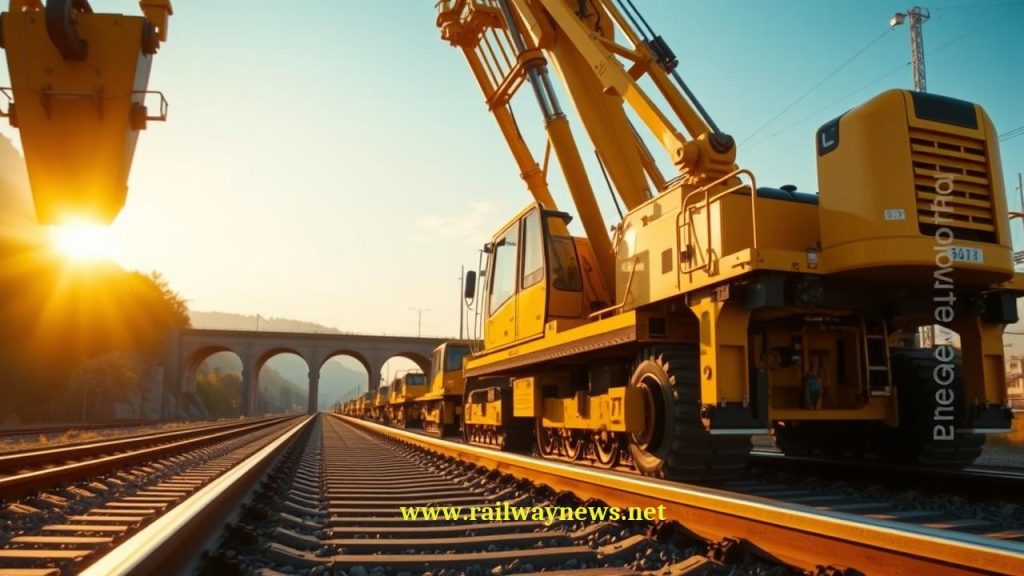
What is EN 15746-1? A Detailed Overview
EN 15746-1 is a critical European Standard that specifies the technical requirements for the design, construction, and performance of road-rail machines (RRMs) and their associated equipment. This standard focuses specifically on the safety and operational integrity of these machines when they are both ‘running’ (traveling along the track) and ‘working’ (performing their intended tasks, such as lifting, excavating, or tamping) on railway infrastructure.
The primary goal of EN 15746-1 is to ensure that these highly specialized vehicles can operate safely without posing a risk to the railway network, other rail traffic, personnel, or the machine itself. It provides a harmonized set of rules for manufacturers and operators across Europe, promoting interoperability and a high, consistent level of safety.
Scope and Objectives of the Standard
The scope of EN 15746-1 is detailed, covering all new road-rail machines designed for construction and maintenance on standard gauge railways. It addresses the significant risks associated with the unique dual-mode functionality of these machines.
Key Objectives
- Ensuring Safe Running: To define the requirements for the machine to travel on the track like a regular rail vehicle, covering aspects like braking, stability, and visibility.
- Regulating Safe Working: To establish criteria for the safe operation of work equipment, focusing on stability during lifting or excavating, control systems, and operator protection.
- Promoting Interoperability: To create a common technical baseline so that a machine certified in one country can be accepted for use on other European networks, subject to national rules.
- Risk Mitigation: To systematically address hazards such as derailment, collision, overturning, and electrical contact with overhead lines.
It is important to note that this standard, Part 1, deals with the technical requirements. The procedures for conformity assessment, verification, and testing are covered in its companion standard, EN 15746-2.
Core Technical Requirements for Road-Rail Machines
EN 15746-1 is divided into detailed clauses that cover every aspect of the machine’s interaction with the railway environment. These can be broadly grouped into requirements for ‘running mode’ and ‘working mode’.
Requirements for ‘Running Mode’
When an RRM is traveling along the track, it must behave predictably and safely, similar to a dedicated rail vehicle. Key requirements include:
- Gauging: The machine must conform to the specified kinematic gauge (e.g., G1) to ensure it does not strike platforms, tunnel walls, signals, or other lineside structures.
- Braking Performance: This is a critical safety area. The standard mandates specific performance criteria for service, emergency, and parking brake systems. Calculations and tests must prove the machine can stop within a safe distance under various load and gradient conditions.
- Running Gear and Suspension: The design of the rail axles, wheels, and suspension is crucial for preventing derailment. The standard specifies requirements for wheel profiles, axle loads, and the ability of the suspension to cope with track irregularities and cant (superelevation).
- Visibility and Lighting: The operator must have a clear and unobstructed view of the track ahead. The standard defines requirements for forward visibility and specifies the type, color, and intensity of headlamps, marker lights, and tail lamps to ensure the machine is clearly visible to other traffic and personnel.
- Traction and Power Systems: The machine’s engine and transmission must be capable of propelling it safely, including starting on the maximum design gradient.
Requirements for ‘Working Mode’
When the machine is stationary or moving slowly to perform its task, a different set of risks becomes dominant. The standard addresses these with specific requirements:
- Stability and Safety: This is paramount for RRMs with cranes, excavators, or lifting platforms. The standard requires detailed stability calculations and tests to prove the machine will not overturn, even when working on canted track with the maximum load at maximum reach. Safety devices like load moment indicators and slew limiters are often mandatory.
- Control Systems: Controls for work equipment must be reliable, ergonomic, and fail-safe. Emergency stop functions must be easily accessible and effective in bringing the machine to a safe state.
- Operator Environment: The operator’s cabin must provide protection from environmental hazards and falling objects (FOPS). It must also feature good ergonomics, low noise levels, and clear visibility of the working area.
- Working on or Near Live Overhead Lines: For machines intended to work near Overhead Line Equipment (OLE), strict requirements are in place to prevent electrical hazards, including limiting devices to restrict the height of booms and dippers.
Categorization of Road-Rail Machines under EN 15746-1
EN 15746-1 recognizes that different machines perform different tasks and therefore pose different risks. While not explicitly categorizing them in a single table, the requirements are applied based on the machine’s function. The table below illustrates how the standard’s requirements apply to different types of RRMs.
| Machine Type / Category | Primary Function | Key Design Considerations under EN 15746-1 |
|---|---|---|
| Tractive Units | Hauling and shunting wagons or other rail vehicles. | High emphasis on braking capacity (for the entire consist), robust coupling systems, high tractive effort, and clear visibility for shunting operations. |
| Mobile Cranes / Excavators | Lifting, excavation, track renewal, and material handling. | Stringent stability calculations and testing are critical. Must include load moment indicators, slew/height limiters, and outriggers. Stability on canted track is a major focus. |
| Mobile Elevating Work Platforms (MEWPs) | Lifting personnel for inspection and maintenance of overhead lines or structures. | Personnel safety is paramount. Requirements for platform stability, emergency lowering systems, overload protection, and electrical insulation are key. |
| Inspection & Measurement Vehicles | Track geometry measurement, ultrasonic rail flaw detection. | Emphasis on high-quality running gear for smooth travel to not corrupt measurements. Must ensure measurement systems do not interfere with track circuits or signaling. |
The Importance of EN 15746-1 in the Rail Industry
The implementation of EN 15746-1 has brought significant benefits to the railway sector:
- Enhanced Safety: By providing a clear and robust framework of technical requirements, the standard directly contributes to reducing accidents, derailments, and incidents involving road-rail machinery.
- Market Harmonization: It creates a level playing field for manufacturers, ensuring all machines placed on the market meet the same high safety standards, which simplifies procurement for infrastructure managers.
- Clarity for Design and Manufacturing: The standard provides engineers with a definitive guide for designing compliant and safe machines, reducing ambiguity and development time.
- Foundation for Certification: It serves as the technical basis for the conformity assessment process outlined in EN 15746-2, which is essential for obtaining authorization to operate on a rail network.
Conclusion
EN 15746-1 is more than just a technical document; it is a cornerstone of safety and engineering excellence for road-rail machinery in Europe. By meticulously defining the requirements for both running and working modes, it ensures that these versatile and essential pieces of equipment can perform their maintenance and construction duties effectively without compromising the safety and integrity of the railway network. Compliance with this standard is essential for any manufacturer or operator seeking to deploy road-rail machines on modern railway infrastructure.

Railway infrastructure, rolling stock and transport technologies specialist focused on global rail industry developments, high-speed rail systems, signaling technologies and freight transportation. Covering railway investments, public transport modernization, rail operations and international mobility projects across Europe, Asia and North America.