
EN 13481-2: Europe’s Key To Safe Rail Fastening Systems
EN 13481-2 specifies critical performance for rail fastening systems on concrete sleepers. This standard ensures track safety, reliability, and durability across the railway industry.
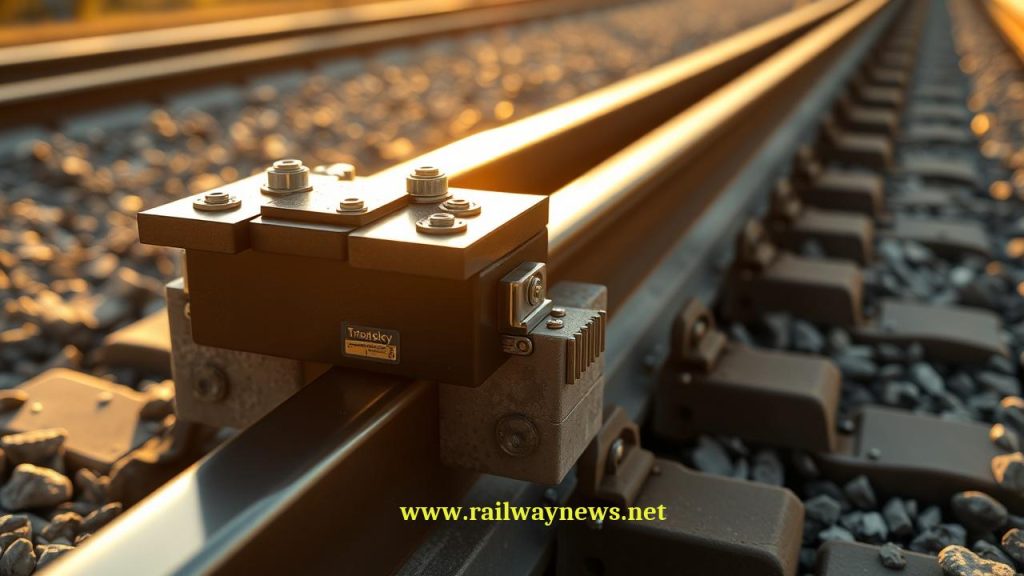
Understanding EN 13481-2: Performance Requirements for Fastening Systems on Concrete Sleepers
EN 13481-2 is a key European standard that specifies the performance requirements and test procedures for fastening systems used on concrete sleepers within ballasted railway tracks. This standard is crucial for ensuring the safety, reliability, and interoperability of track infrastructure across Europe and beyond.
As a part of the broader EN 13481 series, which covers various types of sleepers and track systems, Part 2 focuses exclusively on the most common track configuration: conventional ballasted track with concrete sleepers. It provides a standardized framework for manufacturers to design and test their products and for railway infrastructure managers to specify and procure compliant fastening systems.
Core Objectives and Scope
The primary goal of EN 13481-2 is to define a set of rigorous laboratory tests that simulate the demanding operational conditions experienced by a fastening system over its service life. By establishing uniform performance criteria, the standard ensures that any compliant system can safely handle the forces exerted by passing trains.
The scope of the standard includes:
- Defining the test procedures for evaluating the performance of a complete fastening system assembly.
- Specifying the requirements for individual components, such as rail pads, clips, insulators, and cast-in shoulders or inserts.
- Categorizing fastening systems based on their performance characteristics to match them with specific track operational requirements (e.g., line speed, axle load).
- Ensuring the long-term durability and reliability of the track-sleeper-fastening interface.
Key Performance Requirements and Laboratory Tests
To achieve certification, a fastening system must pass a series of demanding laboratory tests outlined in the standard. These tests are designed to measure the system’s response to static, dynamic, and environmental stresses.
Static Load Tests
These tests evaluate the system’s behavior under constant or slowly applied loads, simulating the weight of a stationary or slow-moving train.
- Clamping Force: This measures the force exerted by the fastening clips on the rail foot. Adequate clamping force is essential to prevent rail rollover and longitudinal rail movement (creep), ensuring track gauge stability.
- Attenuation of Impact Loads (Static Stiffness): This test determines the vertical stiffness of the system, primarily the rail pad. The stiffness value is critical for calculating track deflection, managing rail stresses, and controlling noise and vibration.
Dynamic and Fatigue Tests
These tests are designed to simulate the repeated, high-impact loads from millions of wheel passes over the system’s lifetime.
- Fatigue Test: The fastening assembly is subjected to millions of cycles of repeated vertical and lateral loads. The test verifies that no component fails or suffers significant degradation in performance (e.g., loss of clamping force) due to material fatigue.
- Effect of Repeated Loading: This assesses the long-term settlement and wear of the rail pad under cyclic loading. It ensures the pad maintains its required stiffness and thickness over time, preventing loss of track geometry.
Environmental and Durability Tests
To ensure reliability in real-world conditions, the system is tested for its resilience to environmental factors.
- Effect of Water and Freezing: The test evaluates the performance of the system after being exposed to water and freeze-thaw cycles, which is critical for infrastructure in colder climates.
- Corrosion Resistance: Metallic components are subjected to a salt spray test to assess their resistance to corrosion, a vital parameter for systems installed in coastal, industrial, or tunnel environments.
Electrical Resistance
For tracks equipped with track circuits for train detection and signaling, the fastening system must provide high electrical resistance between the two rails. This test measures the resistance of the assembly to ensure it properly insulates the rails and prevents short circuits, which could lead to signaling failures.
Categorization of Fastening Systems
EN 13481-2 allows for the categorization of fastening systems based on their performance, particularly their vertical rail pad stiffness. This enables infrastructure managers to select a system that is technically and economically optimized for a specific line’s requirements. The table below provides a simplified overview of typical categories.
| Category | Typical Application | Key Performance Characteristic | Description |
|---|---|---|---|
| Category A | High-Speed Lines (> 250 km/h) | Low to Medium Stiffness | Designed to provide higher elasticity to reduce dynamic forces and vibration at very high speeds, improving passenger comfort and reducing track degradation. |
| Category B | Conventional Mainlines | Medium Stiffness | A balanced performance system suitable for mixed traffic (passenger and freight) on primary routes with moderate speeds and axle loads. |
| Category C | Heavy Haul / High Axle Load Lines | Medium to High Stiffness | Engineered to withstand very high axle loads typical of freight traffic. The focus is on durability and maintaining track geometry under extreme vertical forces. |
| Category D | Urban & Light Rail (Tram) | Very Low Stiffness (High Elasticity) | Optimized for vibration and noise attenuation in urban environments. These systems often use highly elastic components to isolate the track from nearby buildings. |
Conclusion: A Foundation for Track Safety and Reliability
EN 13481-2 serves as a critical benchmark in the railway industry. It harmonizes the requirements for one of the most fundamental components of the track super-structure, ensuring that fastening systems for concrete sleepers are robust, durable, and fit for purpose. Compliance with this standard is not just a regulatory hurdle; it is a fundamental assurance of a system’s ability to maintain track geometry, manage immense forces, and ultimately guarantee the safe passage of trains for decades.

Railway infrastructure, rolling stock and transport technologies specialist focused on global rail industry developments, high-speed rail systems, signaling technologies and freight transportation. Covering railway investments, public transport modernization, rail operations and international mobility projects across Europe, Asia and North America.