
EN 50617-2: Unifying European Rail Interoperability
Explore EN 50617-2: the essential standard defining axle counter parameters for safe, reliable train detection and European railway interoperability.
Understanding EN 50617-2: Axle Counters for European Railway Interoperability
EN 50617-2 is a critical European standard that specifies the technical parameters for axle counter based train detection systems. As a key component of the wider EN 50617 series, this standard is fundamental to ensuring the safety, reliability, and interoperability of the Trans-European railway network, particularly within the Control-Command and Signalling (CCS) subsystem.
The primary goal of EN 50617-2 is to define a unified set of requirements for axle counters, allowing equipment from different manufacturers to be integrated into various national railway networks without compromising safety or performance. This harmonization is essential for seamless cross-border train operations.
The Role and Function of Axle Counters in Train Detection
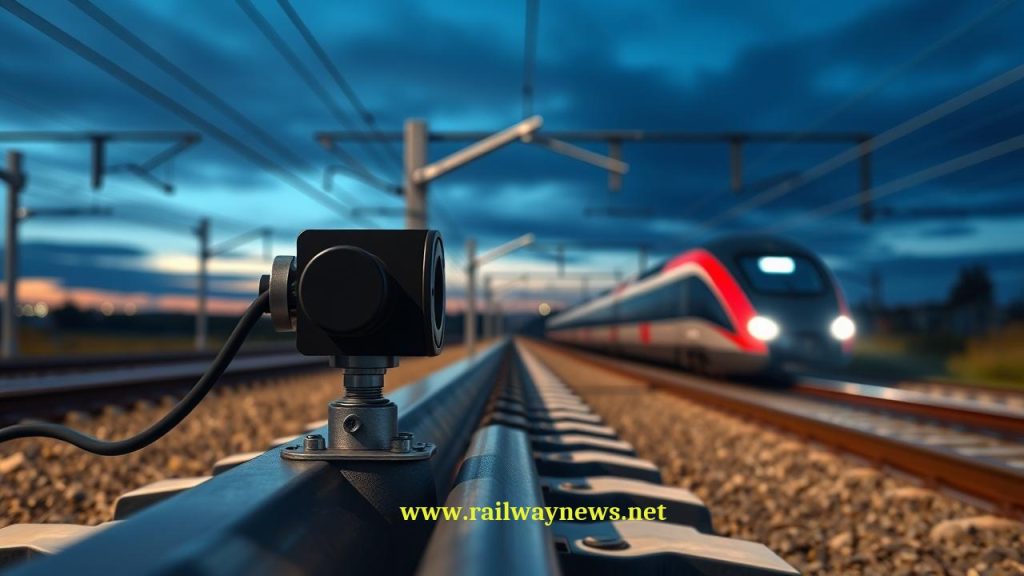
An axle counter system is a form of train detection that determines whether a specific section of track is clear or occupied. Unlike traditional track circuits which monitor the entire section continuously, an axle counter system operates on a counting principle. It consists of two or more detection points (sensors) at the boundaries of a track section and a central evaluator unit.
- Detection Point (Wheel Sensor): Installed on the rail, this sensor detects the magnetic field disturbance caused by a passing train wheel (axle). Each passing axle generates a pulse.
- Evaluator Unit: This unit receives pulses from the detection points at the entrance and exit of a section. It maintains a count of axles entering and leaving.
- Section Status: If the number of axles counted out of the section equals the number of axles counted in, the evaluator declares the section “clear.” If the counts do not match, the section is declared “occupied,” ensuring a fail-safe state.
This method offers significant advantages in areas with poor track circuit performance, such as in electrified lines, tunnels, or areas with degraded ballast conditions.
Key Technical Parameters Defined by EN 50617-2
The standard delves deep into the technical specifications required for an axle counter system to be considered compliant for interoperable use. These parameters ensure that the system functions reliably under the diverse and demanding conditions of a modern railway.
Detection Performance and Environmental Resilience
The standard mandates strict performance criteria for the physical detection of axles under various operational scenarios.
- Operating Speed Range: Systems must reliably detect axles from a standstill (0 km/h) up to very high speeds (typically exceeding 350 km/h) to accommodate all types of rail traffic.
- Wheel and Rail Profiles: The sensors must be compatible with a wide range of wheel and rail profiles specified within European Technical Specifications for Interoperability (TSIs).
- Environmental Conditions: The equipment must operate flawlessly within a specified temperature range (e.g., -40°C to +70°C), and be resistant to humidity, water ingress (IP rating), vibration, shock, and corrosive elements.
- Electromagnetic Compatibility (EMC): As a critical safety system, the axle counter must be highly immune to electromagnetic interference from traction power systems, braking systems, and external radio frequencies. It must also not emit interference that could affect other railway equipment.
Safety and Interface Requirements
Safety is the paramount concern. EN 50617-2 specifies the safety-related aspects and how the system communicates with the interlocking.
- Fail-Safe Operation: The system must be designed to fail into a safe state. Any internal fault, power loss, or sensor failure must result in the track section being reported as “occupied.”
- Safety Integrity Level (SIL): Axle counter systems are typically required to meet a high Safety Integrity Level, often SIL 4, as defined by CENELEC standards (EN 50126, EN 50128, EN 50129). This dictates a rigorous design, validation, and verification process.
- Interface to Interlocking: The standard defines the requirements for the communication interface between the axle counter evaluator and the railway’s interlocking system. This includes the protocol, data integrity, and timeliness of the “clear” or “occupied” status messages.
Comparison: Axle Counters vs. Traditional Track Circuits
To better understand the significance of axle counter systems standardized by EN 50617-2, it is useful to compare them with traditional track circuits.
| Feature | Axle Counter Systems (per EN 50617-2) | Traditional Track Circuits |
|---|---|---|
| Principle of Operation | Counts axles entering and exiting a defined track section. | Monitors electrical continuity of the rails within a section. |
| Immunity to Rail Contamination | High. Unaffected by rust, sand, grease, or water on the rail head. | Low. Performance can be degraded by poor wheel-rail contact or contamination. |
| Performance on Electrified Lines | Excellent. Specifically designed to be immune to traction return currents and EMC. | Requires impedance bonds and can be susceptible to interference. |
| Broken Rail Detection | Does not inherently detect broken rails. Requires supplementary systems. | Can inherently detect a complete break in one or both rails, as it breaks the circuit. |
| Section Length | Can cover very long sections (many kilometers) with no intermediate equipment. | Limited section length due to signal attenuation in the rails. |
| Power Consumption | Generally lower, as it only requires power at the detection points and evaluator. | Requires continuous power to energize the entire track section. |
| Installation & Maintenance | Requires no insulated rail joints, reducing a major maintenance point. | Requires insulated rail joints, which are a common point of mechanical failure and maintenance. |
Conclusion: A Cornerstone of Modern Signalling
EN 50617-2 is more than just a technical document; it is an enabler of the modern, integrated European railway network. By standardizing the performance, safety, and interface requirements for axle counters, it provides a reliable foundation for train detection systems across the continent. This ensures that as train speeds increase and cross-border traffic becomes more common, the signalling systems that protect these operations are robust, reliable, and fundamentally interoperable.
Frequently Asked Questions (FAQ) about EN 50617-2

Railway infrastructure, rolling stock and transport technologies specialist focused on global rail industry developments, high-speed rail systems, signaling technologies and freight transportation. Covering railway investments, public transport modernization, rail operations and international mobility projects across Europe, Asia and North America.