
Mississippi Train Derailment: Safety, Risks, and Impact Analysis
Mississippi train derailment investigated; cause undetermined. Railway safety protocols reviewed.
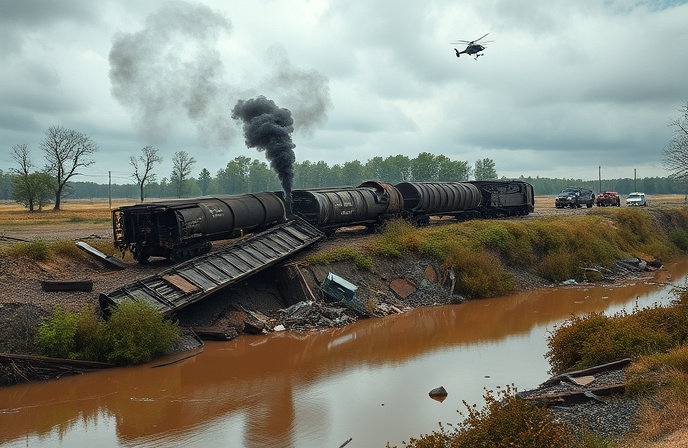
Investigation Underway After Train Derailment in Mississippi
A train derailment Mississippi incident is currently under investigation, raising concerns within the railway industry. The incident occurred on [Insert Date] at approximately [Insert Time] near [Specific Location in Mississippi], involving [Number] cars from a [Name of Rail Operator] freight train. The cause of the derailment is currently undetermined, but early reports suggest [Briefly mention initial observations, e.g., track issues, equipment malfunction, etc.]. The investigation, spearheaded by [Mention investigating body, e.g., the National Transportation Safety Board (NTSB)], aims to determine the root cause of the incident, assess the damage, and prevent future occurrences. This article will delve into the specifics of the train derailment Mississippi, examining the initial response, potential causes, and the implications for railway safety and operations.
Initial Response and Emergency Protocols Following the Derailment
Following the train derailment Mississippi, emergency responders, including local fire departments, law enforcement, and the railway operator’s own response teams, were immediately dispatched to the scene. Their initial priorities focused on securing the area, assessing the potential hazards (particularly if hazardous materials were involved – mention this hypothetically), and ensuring the safety of the public and any railway personnel. The response protocol, guided by the railway’s emergency action plan (EAP), would have mandated specific steps, including immediate communication with the NTSB and other regulatory agencies. Debris removal, track repairs, and environmental assessments were also likely underway. The efficiency and effectiveness of the initial response reflect the importance of detailed training and well-coordinated emergency preparedness.
Potential Contributing Factors to the Mississippi Train Derailment
Several factors could contribute to a train derailment Mississippi. These include, but are not limited to, track conditions, such as rail defects (e.g., broken rails, gauge widening), ballast issues, or inadequate track geometry; equipment failures, ranging from wheel defects to issues with couplers or brake systems; human factors, encompassing fatigue, operational errors, and improper maintenance procedures; and environmental factors, such as extreme weather conditions like heavy rain or heat stress that can impact track integrity. The NTSB investigation will meticulously analyze all these potential contributors, gathering data from track inspections, reviewing maintenance records, examining train data recorders (also known as “black boxes”), and interviewing relevant personnel. Thorough examination of all these areas is crucial to pinpointing the primary cause and secondary factors.
Industry Safety Regulations and Technological Advancements in Preventing Derailments
The railway industry operates under a stringent set of safety regulations overseen by bodies like the Federal Railroad Administration (FRA) in the United States, and similar regulatory authorities globally. These regulations mandate regular inspections of tracks, rolling stock, and signal systems to proactively mitigate risks. The ongoing investigation into the train derailment Mississippi will likely prompt a review of these regulations, and could lead to recommendations for enhanced safety protocols. Advancements in technology are also playing a crucial role in improving railway safety. These advancements include automated track inspection systems, enhanced train control systems (ETCS) such as positive train control (PTC) which can prevent collisions and speed-related derailments, and advanced monitoring systems for rolling stock that can detect potential defects before they lead to an incident.
Impact on Railway Operations and Future Outlook
The train derailment Mississippi will undoubtedly cause significant disruptions to railway operations in the immediate area, including delays and diversions of freight and passenger traffic. The cost of the derailment will encompass track and equipment damage, cleanup expenses, investigation costs, and potential legal liabilities. The long-term consequences could extend to changes in maintenance practices, implementation of new safety technologies, and increased regulatory scrutiny. The lessons learned from this incident will underscore the need for a continued focus on proactive risk management, robust safety cultures, and the utilization of cutting-edge technologies to prevent similar incidents in the future.
Conclusion
The recent train derailment Mississippi highlights the inherent risks associated with railway operations and underscores the critical importance of safety protocols. The ongoing investigation by the NTSB will play a crucial role in uncovering the root cause of the incident and formulating recommendations to prevent similar events. The railway industry must continuously improve its safety measures, embrace technological advancements, and remain vigilant to ensure the safe and efficient transportation of goods and people. The incident serves as a stark reminder of the potential consequences of safety lapses and emphasizes the need for a strong commitment to safety culture across all levels of the industry. As technology advances, improved diagnostic tools, and preventative strategies will be critical to minimizing the risk of future derailments and further strengthening railway safety.

Railway infrastructure, rolling stock and transport technologies specialist focused on global rail industry developments, high-speed rail systems, signaling technologies and freight transportation. Covering railway investments, public transport modernization, rail operations and international mobility projects across Europe, Asia and North America.
RELATED POSTS

October 1, 2026 7:09 am
United States regulators confirmed a September 30 deadline for the...

October 4, 2026 5:14 pm
Alstom secured a CA$4.7 billion order from VIA Rail Canada...

October 1, 2026 12:13 am
Illinois approved $1.5 billion annually for the Northern Illinois Transit...
October 6, 2026 2:14 am
Union Pacific launched export rail shipments with Ferromex to deliver...

October 1, 2026 6:10 am
Amtrak approved a System Expansion Committee on July 30 to...
October 1, 2026 3:12 am
Greenbrier confirmed Brian Comstock as new president and CEO effective...