
HS2: 3Squared’s Tech Drives Rail Efficiency
3Squared, a Sheffield-based railway technology firm, partnered with Skanska Costain STRABAG JV (SCS JV) on the HS2 project to deploy RailSmart software, enhancing supply chain management and cost control through real-time data analytics, crucial for efficient large-scale infrastructure projects.
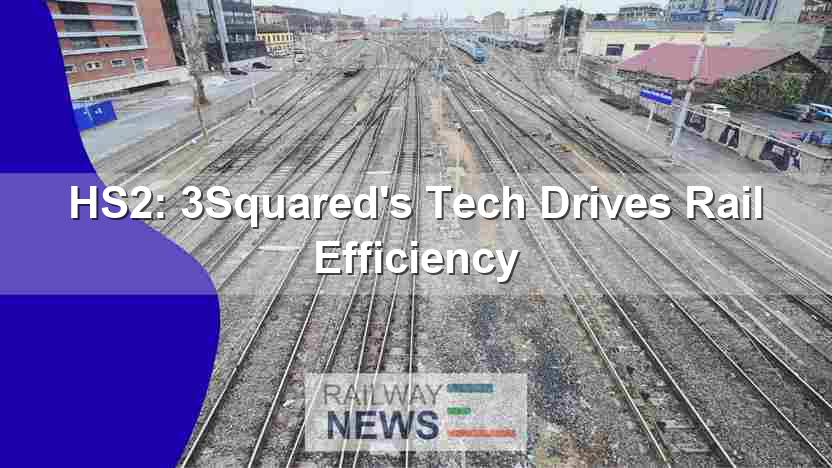
This article explores the significant role of technology in the execution of large-scale railway infrastructure projects, specifically focusing on the High Speed Two (HS2) project in the United Kingdom. The case study of 3Squared, a Sheffield-based railway technology firm, illustrates how innovative software solutions are crucial for efficient supply chain management, cost control, and overall project success in such complex undertakings. We will delve into the specifics of 3Squared’s contract with Skanska Costain STRABAG JV (SCS JV), a key contractor for HS2, examining the functionalities of the RailSmart software and its impact on various aspects of the project. Additionally, the broader implications of this partnership, including its contribution to the UK’s economic recovery and the government’s “levelling up” agenda, will be discussed. The integration of sophisticated technological tools with established project management methodologies is becoming increasingly important in the rail sector, and this example provides valuable insights into best practices and future trends.
3Squared and the HS2 Project: A Technological Partnership
3Squared, a UK-based technology firm, secured a three-year contract with the Skanska Costain STRABAG JV (SCS JV), a major contractor responsible for the HS2 tunnelling program between London Euston and the M25. This collaboration highlights the growing reliance on advanced technological solutions in mega-infrastructure projects. The core of the agreement involves the deployment of 3Squared’s RailSmart software, a detailed supply chain management system designed to enhance visibility, efficiency, and cost control. This sophisticated system provides real-time data on operational performance, freight movements, and financial aspects of the project, enabling informed decision-making and proactive problem-solving.
RailSmart: Enhancing Efficiency and Control in HS2 Construction
RailSmart’s capabilities extend beyond basic supply chain tracking. The software includes bespoke modules tailored to the specific needs of the HS2 project, addressing crucial aspects such as terminal management, cost control, and supplier performance monitoring. This customization ensures the system seamlessly integrates with existing HS2 workflows, maximizing its effectiveness. The software’s real-time data analytics provide decision-makers with critical insights into potential bottlenecks, cost overruns, and supply chain disruptions, allowing for prompt intervention and mitigation of risks. Additionally, the integration of various data sources allows for a holistic view of the project, fostering better coordination among different stakeholders.
Economic and Societal Impact: Beyond the Railway Line
The 3Squared contract signifies more than just technological advancement; it also reflects the wider economic and societal impact of the HS2 project. The Department for Transport (DfT)’s “notice to proceed” for HS2 construction, coupled with contracts such as this, demonstrates the project’s role in stimulating economic recovery and job creation. The involvement of SMEs (Small and Medium-sized Enterprises) like 3Squared underscores HS2’s commitment to supporting regional economies and contributing to the UK government’s “levelling up” agenda, which aims to reduce regional inequalities across the country. The project, through its supply chain, generates employment opportunities, training, and apprenticeships, contributing to both short-term economic stimulus and long-term skills development.
Future Trends in Rail Technology and Project Management
The HS2 project, and the 3Squared contract in particular, showcase the evolving landscape of rail technology and project management. The increasing complexity of modern railway infrastructure necessitates the adoption of advanced technologies for effective planning, execution, and monitoring. Real-time data analytics, integrated supply chain management, and sophisticated software solutions are becoming indispensable for delivering projects on time and within budget. The successful integration of these technologies not only improves operational efficiency but also enhances transparency and accountability, leading to greater overall project success. The future of rail infrastructure development will undoubtedly involve further integration of data-driven decision-making and the deployment of innovative technological solutions.
Conclusion
The partnership between 3Squared and SCS JV on the HS2 project serves as a compelling case study illustrating the transformative power of technology in large-scale infrastructure development. The implementation of 3Squared’s RailSmart software demonstrates how advanced supply chain management systems can significantly improve efficiency, cost control, and overall project outcomes. This collaboration extends beyond technological benefits, contributing significantly to the UK’s economic recovery and the “levelling up” agenda by creating jobs and supporting SMEs. The success of this project highlights the increasing importance of data-driven decision-making and the integration of advanced technologies in modern railway construction. As the industry moves forward, similar technological innovations and strategic partnerships will be vital for delivering complex railway projects efficiently and sustainably, while simultaneously fostering economic growth and regional development. The lessons learned from this experience can inform future projects, emphasizing the crucial role of technology in shaping the future of the rail industry. The integration of sophisticated software, such as RailSmart, will become increasingly commonplace as a core component of successful rail infrastructure delivery. The focus on real-time data, proactive risk management, and optimized supply chain operations promises more efficient, cost-effective, and timely completion of future railway projects.

Railway infrastructure, rolling stock and transport technologies specialist focused on global rail industry developments, high-speed rail systems, signaling technologies and freight transportation. Covering railway investments, public transport modernization, rail operations and international mobility projects across Europe, Asia and North America.
RELATED POSTS

September 5, 2026 4:19 pm
CPK launched formal tender talks with four consortia to design...

September 6, 2026 4:12 am
Alstom delivered the first of 100 new G Class trams...

September 5, 2026 7:14 pm
HS2 Ltd signed renegotiated civils contracts with EKFB and Align...
September 19, 2026 11:19 am
China launched an experimental 1.11-tonne maglev test sled to 800...
September 7, 2026 4:15 pm
Zimbabwe approved the EUR 3 billion Harare Light Rail project,...
September 5, 2026 6:17 pm
Universal Signalling won a deal to install its U-Cross system...