
Northwest Washington Rail: Funding Boost for Infrastructure & Safety
Northwest Washington railway infrastructure gets crucial federal funding boost, improving safety and efficiency.
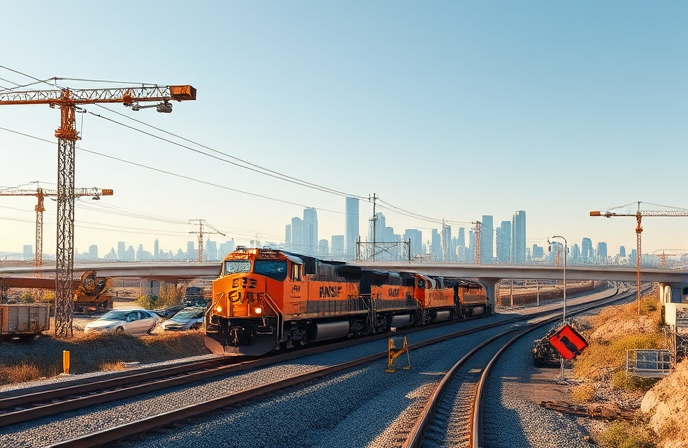
Northwest Washington Receives Long-Awaited Funding Boost for Critical Railway Infrastructure Projects
U.S. Representative Rick Larsen (D-Wash.) last week announced the release of federal transportation funds earmarked for several projects across Northwest Washington, significantly impacting regional railway infrastructure. The U.S. Department of Transportation (USDOT) has finally obligated the funds initially awarded during the Biden administration, which were held pending review under the Trump administration. This announcement, made last week, directly impacts local governments in Snohomish and Skagit counties. The primary objective of the funding is to bolster safety, reduce congestion, and modernize the region’s rail network. This article examines the key projects receiving funding, their impact on railway operations, and the broader implications for the region’s transportation infrastructure.
Funding Release: A Strategic Investment in Railway Safety
The USDOT’s decision to release the funds is a significant step towards improving railway safety and efficiency in Northwest Washington. The projects, awarded over several fiscal years, address critical infrastructure needs, focusing on grade separations and risk mitigation. The funds were held up for a period of time, causing delays to the original project schedules. With the funds now available, local authorities can now move forward with project implementation.
Everett Grade Separation and Safety Enhancements
The city of Everett has been awarded $18.1 million (FY2024) to eliminate two dangerous grade crossings near the Smith Island railroad terminal. This project involves constructing an overpass and a new integrated roundabout, a strategic move designed to significantly reduce the risk of accidents and improve traffic flow. Grade crossings, where railway lines intersect roadways at the same level, present inherent safety hazards. Replacing these crossings with grade separations is a standard practice in modernizing railway infrastructure and is a proactive measure to mitigate potential risks and ensure public safety. BNSF Railway, which operates in this area, will also experience benefits from improved operational efficiency.
Burlington’s Grade Separation Feasibility Study
The city of Burlington is set to receive $2 million (FY2023) to conduct a detailed study to identify the most suitable location among its 16 grade crossings for a grade separation project. The goal is to determine the optimal solution to improve safety and relieve traffic congestion. This is the initial planning stage for a critical infrastructural upgrade and will guide future investment decisions. This approach is critical for ensuring that any construction is in the ideal location to maximize the positive impacts.
Culvert Replacement and Environmental Remediation in Acme
The Nooksack Indian Tribe is allocated $1.2 million (FY2022) to replace a culvert under a BNSF Railway line in Acme, addressing environmental concerns and infrastructure integrity. Culvert replacement contributes to environmental preservation as well as reducing the risk of future erosion or failure. This project demonstrates a commitment to both environmental stewardship and rail infrastructure maintenance. Removing the culvert from Jones Creek will both help mitigate environmental concerns and also increase the safety and reliability of the railway line, which is critical for freight operations in the region.
Conclusion
The release of these federal funds represents a crucial investment in the future of Northwest Washington’s railway infrastructure. The projects, spanning from Everett to Acme, will provide safety enhancements, reduce traffic congestion, and enhance environmental protection, and will contribute significantly to the overall efficiency of the region’s transportation network. For BNSF Railway and other key stakeholders, these infrastructure improvements will lead to improved operational efficiency and lower maintenance costs. These improvements are a step towards supporting economic growth and enhancing the overall quality of life for residents. The long-term impact is clear: a safer, more efficient, and more sustainable railway system ready for the future. The continued dedication to infrastructure investment by federal, state, and local governments will be crucial to long-term success and economic advancement.

Railway infrastructure, rolling stock and transport technologies specialist focused on global rail industry developments, high-speed rail systems, signaling technologies and freight transportation. Covering railway investments, public transport modernization, rail operations and international mobility projects across Europe, Asia and North America.
RELATED POSTS

October 1, 2026 7:09 am
United States regulators confirmed a September 30 deadline for the...

October 4, 2026 5:14 pm
Alstom secured a CA$4.7 billion order from VIA Rail Canada...

October 6, 2026 2:14 am
Union Pacific launched export rail shipments with Ferromex to deliver...

October 1, 2026 12:13 am
Illinois approved $1.5 billion annually for the Northern Illinois Transit...

October 8, 2026 1:15 pm
Alstom secured a €1bn contract to build 13 automated trains,...

October 1, 2026 6:10 am
Amtrak approved a System Expansion Committee on July 30 to...