
Turkey’s High-Speed Rail: Assystem’s Crucial Role
The Turkish Ispartakule-Çerkezköy high-speed rail project, spanning 67 kilometers and valued at over €1 billion, leverages Assystem’s expertise in engineering and project management to enhance regional connectivity and integrate Turkey more closely into the European transport network.
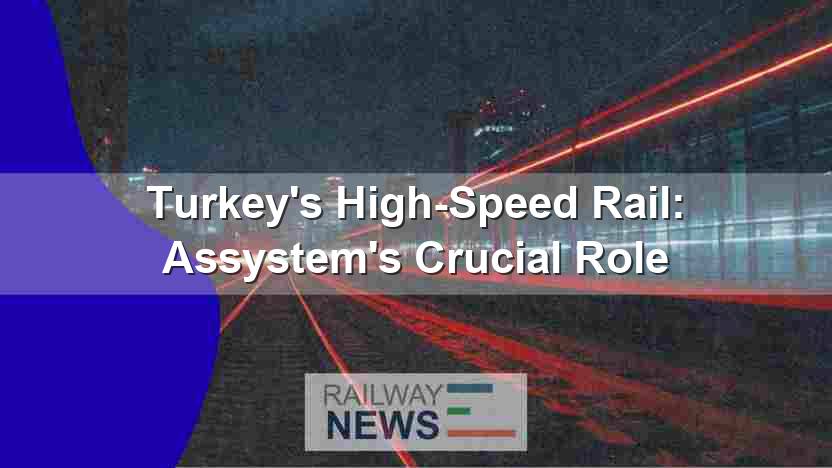
This article explores the significant Ispartakule-Çerkezköy high-speed rail project in Turkey, focusing on the crucial role of Assystem, a French engineering firm, in its development and execution. The project, spanning 67 kilometers, represents a substantial investment in Turkey’s infrastructure, aiming to enhance regional connectivity and integrate the nation more effectively into the Trans-European Transport Network (TEN-T). This analysis will examine the project’s scope, technical specifications, the contribution of Assystem’s expertise, the financial backing securing the project, and the broader implications for Turkey’s transportation sector and its commitment to sustainable development. The project’s implementation highlights the increasing importance of international collaboration in large-scale infrastructure endeavors, incorporating best practices in railway engineering and sustainable transport solutions. The analysis will also look at the implications of adopting European Rail Traffic Management System (ERTMS) Level 1, its benefits, and its implications for interoperability with the wider European rail network. This detailed examination will reveal the strategic significance of this rail line for Turkey’s economic growth and its commitment to modern, efficient, and environmentally conscious transportation.
Assystem’s Role in Project Management
Assystem, a prominent player in the engineering and project management sector, has been entrusted with overseeing the implementation of the Ispartakule-Çerkezköy high-speed rail line. Their 51-month contract encompasses a wide range of responsibilities, including providing technical support to the Project Implementation Unit (PIU) of the Director General of Infrastructure Investment (AYGM). This support extends to environmental and social impact assessments, ensuring compliance with all relevant regulations and standards. Beyond environmental considerations, Assystem will also play a critical role in the acquisition and management of contracts, training the AYGM’s PIU personnel, and providing ongoing technical railway engineering support throughout the project lifecycle. Their contribution goes beyond mere project oversight; they are instrumental in ensuring the efficient and effective deployment of resources and adherence to the project’s timeline and budget.
Technical Specifications and Technological Integration
The Ispartakule-Çerkezköy railway line is designed to be a double-track, electrified high-speed route, capable of accommodating trains traveling at speeds up to 200 km/h. The adoption of European Rail Traffic Management System (ERTMS) Level 1 is a key technological feature. ERTMS is a signaling and train control system designed to enhance safety and efficiency in railway operations. Level 1 represents a significant step towards interoperability with other European rail networks, simplifying cross-border operations and enhancing the overall effectiveness of the transport network. The integration of ERTMS is a critical element reflecting Turkey’s commitment to aligning its rail infrastructure with European standards and best practices. Additionally, the project’s specifications include robust power supply and auxiliary systems, critical for the reliable and safe operation of high-speed trains.
Financial Backing and International Collaboration
The substantial financial investment required for this project underlines its significance. The Asian Infrastructure Investment Bank (AIIB) has committed $338.02 million (€300 million), complemented by a further $169.01 million (€150 million) in loans from the European Bank for Reconstruction and Development (EBRD). This collaborative funding approach highlights the international confidence in Turkey’s infrastructure development plans and the project’s potential for positive regional impact. The involvement of multiple international financial institutions showcases the project’s strategic importance and its alignment with broader regional and European transportation goals. The robust financial framework ensures the project’s financial viability and minimizes risks throughout its execution.
Strategic Implications for Turkey’s Transport Sector
The Ispartakule-Çerkezköy high-speed rail line is more than just a transportation link; it represents a strategic investment in Turkey’s future. By enhancing regional connectivity, the project will boost economic growth, facilitating efficient movement of goods and people. Its integration into the TEN-T network will improve Turkey’s integration with the wider European transport system, fostering international trade and tourism. Moreover, the project demonstrates Turkey’s commitment to sustainable transportation, minimizing carbon emissions through the use of high-speed rail, a more environmentally friendly mode of transport compared to road or air travel. The adoption of modern technologies like ERTMS also contributes to enhanced safety and efficiency within the transportation sector. This project serves as a model for future high-speed rail development across the country, furthering Turkey’s ambition to develop a world-class transport network.
Conclusions
The Ispartakule-Çerkezköy high-speed rail project embodies Turkey’s commitment to modernizing its infrastructure and integrating its transport network with Europe. Assystem’s significant role in project management, encompassing technical support, environmental compliance, and training, underscores the complexity and importance of this undertaking. The project’s technical specifications, featuring ERTMS Level 1 and a focus on high-speed operation, reflect a commitment to both efficiency and safety. The substantial financial backing from the AIIB and EBRD highlights the international confidence in the project’s viability and its contribution to regional development. The project’s impact extends beyond immediate infrastructure improvements; it will drive economic growth, enhance international connectivity, and showcase Turkey’s commitment to sustainable transportation. To summarize, the successful implementation of this project will serve as a crucial benchmark for future rail infrastructure development within Turkey, further solidifying its position within the European transport network and showcasing its dedication to modern, sustainable, and efficient transportation solutions. The lessons learned and the expertise gained throughout this project’s life cycle will prove invaluable in shaping Turkey’s future rail infrastructure projects and its contribution to regional and international transport networks.

Railway infrastructure, rolling stock and transport technologies specialist focused on global rail industry developments, high-speed rail systems, signaling technologies and freight transportation. Covering railway investments, public transport modernization, rail operations and international mobility projects across Europe, Asia and North America.
RELATED POSTS

September 5, 2026 4:19 pm
CPK launched formal tender talks with four consortia to design...

September 5, 2026 7:14 pm
HS2 Ltd signed renegotiated civils contracts with EKFB and Align...

September 6, 2026 4:12 am
Alstom delivered the first of 100 new G Class trams...
September 6, 2026 8:17 am
DB InfraGO reopened the Nuremberg-Regensburg line in Bavaria on 31...
September 5, 2026 6:17 pm
Universal Signalling won a deal to install its U-Cross system...
September 6, 2026 12:20 pm
Indian Railways ordered a probe after a fire destroyed 2...