
Spain’s High-Speed Rail: Extremadura’s €890M Boost
High-speed rail infrastructure in Spain, particularly the €890 million project between Madrid and Extremadura, represents a significant investment aimed at improving national and international connectivity, boosting regional economic development, and contributing to broader European transport goals.
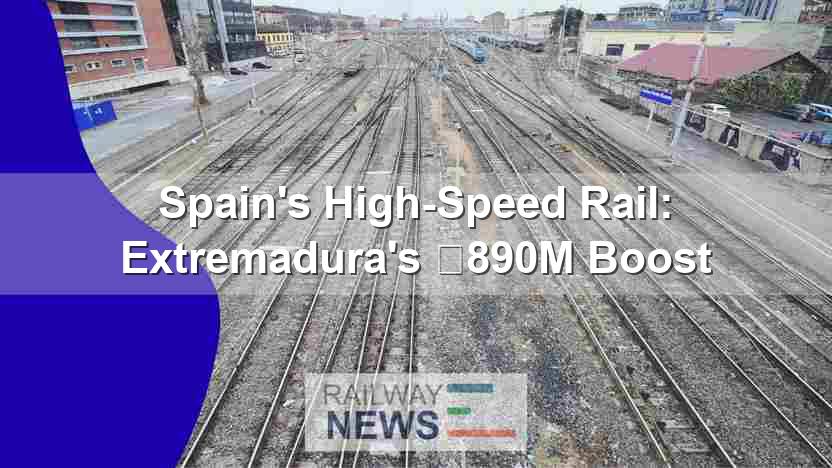
High-Speed Rail Development in Spain: A Case Study of the Madrid-Extremadura Line
This article examines the significant investment in high-speed rail infrastructure in Spain, specifically focusing on the €890 million loan provided by the European Investment Bank (EIB) for the Madrid-Extremadura high-speed rail line. The project represents a crucial step in improving Spain’s national and international connectivity, boosting regional economic development, and contributing to broader European transport goals. This analysis will delve into the economic and social impacts of this substantial investment, exploring its role within the larger context of the European Atlantic Corridor and considering the project’s potential for job creation and regional cohesion. Additionally, we will examine the financing mechanisms employed and the strategic implications for Spain’s national railway network (ADIF).
Financing and Project Scope
The EIB’s commitment of €890 million signifies a major financial undertaking, demonstrating the European Union’s (EU) dedication to upgrading Spain’s railway infrastructure. This funding is channeled through ADIF Alta Velocidad (Adif AV), the Spanish high-speed rail company. The initial tranche of €300 million has already been disbursed, reflecting the project’s phased implementation. The 282km high-speed rail link between Talayuela and Badajoz will connect several key cities in Extremadura (Navalmoral de la Mata, Plasencia, Cáceres, Mérida, and Badajoz), significantly improving regional accessibility. This project is not just a regional initiative, but a crucial component of the wider European Atlantic Corridor, aiming to enhance connectivity between the Iberian Peninsula and the rest of Central Europe. This integration into a larger European network underscores the project’s pan-European significance.
Economic and Social Impacts
The construction phase alone is projected to generate approximately 17,000 jobs, providing a much-needed boost to the Spanish economy, especially vital during economic recovery from the COVID-19 pandemic. Beyond job creation, the project’s completion will have long-term economic benefits for Extremadura, fostering regional development by improving access to markets and facilitating trade. The improved connectivity will enhance tourism, attracting both domestic and international visitors. Reduced travel times will also benefit commuters and businesses, creating a more efficient transportation network and supporting economic growth throughout the region. Additionally, this improved infrastructure can contribute to a more sustainable transportation system, reducing reliance on environmentally damaging road transport.
Strategic Importance for Spain and Europe
The Madrid-Extremadura high-speed rail line plays a pivotal role in Spain’s broader national transport strategy. It strengthens connectivity within the country, reducing regional disparities and promoting greater economic integration. The project also improves connections with neighboring Portugal, furthering collaboration within the Iberian Peninsula and strengthening trade links. More broadly, the project’s alignment with the European Atlantic Corridor illustrates Spain’s commitment to integrating its infrastructure into the larger European network. This strengthens Spain’s position within the EU and facilitates easier trade and movement of people between Spain and other European countries. The project reinforces the EU’s focus on investing in high-speed rail, which is recognized as a cornerstone of efficient and sustainable transportation systems.
Conclusion
The EIB’s €890 million investment in the Madrid-Extremadura high-speed rail line represents a significant commitment to improving Spain’s transport infrastructure and fostering economic development. The project’s impact extends beyond regional benefits, contributing to broader European connectivity through its integration into the European Atlantic Corridor. The substantial job creation during construction and the long-term economic benefits of improved connectivity are key drivers behind this investment. The strategic importance of this project for both Spain and Europe cannot be overstated. By connecting remote regions to major population centers and international transportation networks, the project enhances regional accessibility, fosters economic growth, and promotes sustainable transportation. The success of this project will not only improve the lives of residents in Extremadura but will also serve as a model for future infrastructure investments across Europe, showcasing the potential of high-speed rail to drive economic and social development. The project’s success underscores the need for continued investment in high-speed rail infrastructure, not only within Spain, but also across Europe, to support economic growth, enhance regional development, and contribute towards a sustainable future. The substantial economic and social benefits, combined with its integration into a pan-European transport network, clearly justify the considerable investment.

Railway infrastructure, rolling stock and transport technologies specialist focused on global rail industry developments, high-speed rail systems, signaling technologies and freight transportation. Covering railway investments, public transport modernization, rail operations and international mobility projects across Europe, Asia and North America.
RELATED POSTS

September 5, 2026 4:19 pm
CPK launched formal tender talks with four consortia to design...

September 5, 2026 7:14 pm
HS2 Ltd signed renegotiated civils contracts with EKFB and Align...

September 6, 2026 4:12 am
Alstom delivered the first of 100 new G Class trams...
September 6, 2026 8:17 am
DB InfraGO reopened the Nuremberg-Regensburg line in Bavaria on 31...
September 5, 2026 6:17 pm
Universal Signalling won a deal to install its U-Cross system...
September 6, 2026 12:20 pm
Indian Railways ordered a probe after a fire destroyed 2...