
GWR Wins Rail Contract: Future of UK Rail?
The awarding of the National Rail Contract extension to Great Western Railway underscores the UK government’s confidence in the company’s operational capabilities and service improvements, reflecting strategic investments and technological advancements aimed at enhancing customer satisfaction and sustainability within the rail network.
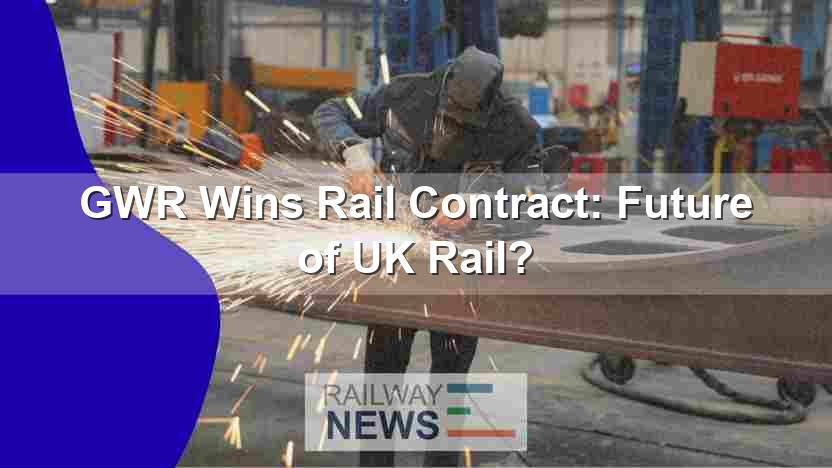
This article examines the awarding of a new National Rail Contract (NRC) to Great Western Railway (GWR) by the UK’s Department for Transport (DfT), analyzing its implications for the railway network and the wider industry. The contract extension, securing GWR’s operation of the Greater Western franchise until at least June 2025, provides a valuable case study in the complexities of railway franchising, the evolving relationship between government and private operators, and the ongoing challenges of delivering sustainable and customer-centric rail services in a dynamic operating environment. We will delve into the factors influencing the DfT’s decision, explore GWR’s performance and future plans under the new contract, and consider the broader context of the UK’s railway modernization strategy. The analysis will also touch upon the wider industry trends, such as the increasing role of technology and the pursuit of environmental sustainability within the railway sector.
The GWR National Rail Contract: A Detailed Look
The awarding of the NRC to GWR represents a significant development in the UK rail landscape. The contract, extending to June 2025 with a possible three-year option, signifies the DfT’s confidence in GWR’s operational capabilities and its commitment to ongoing service improvements. This decision is likely influenced by several factors, including GWR’s demonstrated performance in recent years, its commitment to improving customer satisfaction (demonstrated by a rise from 81% to 91% satisfaction), and its crucial role in maintaining essential services during the COVID-19 pandemic. The contract extension provides much-needed operational stability for GWR, enabling the company to implement long-term strategies for network development and service enhancement.
GWR’s Performance and Future Plans
GWR’s success, as evidenced by increased customer satisfaction, is attributable to several factors including the introduction of high-speed Intercity Express Trains (IETs) and significant timetable revisions in December 2019. These improvements, driven by strategic investment and operational efficiency, highlight GWR’s capacity to adapt to evolving passenger demands and implement infrastructural upgrades to enhance service quality. Under the new NRC, GWR plans to continue focusing on enhancing the customer experience, developing services aligned with evolving passenger needs, and prioritizing sustainable practices. This commitment signifies a broader industry-wide shift toward a more passenger-centric and environmentally responsible approach to railway operation. This continued commitment to sustainable practices aligns with wider governmental aims to modernize the railway network.
The Broader Context: UK Rail Modernization
The GWR contract extension is situated within the broader context of the UK government’s ambitious Plan for Rail. This plan aims to modernize the national railway network, improving infrastructure, enhancing services, and fostering greater efficiency. The contract award reflects the DfT’s ongoing commitment to its modernization objectives and its reliance on private sector partnerships to achieve them. The focus on customer satisfaction and service improvements underlines the central role of passenger experience in the government’s strategy. This underscores the evolving relationship between the public sector regulator and private operators, with a stronger emphasis on performance-based contracting and the pursuit of measurable improvements in service delivery.
Challenges and Opportunities
Despite the positive aspects of the GWR NRC, challenges remain. The railway industry faces ongoing pressures, such as fluctuating passenger demand, infrastructure limitations, and the need for continuous investment in rolling stock and technological upgrades. The success of the contract will depend on GWR’s ability to navigate these challenges effectively, delivering sustainable improvements while maintaining financial viability. The contract also presents significant opportunities, allowing GWR to implement innovations in areas such as digitalization, data analytics, and sustainable transport solutions. This will involve investment in new technologies for improved efficiency, enhanced safety features, and improved customer service provisions. The implementation of these advancements is crucial for the long-term success of GWR and the wider UK rail network.
Conclusion
The awarding of the National Rail Contract (NRC) to Great Western Railway (GWR) marks a significant milestone in the ongoing modernization of the UK’s rail network. The contract extension, extending to at least June 2025, builds upon GWR’s demonstrably improved performance, highlighted by increased customer satisfaction rates. The DfT’s decision reflects the government’s confidence in GWR’s operational capabilities and its strategic alignment with the overarching Plan for Rail. While the contract provides a framework for GWR to further enhance services and implement sustainable practices, challenges remain. These challenges include maintaining financial stability, managing fluctuating passenger demand, and investing in technological innovations. The successful execution of this contract will hinge on GWR’s capacity to address these challenges while seizing opportunities in areas like digitalization and sustainable transport, ultimately contributing to a more efficient, passenger-centric, and environmentally conscious railway system. This case study illustrates the intricate interplay between government policy, private sector involvement, and the ongoing evolution of the railway industry. The focus on customer satisfaction and sustainability underscores a shift toward a more holistic approach to railway management, one that considers not only operational efficiency but also the broader social and environmental implications of rail travel.

Railway infrastructure, rolling stock and transport technologies specialist focused on global rail industry developments, high-speed rail systems, signaling technologies and freight transportation. Covering railway investments, public transport modernization, rail operations and international mobility projects across Europe, Asia and North America.
RELATED POSTS

September 5, 2026 4:19 pm
CPK launched formal tender talks with four consortia to design...

September 6, 2026 4:12 am
Alstom delivered the first of 100 new G Class trams...

September 5, 2026 7:14 pm
HS2 Ltd signed renegotiated civils contracts with EKFB and Align...
September 5, 2026 6:17 pm
Universal Signalling won a deal to install its U-Cross system...
September 6, 2026 8:17 am
DB InfraGO reopened the Nuremberg-Regensburg line in Bavaria on 31...
September 6, 2026 12:20 pm
Indian Railways ordered a probe after a fire destroyed 2...