
Why EN 16704-1 Changes European Track Safety
EN 16704-1: The European standard for railway track work safety. Discover its principles, risk management, and protection measures safeguarding personnel on all sites.
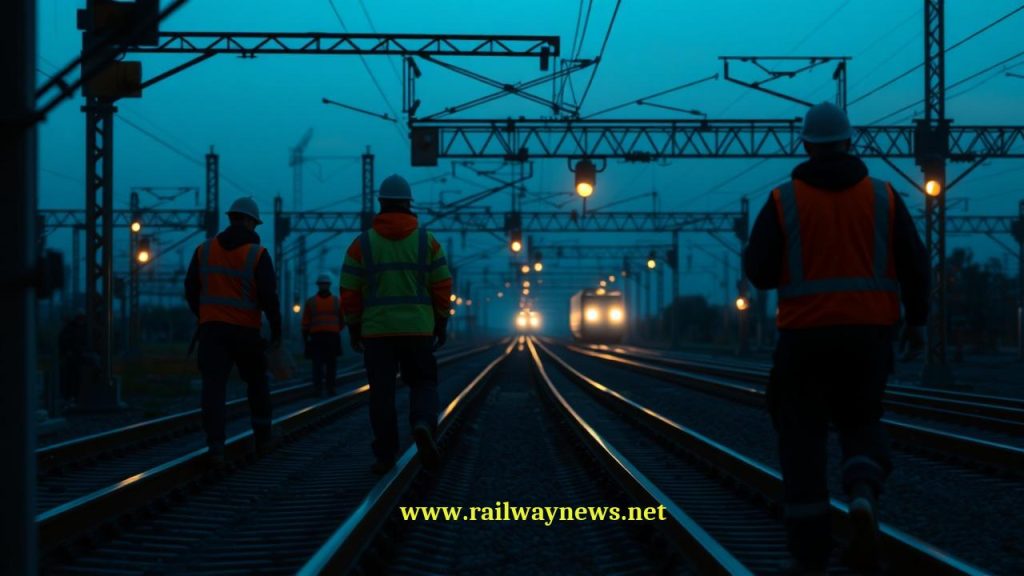
What is EN 16704-1: A Framework for Track Work Safety
EN 16704-1 is a European Standard that specifies the common principles for ensuring the safety of personnel working on or near railway tracks. Its primary purpose is to manage railway-specific risks for both fixed and mobile work sites by establishing a harmonized safety framework for infrastructure managers, railway undertakings, and contractors across Europe.
This standard focuses exclusively on the dangers arising from railway operations, such as moving trains and electrified infrastructure (overhead lines or third rail). It does not cover general occupational health and safety risks like slips, trips, falls, or exposure to hazardous materials, which are addressed by other regulations.
Core Principles and Objectives of EN 16704-1
The standard is built upon fundamental safety management principles aimed at creating a secure working environment on the track. Its objectives are to standardize procedures, enhance communication, and systematically reduce risks.
- Risk Assessment: The foundation of any safety plan under EN 16704-1 is a thorough risk assessment. This process involves identifying all potential railway-specific hazards, evaluating their likelihood and severity, and determining appropriate control measures.
- Hierarchy of Controls: The standard implicitly promotes a hierarchy of safety controls. The highest priority is to eliminate the risk entirely (e.g., by taking full possession of the track and isolating power). Where this is not feasible, risks are mitigated through warning systems and defined procedures.
- Common Terminology and Processes: By establishing a common set of principles and definitions, the standard aims to ensure that safety procedures are understood and applied consistently, which is crucial for cross-border operations and contractors working on different networks.
- Clear Roles and Responsibilities: It emphasizes the need for clearly defined roles, particularly for the “Person in Charge” of the work site, who is responsible for implementing and overseeing all safety measures.
Key Technical Aspects of the Standard
EN 16704-1 outlines the technical considerations and methodologies for protecting work sites. It categorizes risks and the corresponding protective measures that must be considered during the planning and execution phases of track work.
Railway-Specific Risks Identified
The standard requires a focus on hazards unique to the railway environment:
- Collision with Trains: The primary risk of being struck by a train on the line of work, an adjacent line, or through shunting movements.
- Electrocution: Contact with or proximity to live Overhead Line Equipment (OLE) or third/fourth rail conductor systems.
- Movement of Engineering Machinery: Risks associated with the movement of on-track machines, rail-road vehicles, and other plant within the work site.
- Adjacent Line Open (ALO) Working: The specific dangers posed by trains operating on lines adjacent to the work site, including aerodynamic effects and the potential for personnel to stray into the path of a train.
Principles for Protection Measures
To mitigate these risks, the standard details principles for various protection methods:
- Safeguarding the Work Site: This is the most robust form of protection, creating a “green zone” where no rail traffic can enter. It is typically achieved by:
- Possession: Officially blocking a section of track to all train movements, controlled by a signaller.
- Line Blockage: A local protection measure, often using physical devices on the track, to prevent trains from entering the work area.
- Electrical Isolation: De-energizing and earthing overhead lines or conductor rails to allow safe work.
- Warning Systems: Used when safeguarding is not practicable. These systems alert workers to the approach of a train, giving them time to reach a position of safety. This includes:
- Lookouts: Competent persons positioned to observe approaching trains and provide a timely warning (human warning).
- Automatic Track Warning Systems (ATWS): Technical systems using train detection equipment to automatically trigger audible and visual alarms.
- Communication Protocols: Establishing clear, unambiguous communication between the work site, the signaller, and train drivers is critical. The standard mandates structured communication procedures to request and grant line blockages, report emergencies, and hand back the track after work is complete.
Differentiating Between Fixed and Mobile Work Sites
A key distinction within EN 16704-1 is the difference between fixed and mobile work sites, as their protection requirements vary significantly. The following table provides a comparison based on the principles of the standard.
| Feature | Fixed Work Site | Mobile Work Site |
|---|---|---|
| Definition | A work site that remains in one location for a defined period. Personnel and equipment are largely stationary. | A work site that moves along the track as work progresses. It has a leading and trailing edge. |
| Typical Duration | Can range from short-term (a few hours) to long-term (days or weeks). | Generally short-term and continuous. The work itself constitutes movement. |
| Common Protection Methods | Often protected by full safeguarding (possession/line blockage). Warning systems can be used if safeguarding is not possible. | Frequently protected by warning systems (ATWS or Lookouts) as continuous possession may be impractical. Can also operate within a larger possession. |
| Examples | Track renewal, switch and crossing replacement, bridge repair, platform work, OLE structure installation. | Tamping, ballast regulating, track inspection patrols, vegetation management, ultrasonic rail flaw detection. |
The Role of the Person in Charge of the Work Site
EN 16704-1 places significant responsibility on a nominated competent individual, often known as the Person in Charge of Work (PICOW) or an equivalent title. This person is the single point of contact for safety on site and is responsible for:
- Implementing the pre-agreed Safe System of Work plan.
- Conducting on-site briefings to ensure all personnel understand the risks and safety arrangements.
- Confirming that all protection measures (e.g., line blockages, isolations) are correctly in place before work begins.
- Managing access and egress to the work site.
- Ensuring the track is clear of all staff, tools, and equipment before handing the line back for operational traffic.
Importance and Impact on the Railway Industry
The adoption of EN 16704-1 provides a major step forward in harmonizing safety practices across the European railway network. By creating a common framework, it helps to ensure a consistently high level of safety for track workers, regardless of the country or infrastructure manager they are working for. This standardization simplifies planning for cross-border projects, improves the mobility of skilled labor, and ultimately contributes to the core mission of preventing accidents and fatalities on the railway.
Frequently Asked Questions (FAQ) about EN 16704-1

Railway infrastructure, rolling stock and transport technologies specialist focused on global rail industry developments, high-speed rail systems, signaling technologies and freight transportation. Covering railway investments, public transport modernization, rail operations and international mobility projects across Europe, Asia and North America.