
Why EN 16116-2 Changes European Freight Rail Safety
EN 16116-2 sets crucial safety standards for freight wagon access, designing steps, handrails, and platforms to protect staff and enhance European rail interoperability.
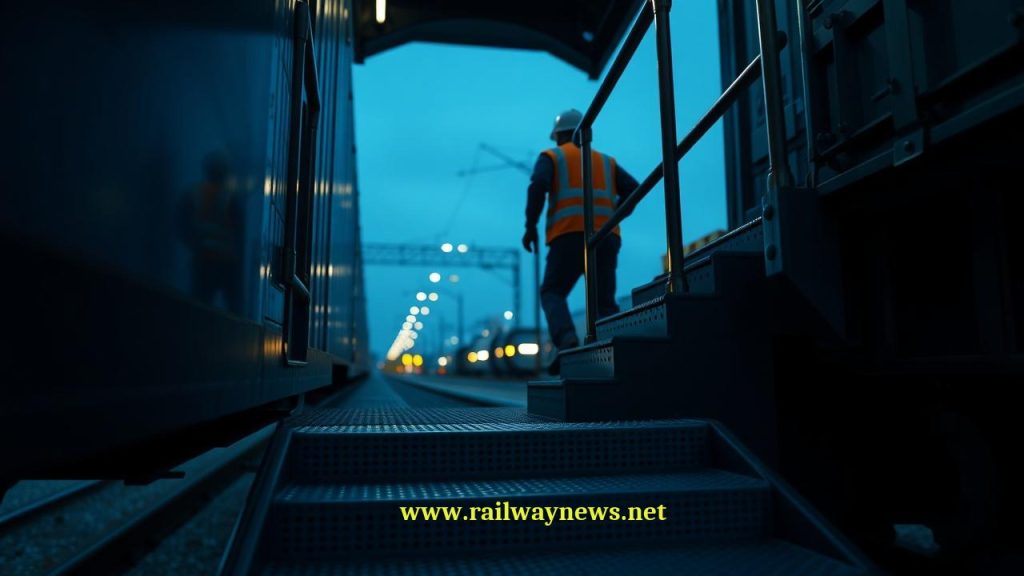
Understanding EN 16116-2: A Technical Guide to Staff Access on Freight Wagons
EN 16116-2 is a European Standard that specifies the design requirements for steps, handrails, and associated access systems intended for use by staff on railway freight wagons. Its primary objective is to ensure the safety of personnel during coupling, uncoupling, and other operational tasks by standardizing the ergonomics, dimensions, and strength of access equipment.
This standard is Part 2 of the EN 16116 series and is exclusively focused on freight wagons. It provides manufacturers, operators, and regulatory bodies with a common framework for designing, constructing, and verifying safe access points, thereby minimizing the risk of slips, trips, and falls, which are significant hazards in the rail freight industry.
Core Objectives and Importance in the Railway Sector
The implementation of EN 16116-2 is crucial for enhancing operational safety and promoting interoperability across the European rail network. Its key objectives include:
- Harmonization of Safety Standards: By providing a unified set of requirements, the standard ensures a consistent level of safety for staff, regardless of the wagon’s country of origin or operation.
- Risk Mitigation: It directly addresses the common risks associated with accessing wagons, such as working at height, adverse weather conditions, and poor visibility, by mandating features like slip-resistant surfaces and specific geometric layouts.
- Ergonomic Design: The standard promotes designs that support natural human movement, such as the “three-point contact” rule, ensuring that staff can maintain a stable grip and footing while ascending, descending, or moving along the wagon.
- Compliance with Interoperability Directives: Adherence to EN 16116-2 is a key element in demonstrating compliance with the Technical Specifications for Interoperability (TSI) for wagons (WAG TSI), which is mandatory for new vehicles intended for use on the trans-European network.
Key Technical Requirements of EN 16116-2
The standard explores precise technical specifications for various access components. These requirements are based on anthropometric data and extensive risk analysis of railway operations.
Design and Dimensions of Steps
Steps are one of the most critical access components. The standard defines strict rules for their geometry and physical properties:
- Dimensions: The standard specifies minimum usable width and depth for step treads to ensure adequate foot support. The vertical distance (riser height) between consecutive steps is also controlled to ensure a comfortable and safe climbing rhythm.
- Slip Resistance: Step surfaces must be designed to provide a high degree of slip resistance. This is typically achieved through perforated, serrated, or expanded metal designs that prevent the accumulation of water, snow, ice, and debris.
- Positioning: The location of the lowest step relative to the rail level is defined to ensure it is accessible from the ground. Clearances around the steps must be sufficient to avoid creating trapping or snagging hazards for clothing or equipment.
- Structural Integrity: Steps must be capable of withstanding specified vertical and horizontal static loads without permanent deformation, simulating the forces exerted by staff during use.
Specifications for Handrails and Grab Handles
Handrails provide essential support and stability for personnel. The requirements ensure they are easy and safe to use.
- Profile and Diameter: Handrails must have a cross-section that is easy to grip securely, typically a circular profile with a diameter falling within a specified range (e.g., 25 mm to 40 mm).
- Clearance: A minimum clearance must be maintained between the handrail and any adjacent structure to prevent hand-trapping and allow for a full grip, even when wearing gloves.
- Continuity and Positioning: Handrails should be continuous where possible and positioned at an ergonomic height. They must be logically placed to assist movement along access routes and at transition points, such as from a step to a platform.
- Load Capacity: Like steps, handrails and their fixings must be strong enough to withstand significant forces applied in any direction, ensuring they do not fail under load.
Requirements for Platforms and Walkways
For areas where staff need to stand or move along the wagon, the standard sets out requirements for platforms and walkways.
- Surface and Dimensions: These surfaces must also be slip-resistant and have a defined minimum width to allow safe passage.
- Edge Protection: To prevent falls from height, platforms and walkways above a certain height from the rail must be fitted with edge protection, such as toeboards and railings, which also have their own dimensional and strength requirements.
Summary of Key Geometrical Requirements
The following table provides a simplified overview of some typical dimensional constraints found within EN 16116-2. Note that these are illustrative values and the standard itself contains more detailed specifications and exceptions.
| Component | Parameter | Typical Requirement |
|---|---|---|
| Step | Minimum Usable Width | ≥ 300 mm |
| Step | Minimum Usable Depth | ≥ 150 mm |
| Step | Vertical Distance (Riser) | ≤ 350 mm |
| Handrail | Grip Diameter | 25 mm – 40 mm |
| Handrail | Minimum Hand Clearance | ≥ 60 mm |
| Platform / Walkway | Minimum Width | ≥ 400 mm |
| Edge Protection | Railing Height | ≥ 1100 mm from platform level |
Conclusion: A Pillar of Modern Freight Wagon Safety
EN 16116-2 is more than just a set of design rules; it is a fundamental pillar of occupational health and safety in the rail freight sector. By standardizing the design of steps, handrails, and access ways, it creates a safer, more predictable, and more efficient working environment for railway staff. For designers and manufacturers, adherence to this standard is essential for market access, legal compliance, and a commitment to protecting the personnel who keep the freight network moving.
Frequently Asked Questions (FAQ) about EN 16116-2
What is the primary purpose of EN 16116-2?
The primary purpose of EN 16116-2 is to establish standardized design and safety requirements for access systems (steps, handrails, platforms) used by staff on new freight wagons. This aims to minimize the risk of accidents like slips and falls and ensure a consistent level of safety across the European railway network.
Does EN 16116-2 apply to existing or refurbished freight wagons?
The standard is primarily intended for the design and construction of new freight wagons. Its application to existing or refurbished wagons is not mandatory unless specified by national regulations, specific project requirements, or contractual agreements between the operator and the refurbishment entity.
What is the key difference between EN 16116-1 and EN 16116-2?
The main difference lies in their scope. EN 16116-1 specifies access requirements for passenger rolling stock (locomotives, multiple units, coaches), focusing on both staff and passenger access. In contrast, EN 16116-2 is exclusively dedicated to the access requirements for staff on freight wagons, which have a very different operational context and design constraints.
Why is slip resistance a critical requirement in the standard?
Slip resistance is critical because railway staff often work outdoors in all weather conditions, including rain, snow, and ice. Additionally, surfaces can be contaminated with oil or grease. A highly slip-resistant surface, typically achieved with perforated or serrated metal, provides secure footing and drastically reduces the risk of falls, which can lead to serious injuries.

Railway infrastructure, rolling stock and transport technologies specialist focused on global rail industry developments, high-speed rail systems, signaling technologies and freight transportation. Covering railway investments, public transport modernization, rail operations and international mobility projects across Europe, Asia and North America.