
Why EN 15551 Changes European Rail Safety & Interoperability
Explore EN 15551, the European standard for railway buffers. It ensures critical safety, interoperability, and energy absorption for all rolling stock.
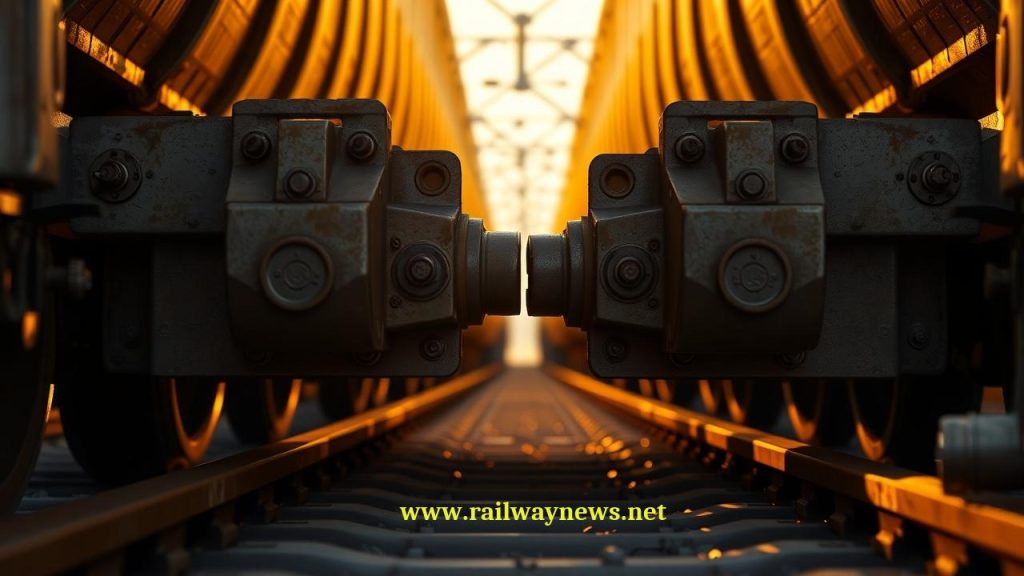
Understanding EN 15551: The European Standard for Railway Buffers
EN 15551 is a crucial European Standard (EN) that specifies the requirements for the design, manufacturing, and testing of buffers used on railway rolling stock. This standard is fundamental to ensuring the safety, reliability, and interoperability of trains operating across the European rail network by defining the performance characteristics of these critical energy-absorbing components.
Buffers are the primary interface between railway vehicles in a train consist, responsible for managing the longitudinal forces that occur during coupling, braking, and in-train dynamics. EN 15551 provides a harmonized technical framework for manufacturers and operators, ensuring that buffers can safely absorb and dissipate kinetic energy, protecting both the vehicle structure and its cargo or passengers.
Key Technical Requirements of EN 15551
The standard explores several technical aspects to ensure that buffers are fit for purpose across a wide range of operational scenarios. These requirements form the basis for the design, approval, and maintenance of all compliant buffers.
Energy Absorption and Buffering Capacity
The primary function of a buffer is to absorb energy. EN 15551 categorizes buffers based on their nominal energy absorption capacity, measured in kilojoules (kJ). This categorization ensures that the correct type of buffer is used for the specific vehicle and its intended service (e.g., heavy freight vs. passenger coaches).
- Categories: The standard defines several categories (e.g., Category A, B, C for freight wagons, Category L for locomotives) with specific minimum energy capacity and stroke length requirements.
- Energy Dissipation: It mandates that a significant portion of the absorbed energy must be dissipated (typically as heat in hydraulic buffers) rather than returned elastically. This prevents a “rebound” effect that could destabilize the train.
Static and Dynamic Characteristics
The performance of a buffer is defined by its force-stroke characteristic curve, which shows how much force is required to compress it by a certain distance. EN 15551 specifies requirements for both static and dynamic conditions.
- Static Characteristic: This is the buffer’s response to a slow, controlled compression. The standard defines an acceptable “envelope” or range for the force-stroke curve to ensure consistent and predictable behavior during gentle coupling operations.
- Dynamic Characteristic: This refers to the buffer’s performance during high-speed impacts. The standard requires dynamic tests to verify the buffer’s ability to absorb the specified energy capacity at operational impact speeds without failure.
Geometric and Mounting Requirements
For interoperability, all buffers must conform to strict dimensional and mounting specifications. This ensures that any two EN 15551 compliant vehicles can be coupled safely and effectively.
- Buffer Head: The shape and dimensions of the buffer head (the contact surface) are standardized. This typically includes specifications for flat or spherically radiused surfaces to allow for negotiation of curves and turnouts.
- Mounting: The standard defines the hole patterns and dimensions for attaching the buffer casing to the vehicle’s headstock.
- Stroke Length: The total travel distance of the buffer plunger is a critical parameter, linked directly to its energy absorption category.
Materials and Construction
EN 15551 requires that buffers be constructed from materials capable of withstanding the harsh railway environment. This includes resistance to high repetitive loads, fatigue, corrosion, and extreme temperatures (typically from -25°C to +50°C, with special provisions for colder climates).
Marking and Identification
Every buffer must be clearly and permanently marked with essential information for traceability and maintenance. This typically includes:
- Manufacturer’s name or trademark
- Buffer type and category
- Year of manufacture
- Serial number
- Mark of conformity (CE mark)
Buffer Categories as Defined in EN 15551
The standard classifies buffers into distinct categories to match the operational demands of different types of rolling stock. The table below summarizes the main categories for conventional rail applications.
| Category | Primary Application | Nominal Energy Capacity (kJ) | Key Characteristics |
|---|---|---|---|
| Category A | Freight Wagons (Standard) | ~30 kJ | Standard capacity for general freight, often with a stroke of 105 mm. |
| Category B | Freight Wagons (High Capacity) | ~50 kJ | For wagons that are frequently shunted or carry sensitive goods, requiring higher energy absorption. |
| Category C | Freight Wagons (Very High Capacity) | ~75 kJ | Used in demanding applications, heavy-haul trains, or for vehicles with specific safety requirements. Longer stroke is typical. |
| Category L | Locomotives & Special Vehicles | Variable (often >80 kJ) | Designed for the higher masses and impact scenarios associated with locomotives. May feature specific housing and stroke characteristics. |
Testing and Validation Procedures
To prove compliance with EN 15551, buffers must undergo a rigorous series of tests. These are divided into two main types: type tests and routine tests.
Type Tests
These are extensive tests performed once on a new buffer design to validate its performance against all requirements of the standard. Key type tests include:
- Static Characteristic Test: Verifying the force-stroke curve under slow compression.
- Dynamic Capacity Test: A drop-weight test to confirm the buffer can absorb its nominal energy capacity at speed.
- Endurance Test: Subjecting the buffer to thousands of compression cycles to test for fatigue and wear.
- Leakage Test: For hydraulic buffers, ensuring the sealing system is effective over time.
- Climatic Test: Verifying performance at the extremes of the specified operating temperature range.
Routine Tests
These are less extensive tests performed on every buffer produced to ensure consistent manufacturing quality. They typically include a simplified static characteristic test and a visual inspection to ensure it matches the approved type-tested design.
Conclusion: The Importance of EN 15551
EN 15551 is more than just a technical document; it is a cornerstone of modern railway safety and efficiency. By standardizing the performance, dimensions, and testing of buffers, it ensures that vehicles from different manufacturers and countries can operate together seamlessly and safely. The standard’s focus on energy absorption and dissipation is critical for protecting rolling stock from structural damage during everyday operations and mitigating the consequences of low-speed collisions. For engineers, manufacturers, and operators in the railway sector, a thorough understanding of EN 15551 is essential for delivering safe and reliable products.

Railway infrastructure, rolling stock and transport technologies specialist focused on global rail industry developments, high-speed rail systems, signaling technologies and freight transportation. Covering railway investments, public transport modernization, rail operations and international mobility projects across Europe, Asia and North America.