
Why EN 15020 Changes European Rail Safety
Unlock seamless railway recovery! EN 15020 standardizes rescue couplers, ensuring safe, efficient connection and recovery of any disabled train, boosting interoperability and safety across networks.
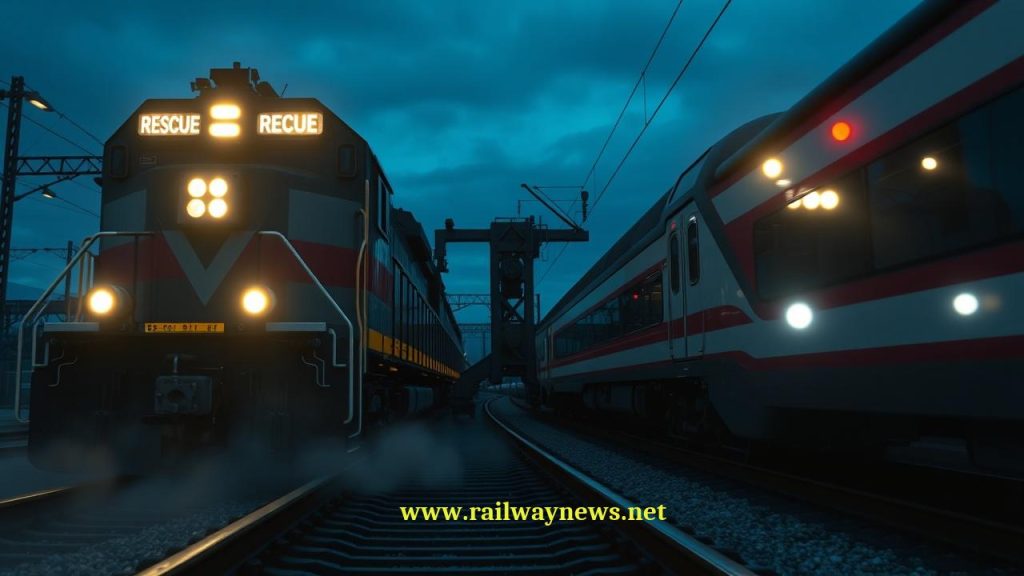
Understanding EN 15020: The Standard for Railway Rescue Couplers
EN 15020 is a European standard that specifies the performance requirements, specific interface geometry, and test methods for railway rescue couplers. Its primary purpose is to ensure that a disabled or failed train can be safely and efficiently recovered by a rescue vehicle, even if the two units have different native coupling systems.
This standard is critical for railway interoperability and safety. In an emergency, a standardized rescue coupler adapter allows a recovery locomotive to connect to any trainset compliant with the standard, significantly reducing downtime and ensuring passenger and operational safety across different rail networks.
Core Objectives and Scope of EN 15020
The main objective of EN 15020 is to define a universal “rescue interface” that can bridge the gap between various proprietary coupling systems used in the railway industry. By standardizing the requirements for these adapters, the standard ensures a predictable and reliable recovery process.
Scope of the Standard
The standard applies to the design and testing of rescue couplers intended for the recovery of mainline and urban railway vehicles. Key areas covered include:
- Mechanical Strength: Defining the minimum tensile and compressive forces the coupler must withstand.
- Interface Geometry: Specifying the precise physical dimensions of the coupling interface to guarantee mechanical compatibility.
- Operational Requirements: Outlining requirements for handling, weight, and the coupling procedure itself.
- Testing Procedures: Establishing a set of mandatory tests to verify that a coupler design meets all performance and safety criteria.
However, the standard explicitly does not cover the design of the rescue vehicle itself, the procedures for the rescue operation, or the use of these couplers for regular service (shunting or towing in normal operation).
Key Performance and Technical Requirements
EN 15020 sets forth stringent technical requirements to ensure the rescue couplers are robust, reliable, and safe for use in high-stakes recovery situations.
Mechanical Strength and Durability
A rescue coupler must be capable of withstanding significant longitudinal forces without failure or permanent deformation. The standard specifies minimum values for both static tensile (pulling) and compressive (pushing) loads. These requirements ensure the coupler can handle the immense forces involved in moving a multi-tonne, dead-weight trainset, often on gradients or in adverse weather conditions.
Interface Geometry and Compatibility
This is the cornerstone of the standard. EN 15020 defines a specific, non-proprietary coupler head geometry. Rescue couplers are typically designed as adapters, with one side featuring this standard EN 15020 interface and the other side featuring the native coupler of the rescue vehicle (e.g., a Type 10 automatic coupler or a standard draw hook). This allows a single rescue vehicle to be equipped with a set of adapters to recover trains with various systems, such as:
- Scharfenberg (Type 10) couplers
- BSI (BSI-Kompaktkupplung) couplers
- Wedgelock couplers
- Albert couplers
The geometric specification includes details on the coupler head profile, locking mechanisms, and alignment features, ensuring a secure physical connection can be established quickly and safely.
Operational and Handling Requirements
Since rescue couplers are often deployed manually in challenging environments, the standard includes requirements for ergonomics and ease of use. This includes a maximum weight for the components that must be handled by personnel, ensuring that the coupler can be mounted without specialized lifting equipment. The design must also facilitate a straightforward and rapid coupling and uncoupling process, which is critical during an emergency.
Summary of Key Parameters in EN 15020
The following table provides an overview of the critical aspects defined by the EN 15020 standard, highlighting the technical considerations for design and verification.
| Parameter | Specification Requirement | Technical Rationale |
|---|---|---|
| Interface Type | Defined standard head geometry. | Ensures universal compatibility between any compliant rescue vehicle and any compliant disabled train. |
| Static Tensile Strength | Specifies a minimum force (in kN) the coupler must withstand without failure. | Guarantees the coupler can safely pull the full weight of a disabled train under worst-case scenarios. |
| Static Compressive Strength | Specifies a minimum force (in kN) the coupler must withstand without buckling. | Ensures safety during braking or when pushing a trainset during recovery operations. |
| Manual Handling Weight | Sets a maximum weight limit for any single part that needs to be manually lifted. | Improves operational safety and speed by allowing personnel to deploy the coupler without mechanical aids. |
| Locking Mechanism | Must provide a secure, positive lock with a clear visual indication of engagement. | Prevents accidental uncoupling during the rescue operation, which would be a critical safety failure. |
| Environmental Operation | Must function correctly within a specified range of temperatures and environmental conditions. | Ensures reliability whether the rescue is performed in extreme cold, heat, rain, or snow. |
Test Methods and Verification Protocol
To achieve compliance with EN 15020, a rescue coupler must undergo a rigorous series of tests to validate its design and manufacturing quality. These tests are essential for ensuring the product’s safety and reliability in the field.
Type Tests
These tests are performed on a prototype or first production unit to validate the design.
- Static Load Tests: The coupler is subjected to the specified maximum tensile and compressive loads in a controlled laboratory environment to verify its structural integrity.
- Functional Tests: These tests involve physically coupling and uncoupling the adapter to a master gauge or a compatible coupler head to ensure the geometry is correct and the locking mechanism works as intended.
- Handling Tests: The coupler is handled and installed by personnel to verify it meets the weight and ergonomic requirements.
Routine Tests
These are simpler tests performed on series-production units to ensure consistent manufacturing quality. This often includes visual inspections, dimensional checks, and basic functional checks of the locking mechanism.
Conclusion: A Critical Standard for Railway Safety
EN 15020 is more than just a technical document; it is a fundamental enabler of operational resilience and safety in the modern railway sector. By creating a standardized solution for a complex problem—recovering trains with incompatible couplers—it ensures that railway operators can respond to incidents quickly and effectively. For manufacturers, it provides clear design and performance targets, while for network operators, it guarantees a level of interoperability that is essential for maintaining a safe and efficient rail system.

Railway infrastructure, rolling stock and transport technologies specialist focused on global rail industry developments, high-speed rail systems, signaling technologies and freight transportation. Covering railway investments, public transport modernization, rail operations and international mobility projects across Europe, Asia and North America.