
Why Europe’s EN 14067-5 Is Key To High-Speed Rail Safety
Master EN 14067-5: the standard for railway tunnel aerodynamics. It ensures passenger safety, comfort, and structural integrity for high-speed rail through rigorous validation.
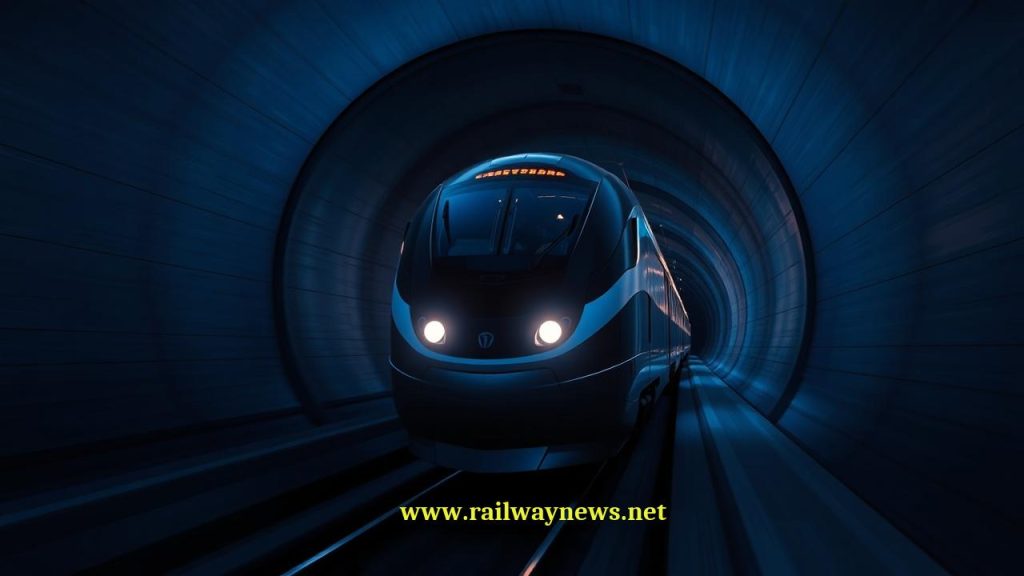
Understanding EN 14067-5: Aerodynamics in Railway Tunnels
EN 14067-5 is a European standard that specifies the requirements and test procedures for the aerodynamics of trains operating within tunnels. It is a critical part of the EN 14067 series, which covers various aspects of railway aerodynamics. This particular part focuses on managing the complex aerodynamic phenomena that occur when a train travels through the confined space of a tunnel, ensuring safety, passenger comfort, and structural integrity of both the rolling stock and the tunnel infrastructure.
The standard is essential for high-speed rail operations, where aerodynamic effects are significantly amplified. It provides a common methodology for infrastructure managers, rolling stock manufacturers, and railway undertakings to assess and mitigate risks associated with tunnel aerodynamics. Adherence to EN 14067-5 is often a prerequisite for achieving interoperability and gaining operational approval on European railway networks.
Key Aerodynamic Phenomena Addressed by EN 14067-5
When a train enters and travels through a tunnel, it displaces a large volume of air, creating several distinct and powerful aerodynamic effects. The standard provides a framework for evaluating and limiting these phenomena.
The Piston Effect and Pressure Waves
The piston effect is the most prominent aerodynamic phenomenon in a tunnel. As a train enters, it acts like a piston in a cylinder, compressing the air ahead of it and creating a positive pressure wave that travels down the tunnel at the speed of sound. Simultaneously, a negative pressure (rarefaction) wave is generated at the rear of the train, pulling air into the tunnel.
- Initial Compression Wave: Generated at the tunnel entrance, this wave reflects off the exit portal and other features, creating complex pressure fluctuations throughout the tunnel.
- Expansion (Rarefaction) Wave: Generated as the tail of the train enters the tunnel.
- Micro-Pressure Wave (Sonic Boom): When the initial compression wave exits the tunnel portal, it can radiate outwards as an impulsive noise, often described as a sonic boom. EN 14067-5 provides methods to predict and assess this environmental noise impact.
Pressure Changes and Passenger Comfort
The rapid and significant pressure changes generated by the piston effect can cause aural discomfort for passengers and crew, similar to the sensation experienced during aircraft ascent or descent. The standard sets strict limits on the maximum allowable pressure variations within a specific time frame to ensure passenger well-being.
Aerodynamic Loads and Slipstream
The movement of air around the train creates significant forces and high-velocity air currents (slipstream).
- Loads on Infrastructure: The pressure waves exert considerable forces on tunnel equipment, such as ventilation systems, signaling equipment, emergency doors, and platform screen doors. The standard specifies how to calculate these loads to ensure equipment is designed to withstand them.
- Loads on the Train: The confined space of a tunnel significantly increases the aerodynamic drag on the train, impacting energy consumption.
- Slipstream Velocities: High air speeds in the annulus (the space between the train and the tunnel wall) can pose a safety risk to workers in the tunnel or passengers on station platforms located within a tunnel. EN 14067-5 defines procedures for measuring and limiting these air velocities.
Requirements and Validation Procedures in EN 14067-5
To ensure compliance, EN 14067-5 outlines a set of requirements and defines three primary methods for their validation: full-scale testing, moving model testing, and numerical simulations (CFD).
Key Performance Criteria
- Maximum Pressure Change (Δp_max): A limit on the largest pressure fluctuation experienced inside the train to protect passenger health and comfort.
- Maximum Pressure Gradient: A limit on the rate of pressure change to prevent aural discomfort.
- Maximum Air Velocity: Limits on air speeds in designated areas, such as evacuation walkways, to ensure safety.
- Aerodynamic Loads: Requirements for calculating the forces on tunnel installations and the train itself.
Validation Methodologies Comparison
The choice of validation method depends on the project stage, complexity, and available resources. Often, a combination of methods is used, with CFD simulations in the design phase and full-scale tests for final verification.
| Validation Method | Description | Advantages | Disadvantages |
|---|---|---|---|
| Full-Scale Testing | On-site measurements using an actual train in a real tunnel. Sensors are placed on the train, in the tunnel, and at the portals to record pressure and velocity data. | – Provides the most accurate, real-world data. – Considered the definitive proof of compliance. | – Extremely expensive and logistically complex. – Requires track access, disrupting operations. – Difficult to isolate and study individual parameters. |
| Moving Model Testing | Using scaled-down models of the train and tunnel in a specialized testing facility. The model is propelled at high speed through the model tunnel. | – Controlled laboratory environment. – Cheaper and faster than full-scale tests. – Allows for easy parameter variation (e.g., speed, train shape). | – Potential for scaling errors (e.g., Reynolds number effects). – Requires highly specialized and expensive facilities. |
| CFD Simulation | Computational Fluid Dynamics uses numerical methods and computing power to simulate the airflow and pressure fields around the train in a virtual tunnel model. | – Highly flexible and cost-effective for design exploration. – Provides detailed data for the entire flow field. – Allows for “what-if” scenarios without physical changes. | – Results are highly dependent on the model’s accuracy and user expertise. – Requires significant computational resources. – Must be carefully validated against experimental data. |
Conclusion: Ensuring Safety and Performance in Modern Railways
EN 14067-5 is a cornerstone standard for the design and operation of modern railway systems, especially high-speed lines. By providing a standardized framework for understanding, predicting, and mitigating the powerful aerodynamic effects in tunnels, it plays a vital role in ensuring passenger comfort, operational safety, and the long-term durability of both rolling stock and infrastructure. Its methodologies allow engineers to design more efficient trains and tunnels, balance performance with environmental considerations, and facilitate the seamless interoperability of railways across Europe.

Railway infrastructure, rolling stock and transport technologies specialist focused on global rail industry developments, high-speed rail systems, signaling technologies and freight transportation. Covering railway investments, public transport modernization, rail operations and international mobility projects across Europe, Asia and North America.