
Vossloh Secures Over €100M Turnout Components Contract Germany
Vossloh secured over €100 million to supply large turnout components for Germany’s rail network until 2028.
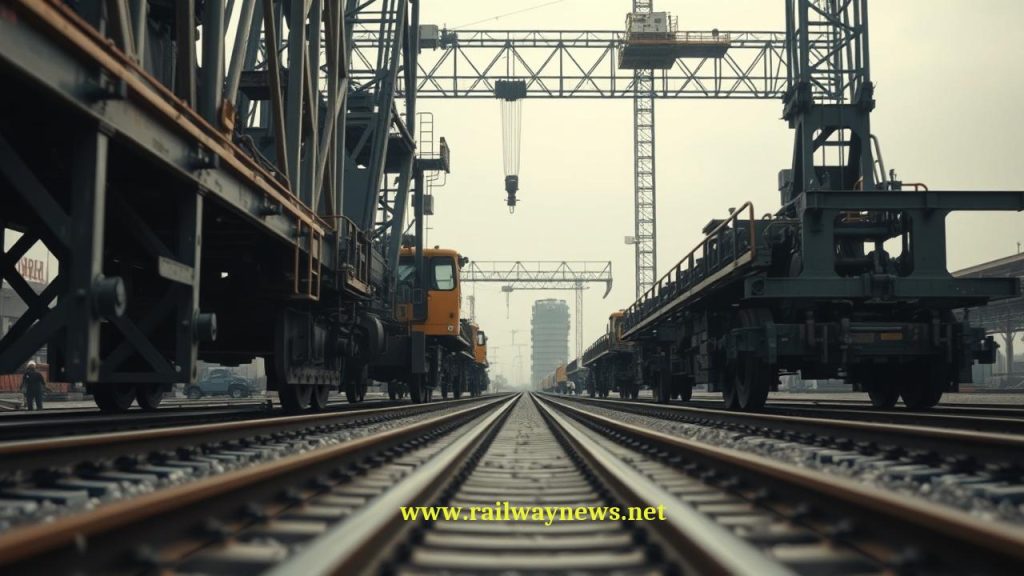
⚡ In Brief: Vossloh has secured a framework agreement with Deutsche Bahn potentially worth over €100 million to supply large turnout components for Germany’s rail network, with deliveries scheduled through 2028 to support a major modernization program.
BERLIN, GERMANY – Vossloh AG has signed a three-year framework agreement with Deutsche Bahn (DB) to supply large turnout components for the German rail network. The contract, which includes an option to extend to five years, has a potential value exceeding €100 million and covers deliveries until 2028.
What Does This Contract Cover?
The agreement covers the supply of large components essential for railway turnouts, including switches, sleepers, and other specialized parts. This procurement is structured in “feasibility lots,” allowing DB InfraGO AG to place orders based on the specific needs of its ongoing network maintenance and modernization program. The exact volume of components to be delivered was not disclosed, as it is dependent on the actual call-off orders made by Deutsche Bahn during the contract term.
Key Contract Data
| Parameter | Value |
|---|---|
| Contract Name | Large Turnout Components Framework Agreement |
| Total Value | Over €100 million (potential value) |
| Parties Involved | Vossloh AG, Deutsche Bahn (DB InfraGO AG) |
| Timeline / Completion | Deliveries until 2028 (3-year term with 2-year extension option) |
| Country / Corridor | Germany |
How Does This Compare to Similar Contracts?
This component supply agreement is a foundational element of a national infrastructure upgrade, contrasting with contracts for project design and management. For example, in the UK, engineering firm Amey secured a contract to act as a design partner for the Transpennine Route Upgrade and the early stages of Northern Powerhouse Rail, focusing on services rather than physical hardware supply (Source: Rail UK, 2024). While different in scope, both agreements highlight a Europe-wide trend of operators engaging strategic partners for long-term, large-scale network enhancements. The framework structure is also common in other capital-intensive industries, such as the agreement between Seatrium and Royal Caribbean Group for cruise ship repairs, which secures long-term workload visibility and supply chain stability (Source: MarineLink, 2024).
Editor’s Analysis
This agreement between Vossloh and DB is a critical logistical underpinning for Germany’s “Starke Schiene” (Strong Rail) strategy, which requires extensive renewal of existing infrastructure to handle projected traffic growth. By securing a multi-year supply of essential, high-wear components like turnouts, DB InfraGO mitigates supply chain risks and gains cost predictability for its massive capital program. This move reflects a broader industry focus on improving supply chain visibility and resilience, a significant challenge noted across the logistics sector (Source: Logistics Management, 2024).
FAQ
Q: What specific components are included in this agreement?
A: The agreement covers large, critical components for railway turnouts, which are mechanical installations that guide trains from one track to another. This includes items such as switches, sleepers, and other individual parts required for assembly.
Q: Why is this a “framework agreement” and not a fixed-volume contract?
A: A framework agreement establishes terms, conditions, and pricing with a supplier for a set period without committing to a specific quantity. This allows Deutsche Bahn the flexibility to order components as required for various modernization projects across its network until 2028.
Q: How does this agreement impact rail services in Germany?
A: While not impacting services directly in the short term, this supply contract is fundamental to DB’s long-term network modernization. The new components are designed to increase the reliability, safety, and performance of the track infrastructure, ultimately supporting more dependable services for both passenger and freight transport.

Railway infrastructure, rolling stock and transport technologies specialist focused on global rail industry developments, high-speed rail systems, signaling technologies and freight transportation. Covering railway investments, public transport modernization, rail operations and international mobility projects across Europe, Asia and North America.
RELATED POSTS

October 1, 2026 7:09 am
United States regulators confirmed a September 30 deadline for the...

October 8, 2026 1:15 pm
Alstom secured a €1bn contract to build 13 automated trains,...

October 4, 2026 5:14 pm
Alstom secured a CA$4.7 billion order from VIA Rail Canada...

October 1, 2026 12:13 am
Illinois approved $1.5 billion annually for the Northern Illinois Transit...

October 6, 2026 2:14 am
Union Pacific launched export rail shipments with Ferromex to deliver...

October 1, 2026 6:10 am
Amtrak approved a System Expansion Committee on July 30 to...