
Network Rail Completes 24-Day Huddersfield Leeds Upgrade
Network Rail completed a 24-day line closure and station upgrade program between Huddersfield and Leeds on May 25, utilizing a £100 million diversionary route.
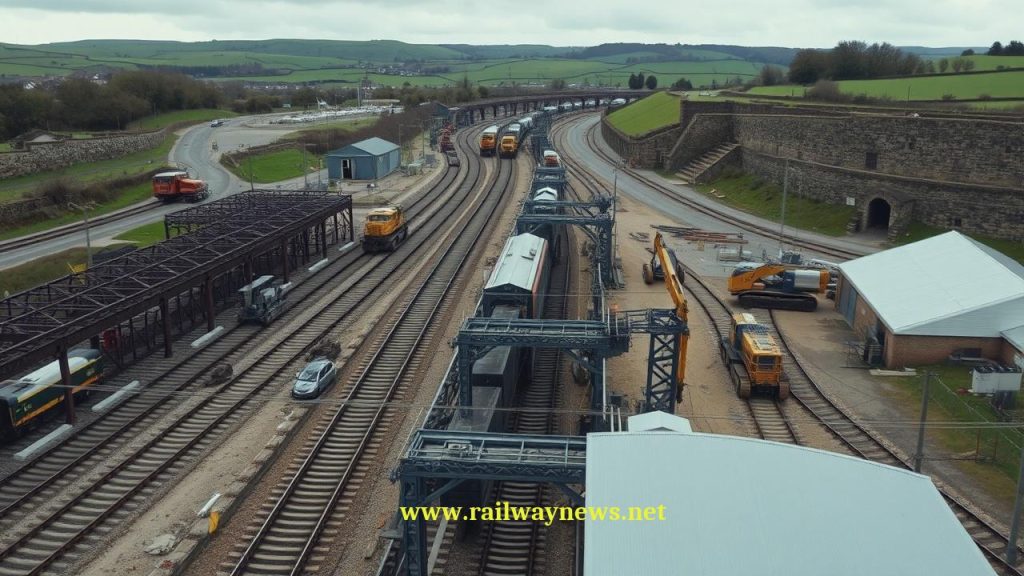
⚡ In Brief: Network Rail completed a 24-day line closure and station upgrade program between Huddersfield and Leeds on May 25, utilizing a £100 million diversionary route to maintain passenger services.
HUDDERSFIELD, United Kingdom – Network Rail completed a series of major track, station, and structural upgrades along the Transpennine Route Upgrade corridor between Huddersfield and Leeds on May 25. The 24-day blockade, which commenced on May 2, was delivered on schedule and supported by 2,500 diversionary train services. The next major phase of the multi-billion-pound program is scheduled to begin on May 30 between Morley and Dewsbury.
What Is the Full Scope of This Project?
The Transpennine Route Upgrade is a multi-billion-pound infrastructure programme designed to electrify and double-track the 76-mile railway line between Manchester, Leeds, and York. The recently completed 24-day blockade focused on station redevelopments at Huddersfield and Deighton, alongside track alignment and structural enhancements. To mitigate passenger disruption during the closure, the program utilized a £100 million investment in diversionary routes, allowing 2,500 trains to bypass the construction zone via Brighouse. The upcoming phase from May 30 to June 27 will target station accessibility and platform extensions at Batley and Dewsbury to accommodate longer, higher-capacity passenger trains.
Key Project Data
| Parameter | Value |
|---|---|
| Project / Contract Name | Transpennine Route Upgrade (TRU) – Huddersfield to Leeds Phase |
| Total Value | Not fully disclosed (diversionary routes costed at £100 million) |
| Parties Involved | Network Rail, Northern, TransPennine Express |
| Timeline / Completion | May 2 to May 25 (Completed); Next phase May 30 to June 27 |
| Country / Corridor | United Kingdom / Transpennine Corridor (Leeds – Huddersfield) |
How Does This Compare to Similar Projects?
The £100 million allocated solely to diversionary route resilience highlights a shifting UK strategy toward passenger mitigation compared to historical blockades. For comparison, the Midland Main Line electrification scheme allocated approximately £120 million for its entire early-stage power supply upgrade phase in 2023 (Source: Network Rail, 2023). While some heavy engineering sectors, such as Norway’s offshore energy pipeline projects, see single infrastructure contracts valued between $150 million and $300 million for 12.7-km segments (Source: Subsea7, 2024), the TRU represents a far more complex, multi-operator civil engineering effort integrated into an active transport network. Direct overall capital expenditure for the Huddersfield-Leeds station upgrade phase remains officially undisclosed.
Editor’s Analysis
The successful on-time delivery of the 24-day Huddersfield blockade demonstrates that major UK rail projects can overcome historical delivery delays through intensive, short-duration blockades rather than protracted weekend closures. This delivery model aligns with a global shift toward rapid infrastructure modernization, supported by rising investments in digital signaling and automated traffic management (Source: Siemens AG, 2026). By prioritizing upfront expenditure on diversionary routes, operators are establishing a new benchmark for passenger retention during high-impact capital works.
FAQ
Q: What stations are being upgraded next under the Transpennine Route Upgrade?
A: The next phase of work will target upgrades at Batley and Dewsbury stations between May 30 and June 27. These upgrades will focus on improving accessibility and extending platforms to accommodate longer trains.
Q: How much did the diversionary routes cost to prepare?
A: Network Rail invested £100 million in upgrading alternative routes to ensure passenger services could continue during the main line closures. This investment supported nearly 2,500 trains bypassing the primary construction zones.
Q: What was the total cost of the Huddersfield and Deighton station upgrades?
A: The specific capital expenditure for the Huddersfield and Deighton station upgrade phase was not publicly disclosed. Network Rail has integrated these costs into the broader, multi-billion-pound Transpennine Route Upgrade budget.

Railway infrastructure, rolling stock and transport technologies specialist focused on global rail industry developments, high-speed rail systems, signaling technologies and freight transportation. Covering railway investments, public transport modernization, rail operations and international mobility projects across Europe, Asia and North America.
RELATED POSTS

October 1, 2026 7:09 am
United States regulators confirmed a September 30 deadline for the...

October 1, 2026 12:13 am
Illinois approved $1.5 billion annually for the Northern Illinois Transit...

October 4, 2026 5:14 pm
Alstom secured a CA$4.7 billion order from VIA Rail Canada...

October 1, 2026 6:10 am
Amtrak approved a System Expansion Committee on July 30 to...

October 6, 2026 2:14 am
Union Pacific launched export rail shipments with Ferromex to deliver...
October 1, 2026 3:12 am
Greenbrier confirmed Brian Comstock as new president and CEO effective...