
Union Pacific-Norfolk Southern Merger: STB Review Impact
Union Pacific and Norfolk Southern are in merger talks, raising regulatory concerns. STB review is pending, impacting competition.
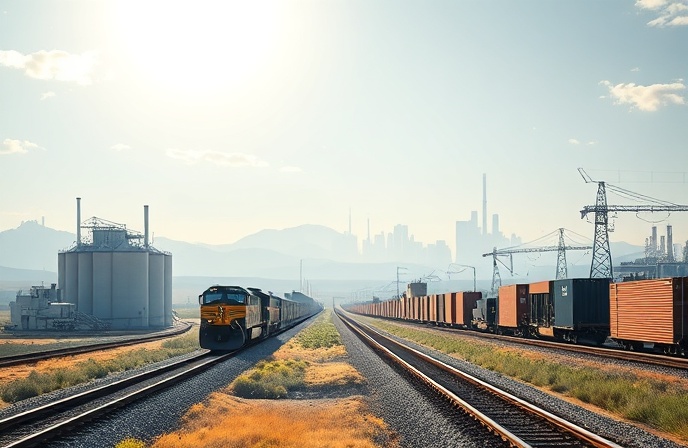
Possible Union Pacific-Norfolk Southern Merger Talks Raise Regulatory Eyebrows
Whispers of a potential mega-merger between two of North America’s largest Class I railroads have sent ripples of speculation throughout the rail industry. The Surface Transportation Board (STB), the regulatory body overseeing U.S. freight rail, has confirmed that it has yet to receive any prefiling notification or formal application pertaining to a proposed merger between Union Pacific Railroad (UP) and Norfolk Southern Railway (NS). The news follows reports that the two railway giants are in “advanced discussions” regarding a possible combination, sparking intense industry interest. This article will delve into the current state of affairs, the regulatory hurdles, and the potential implications of such a monumental deal.
The Current Situation: Initial Discussions and Official Silence
The story first broke with reports from national media outlets, including *The Wall Street Journal*, indicating UP’s exploration of acquiring NS. Both railroads have confirmed their engagement in advanced merger discussions. However, both UP and NS have elected not to provide further comments, which leaves the industry, and the public, waiting for more information. During a recent call with analysts to discuss UP’s Q2 2025 financial results, UP CEO Jim Vena added a note of caution stating that “there are no assurances an agreement will be reached.” This cautionary tone underscores the complexities and uncertainties inherent in such high-stakes negotiations.
Regulatory Scrutiny: The STB’s Role in Merger Review
Any merger involving Class I railroads requires rigorous STB review. The STB, the successor to the Interstate Commerce Commission (ICC), assesses mergers based on their impact on competition, service, and the public interest. This process is complex and can take years. The STB’s recent stance on increased scrutiny of rail mergers, including the implementation of new merger rules, suggests a potentially challenging pathway for UP and NS. The absence of a prefiling or application suggests the discussions are still preliminary. The STB’s regulatory oversight is crucial in ensuring mergers do not lead to reduced competition or diminished service quality for shippers and the public.
Industry Impact: Potential Consolidation and Competition
A merger between UP and NS, if successful, would reshape the North American rail landscape. The resulting entity would control a vast network spanning much of the U.S. This consolidation could potentially lead to efficiency gains, such as improved network optimization and resource allocation. However, it could also raise concerns about reduced competition in certain markets, potentially affecting shipping rates and service levels. Other Class I railroads would likely need to evaluate their own strategic positions, leading to further restructuring and possibly more M&A activity.
Financial Considerations: Synergies and Challenges
The primary drivers of such a merger would likely be potential cost savings, revenue enhancements, and improved operational efficiency. Railroad mergers often target significant synergies, including the elimination of redundant resources, optimization of routes, and improved utilization of rolling stock and infrastructure. However, integrating two major railway systems is a complex and costly undertaking. Challenges include labor integration, the harmonization of operating procedures, and the resolution of potential conflicts between existing contracts and obligations. The success of such a merger will ultimately depend on the railroads’ ability to generate substantial value while navigating the regulatory landscape.
Conclusion
The potential merger between Union Pacific and Norfolk Southern represents a major development in the railway industry, underscoring the ongoing evolution of the sector. While discussions are in their early stages, the absence of a formal filing with the STB highlights the complexities and potential hurdles involved. The STB’s regulatory process, the potential impact on competition, and the financial considerations all contribute to the significance of this potential deal. The industry will be closely watching the proceedings, as a merger could significantly reshape the competitive landscape and service offerings for years to come. Future announcements from either or both railroads will be critical, especially related to specific strategic and financial plans.
Company Summary
Union Pacific Railroad (UP) is a major Class I freight railroad operating in the Western United States. It is headquartered in Omaha, Nebraska, and its network covers approximately 32,000 route miles. UP’s primary business includes the transportation of agricultural products, automotive, coal, industrial products, and intermodal.
Norfolk Southern Railway (NS), also a Class I, operates mainly in the Eastern United States. Headquartered in Atlanta, Georgia, it boasts a network of about 19,300 route miles. NS primarily transports consumer products, coal, chemicals, and agricultural products.

Railway infrastructure, rolling stock and transport technologies specialist focused on global rail industry developments, high-speed rail systems, signaling technologies and freight transportation. Covering railway investments, public transport modernization, rail operations and international mobility projects across Europe, Asia and North America.
RELATED POSTS

October 1, 2026 7:09 am
United States regulators confirmed a September 30 deadline for the...

October 8, 2026 1:15 pm
Alstom secured a €1bn contract to build 13 automated trains,...

October 4, 2026 5:14 pm
Alstom secured a CA$4.7 billion order from VIA Rail Canada...

October 8, 2026 12:18 pm
Siemens Mobility signed an agreement with VinSpeed to supply 350...

October 1, 2026 12:13 am
Illinois approved $1.5 billion annually for the Northern Illinois Transit...

October 6, 2026 2:14 am
Union Pacific launched export rail shipments with Ferromex to deliver...