
Sweco Wins Munich S-Bahn Expansion Contract, Boosting Capacity
Sweco wins contract for Munich S-Bahn expansion, boosting rail capacity and efficiency. Project aims to double network capacity.
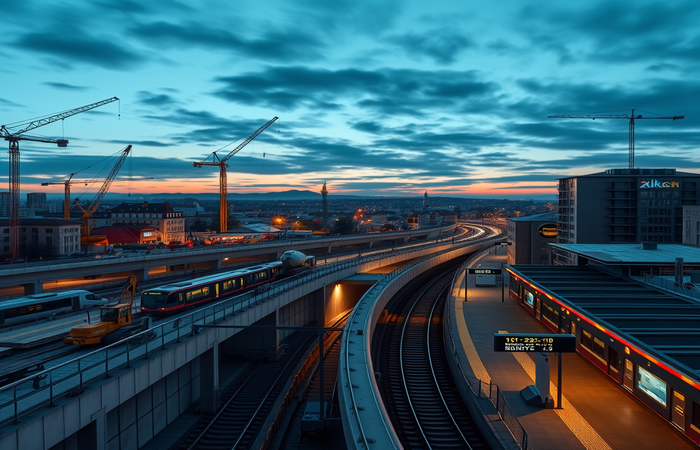
Sweco Awarded Contract to Oversee Munich S-Bahn Expansion
Munich, Germany, is set to significantly upgrade its commuter rail network, and Sweco has been selected to play a pivotal role in this ambitious undertaking. Deutsche Bahn (DB) has awarded Sweco a multi-year contract to lead technical supervision for the Munich S-Bahn expansion project. The contract, which commenced in May 2025, encompasses approximately four and a half years, with a potential five-year extension. This project, a crucial response to the city’s rapidly growing population and the resulting strain on its public transport infrastructure, will involve the construction of a second main line, a new underground tunnel beneath the city centre, and the modernisation of several key stations. This article will delve into the specifics of the project, highlighting Sweco’s involvement and the broader implications for Munich’s transportation future. Sweco’s role is to ensure the project is delivered efficiently, safely and in line with sustainability goals.
Addressing Soaring Commuter Demand
Munich, Germany’s third-largest city, has experienced substantial population growth, necessitating significant investment in its public transport infrastructure. The S-Bahn, originally designed to accommodate around 250,000 daily commuters, now serves over 800,000 passengers each weekday. The existing network has reached its capacity, leading to congestion and impacting service reliability. The Munich S-Bahn expansion project, a major initiative to address this, focuses on increasing rail capacity and enhancing connectivity throughout the region. This includes the construction of a second main line that will run parallel to the existing one, with a new tunnel through the city centre aimed at easing bottlenecks. The upgrades to stations along the line, which are also a crucial aspect of the project, aim to boost passenger comfort and accessibility.
Sweco’s Technical Expertise: A Key Element
Sweco, acting as part of a consortium, will provide detailed construction supervision and engineering support for the duration of the Munich S-Bahn expansion. Approximately 60 Sweco experts will be on-site daily, overseeing the multifaceted construction activities. Their responsibilities include ensuring that all technical requirements are met throughout all phases, from design and construction, to commissioning of the new infrastructure. This involves meticulous management of construction processes, adherence to stringent safety regulations, and the integration of sustainable practices. Sweco’s experience with DB, and its proven track record in delivering successful transportation projects, underscores its capability to ensure the expansion’s efficient and effective completion, which is vital for the overall success of the project.
Doubling Capacity and Enhancing Efficiency
The core objective of the Munich S-Bahn expansion is to drastically improve the network’s capacity and operational efficiency. The project aims to double the overall capacity of the S-Bahn system. This is achieved through several key elements, including the new second main line. This is expected to alleviate congestion on the existing infrastructure, enabling more frequent and reliable services. The construction of the new tunnel is also critical in rerouting trains and optimising the flow of passenger traffic. Station upgrades, which include platform extensions, enhanced accessibility features, and modernised passenger information systems, will further contribute to a smoother and more efficient commuter experience. These improvements are projected to significantly reduce the number of cars on the road, resulting in environmental benefits.
The Ostbahnhof Hub: A Future Transportation Powerhouse
The Munich S-Bahn expansion project includes integration with the new Ostbahnhof station, which is anticipated to become the largest public transport hub in Europe. This strategic development will create seamless links between the S-Bahn network, regional and national rail services, as well as local bus and tram routes. This will reinforce the city’s connectivity with the wider Bavarian region, facilitating efficient transportation of people. The hub aims to be a key transportation hub. The expansion is projected to reduce car travel by an estimated 300 million kilometers annually. This will alleviate congestion and improve air quality in Munich and its surrounding areas, in addition to enhancing the overall experience for public transport users.
Conclusion
The selection of Sweco by Deutsche Bahn to oversee the Munich S-Bahn expansion project is a significant step in addressing the growing transportation demands of Germany’s third-largest city. The project, encompassing the construction of a second main line, a new tunnel, and station upgrades, is a critical investment in the city’s infrastructure. Sweco’s role as the lead technical supervisor will be instrumental in ensuring the efficient, safe, and sustainable delivery of this complex initiative. The successful completion of the project is expected to dramatically increase the capacity of the S-Bahn network, improve operational efficiency, and provide a better experience for commuters. The development of the new Ostbahnhof hub further strengthens Munich’s position as a regional transportation leader, connecting the city with the wider Bavarian region. The reduction in car travel, estimated at 300 million kilometers annually, underscores the positive impact of the project on both the environment and the overall quality of life. This project sets a new benchmark in efficient and sustainable urban transport infrastructure.

Railway infrastructure, rolling stock and transport technologies specialist focused on global rail industry developments, high-speed rail systems, signaling technologies and freight transportation. Covering railway investments, public transport modernization, rail operations and international mobility projects across Europe, Asia and North America.
RELATED POSTS

October 1, 2026 7:09 am
United States regulators confirmed a September 30 deadline for the...

October 8, 2026 1:15 pm
Alstom secured a €1bn contract to build 13 automated trains,...

October 4, 2026 5:14 pm
Alstom secured a CA$4.7 billion order from VIA Rail Canada...

October 1, 2026 12:13 am
Illinois approved $1.5 billion annually for the Northern Illinois Transit...

October 6, 2026 2:14 am
Union Pacific launched export rail shipments with Ferromex to deliver...

October 1, 2026 6:10 am
Amtrak approved a System Expansion Committee on July 30 to...