
UK’s First Hydrogen Trains: Alstom & Eversholt Rail Partnership
The groundbreaking partnership between Alstom and Eversholt Rail in developing the UK’s first fleet of hydrogen-powered multiple units marks a pivotal step towards decarbonizing rail operations, showcasing the potential of hydrogen fuel cell technology as a sustainable solution for the future of transportation.
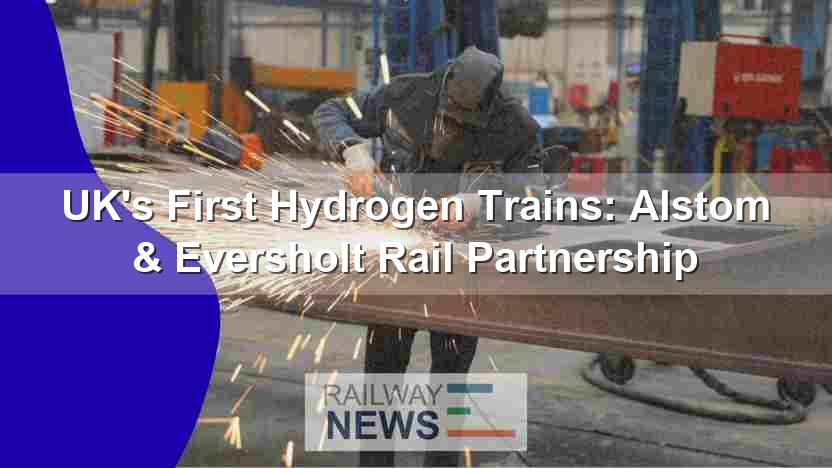
The Dawn of Hydrogen-Powered Rail in the UK: A Partnership Between Alstom and Eversholt Rail
This article explores the groundbreaking partnership between Alstom, a leading French rolling stock manufacturer, and Eversholt Rail, a prominent UK rolling stock leasing company, in the development and deployment of the UK’s first fleet of new hydrogen multiple units (HMUs). This collaboration marks a significant step towards decarbonizing the UK’s railway network and showcases the potential of hydrogen fuel cell technology in sustainable transportation. The initiative, driven by the urgent need to reduce greenhouse gas emissions highlighted by events such as COP26, promises to revolutionize rail operations in the UK and serves as a potential model for other nations seeking cleaner, greener transport solutions. The analysis will delve into the technical aspects of the project, the strategic implications for the rail industry, and the broader environmental benefits of adopting hydrogen train technology. We will also consider the economic aspects of the project, the challenges involved in implementing this innovative technology, and the future potential for scaling up such initiatives across the wider UK railway network. The partnership’s success will be pivotal in establishing the viability of hydrogen as a mainstream fuel for railway operations, paving the way for widespread adoption in the future.
Alstom and Eversholt Rail’s Collaboration: A Strategic Partnership
The memorandum of understanding (MoU) between Alstom and Eversholt Rail represents a powerful synergy. Alstom brings its extensive experience in designing, constructing, and commissioning rolling stock, leveraging its Aventra platform, a modular design known for its adaptability and cost-effectiveness. Eversholt Rail contributes its expertise in the UK rail market, including leasing, maintenance, and fleet management, ensuring the seamless integration of the new HMUs into the existing infrastructure. The sharing of technical and commercial expertise ensures efficient project delivery and mitigates risks associated with such a pioneering undertaking. The initial project scope involves a fleet of ten three-car HMUs, showcasing the scalability of the design and the confidence both companies have in the technology’s future.
The Technological Advancement: Hydrogen Multiple Units (HMUs)
The core of this collaboration centers on the deployment of HMUs. Unlike traditional diesel multiple units (DMUs), HMUs utilize hydrogen fuel cells to generate electricity, eliminating harmful diesel emissions. This technology offers a significant reduction in carbon footprint, aligning with the UK’s commitment to environmental sustainability. The use of the Aventra platform, known for its modular design, allows for customization and adaptation to specific operational requirements. This adaptability also promises lower lifecycle costs, a crucial factor for long-term economic viability. The platform’s flexibility, in terms of carriage length and interior layout, caters to diverse operational needs, from high-capacity metro systems to intercity services.
Economic and Environmental Implications: A Sustainable Future
This project extends beyond its immediate impact. The successful deployment of the HMU fleet will demonstrate the commercial viability of hydrogen-powered rail, potentially attracting further investment in the technology. The economic benefits include reduced operational costs associated with fuel and maintenance, and the creation of new jobs in the manufacturing, maintenance, and operation of the HMUs. The environmental impact is equally significant. The transition from diesel to hydrogen power represents a substantial decrease in greenhouse gas emissions, contributing to the UK’s environmental goals. The project also demonstrates the potential for innovative collaborations between industry partners to drive sustainable development in the rail sector.
Conclusion: Paving the Way for a Hydrogen Rail Revolution
The partnership between Alstom and Eversholt Rail to deliver the UK’s first new hydrogen train fleet represents a landmark achievement in sustainable transportation. The project successfully integrates technological innovation with strategic collaboration, leveraging Alstom’s rolling stock expertise and Eversholt Rail’s market understanding to deliver a fleet of ten three-car HMUs based on the adaptable Aventra platform. The economic benefits, encompassing reduced operational costs and job creation, are complemented by significant environmental gains through the reduction of greenhouse gas emissions. The successful implementation of this project could act as a catalyst for wider adoption of hydrogen fuel cell technology within the UK rail sector and potentially inspire similar initiatives globally. This initiative transcends a simple technological advancement; it signifies a commitment to a greener future, demonstrating the potential of collaborative efforts to address pressing environmental challenges and forge a more sustainable pathway for the rail industry. The successful completion and operation of this initial fleet will be crucial in demonstrating the viability and scalability of hydrogen-powered trains, potentially prompting widespread adoption and contributing significantly to the UK’s decarbonization goals. Further research and development into hydrogen infrastructure and fueling capabilities will be essential to unlock the full potential of this technology, paving the way for a hydrogen-powered rail revolution across the UK and beyond. The project highlights the importance of public-private partnerships in accelerating the transition to a more environmentally sustainable and economically viable railway system.

Railway infrastructure, rolling stock and transport technologies specialist focused on global rail industry developments, high-speed rail systems, signaling technologies and freight transportation. Covering railway investments, public transport modernization, rail operations and international mobility projects across Europe, Asia and North America.
RELATED POSTS

October 8, 2026 1:15 pm
Alstom secured a €1bn contract to build 13 automated trains,...

October 1, 2026 7:09 am
United States regulators confirmed a September 30 deadline for the...

October 8, 2026 12:18 pm
Siemens Mobility signed an agreement with VinSpeed to supply 350...

October 4, 2026 5:14 pm
Alstom secured a CA$4.7 billion order from VIA Rail Canada...

October 5, 2026 6:12 pm
AECOM and Jacobs secured a contract in September 2026 to...

October 4, 2026 11:08 pm
Sound Transit confirmed the September 30 opening of Seattle Pinehurst...