
Breeze: UK’s Hydrogen Train Revolution
The “Breeze” project between Alstom and Eversholt Rail demonstrates a collaborative approach to retrofitting electric multiple units with hydrogen fuel cell technology, aiming to accelerate the deployment of hydrogen-powered trains in the UK railway system, aligning with national decarbonization goals.
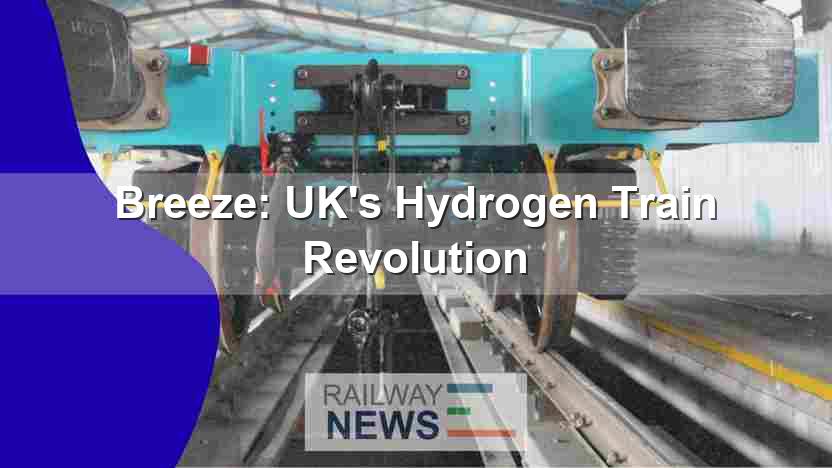
The burgeoning field of sustainable transportation is rapidly evolving, with hydrogen fuel cell technology emerging as a promising solution for decarbonizing rail networks. This article explores a significant collaborative effort between Alstom, a leading rolling stock manufacturer, and Eversholt Rail, a prominent rolling stock operating company in the UK, to accelerate the development and deployment of hydrogen-powered trains. Their joint venture focuses on the “Breeze” project, aiming to retrofit existing electric multiple units (EMUs) with hydrogen fuel cell technology, effectively transforming them into Hydrogen Multiple Units (HMUs). This initiative represents a crucial step towards a greener future for the UK railway system, aligning with national decarbonization goals and showcasing the potential of hydrogen as a viable alternative fuel source in the rail sector. The following sections will examine the technical aspects of this project, the economic implications, the environmental benefits, and the broader strategic significance within the context of the UK’s railway modernization plans.
Retrofit and Conversion: The Breeze Project
The core of the initiative lies in the conversion of Eversholt Rail’s Class 321 EMUs into HMUs. This retrofitting approach offers several advantages. Firstly, it leverages existing infrastructure, reducing the need for substantial new investment in rolling stock. Secondly, it provides a quicker pathway to deployment compared to building entirely new hydrogen trains, allowing for a faster reduction in carbon emissions. The conversion process involves integrating hydrogen fuel cells into the existing train design, replacing or supplementing the electric traction system. This requires careful engineering to ensure compatibility with the train’s existing systems and structural integrity. The resulting Class 600 trains will demonstrate the feasibility and efficiency of this conversion methodology, paving the way for wider adoption of hydrogen technology in the UK rail network. Alstom’s experience with its Coradia iLint trains in Germany provides a solid foundation for this technology transfer and adaptation to the UK context.
Economic and Employment Impacts
The £1 million investment by Alstom and Eversholt Rail underscores the significant economic potential of the Breeze project. Beyond the initial investment, the project promises considerable long-term economic benefits. The construction of the Breeze trains at Alstom’s Widnes Transport Technology Centre is projected to create over 200 jobs, boosting local employment and contributing to the UK economy. Additionally, the successful deployment of hydrogen trains could open up new market opportunities for British manufacturers and suppliers involved in the hydrogen fuel cell supply chain. The potential for exporting this technology to other countries also presents a further avenue for economic growth. This economic boost is directly linked to the UK government’s commitment to green technologies, providing a compelling investment case for both public and private sector involvement.
Environmental Sustainability
The primary driver for the Breeze project is environmental sustainability. Hydrogen-powered trains, unlike diesel trains, produce only water vapor as a byproduct, resulting in zero tailpipe emissions. This significantly reduces the carbon footprint of railway operations, contributing to the UK’s ambitious climate change targets. The ability to deploy these trains on non-electrified lines further strengthens their environmental benefit, as it eliminates the need for extensive and costly electrification infrastructure upgrades. The project aligns perfectly with the broader global effort towards decarbonizing transportation and showcases a practical solution for reducing greenhouse gas emissions in the rail sector. The widespread adoption of this technology could significantly lower the railway industry’s contribution to air pollution and climate change.
Strategic Significance and Future Prospects
The Breeze project holds significant strategic importance for the UK’s railway network modernization. It represents a proactive step towards achieving a cleaner, more sustainable rail system, aligning with government policies focused on decarbonization and green technology adoption. The project’s success will not only demonstrate the technological viability of hydrogen fuel cell technology in the UK context but also showcase its economic and environmental benefits. The collaboration between Alstom and Eversholt Rail exemplifies the potential for public-private partnerships in driving innovation and accelerating the transition towards a low-carbon transportation sector. The learnings from this project could inform and influence future developments in hydrogen rail technology, both within the UK and internationally. The “shovel-ready” nature of the project, as emphasized by Alstom, highlights its potential for rapid deployment and immediate impact on the UK’s emission reduction targets.
Conclusions
The Alstom and Eversholt Rail collaboration on the Breeze hydrogen train program represents a pivotal moment in the UK’s journey towards a sustainable railway system. The project successfully marries technological innovation with economic and environmental benefits. By retrofitting existing Class 321 EMUs with hydrogen fuel cells, the initiative provides a cost-effective and timely solution for decarbonizing non-electrified lines. The creation of over 200 jobs at Alstom’s Widnes facility demonstrates the considerable economic impact, while the zero-emission operation of the resulting Class 600 HMUs directly addresses environmental concerns. The project’s strategic significance lies in its alignment with the UK government’s green initiatives and its potential to become a model for other nations seeking to transition towards sustainable rail transportation. The success of the Breeze project, with its projected 2024 launch, will not only contribute to a cleaner and greener UK railway system but also pave the way for broader adoption of hydrogen fuel cell technology across the global rail industry. The collaborative effort highlights the power of public-private partnerships in achieving ambitious sustainability goals and signals a significant step forward in the development of clean and efficient rail transportation.

Railway infrastructure, rolling stock and transport technologies specialist focused on global rail industry developments, high-speed rail systems, signaling technologies and freight transportation. Covering railway investments, public transport modernization, rail operations and international mobility projects across Europe, Asia and North America.
RELATED POSTS

September 5, 2026 4:19 pm
CPK launched formal tender talks with four consortia to design...

September 6, 2026 4:12 am
Alstom delivered the first of 100 new G Class trams...

September 5, 2026 7:14 pm
HS2 Ltd signed renegotiated civils contracts with EKFB and Align...

September 6, 2026 8:17 am
DB InfraGO reopened the Nuremberg-Regensburg line in Bavaria on 31...
September 6, 2026 12:20 pm
Indian Railways ordered a probe after a fire destroyed 2...
September 5, 2026 6:17 pm
Universal Signalling won a deal to install its U-Cross system...