
Reading & Northern Completes 10-Mile Pennsylvania Signaling
Reading & Northern expanded rail signaling in Pennsylvania by adding a 10-mile track section to reduce dark territory on its 114-mile mainline in February 2026.
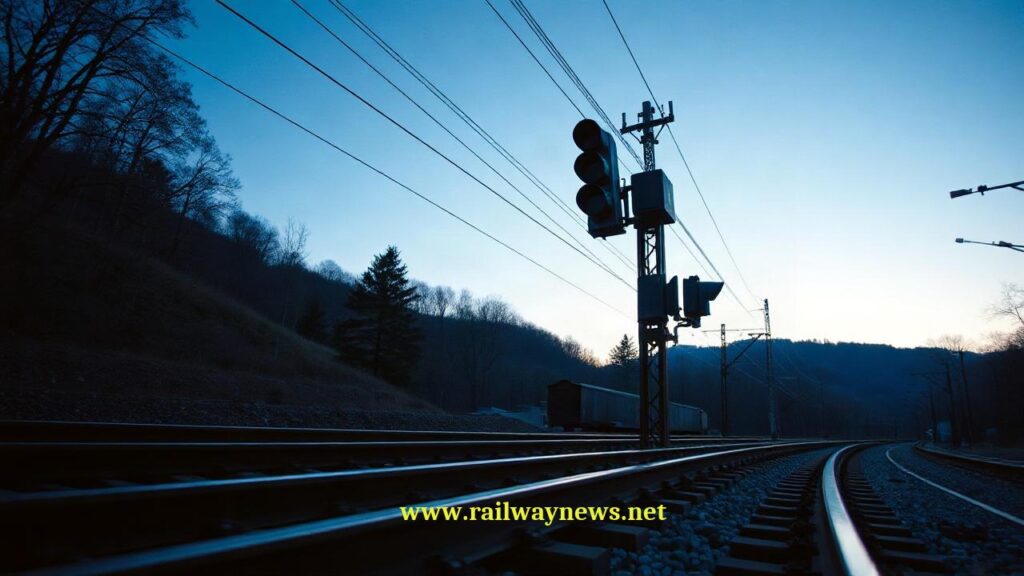
⚡ In Brief: Reading & Northern Railroad has commissioned a 10-mile signaling section in Pennsylvania as part of its privately funded program to restore automated train control across its entire 114-mile mainline.
PORT CLINTON, UNITED STATES – Reading & Northern Railroad (R&N) activated a new 10-mile signaled segment along its mainline between Reading and Pittston, Pennsylvania, in February 2026. The installation expands automated signaling across an active freight and regional passenger corridor where wayside equipment was dismantled decades ago. R&N is self-funding the entire initiative across the remaining unequipped portions of the 114-mile route.
What Is the Full Scope of This Project?
Reading & Northern Railroad is installing modern wayside signaling across 54 miles of dark territory to establish continuous train control on its 114-mile mainline between Reading and Pittston. The activation of the latest 10-mile section expands upon an earlier project phase that successfully recommissioned signaling across a 60-mile southern portion of the network. The signaling hardware replaces track warrant control—which relies on verbal radio permission or paper track authority—with automated track circuits capable of detecting occupied blocks and structural rail breaks. The operator has not disclosed the complete expenditure figures or targeted date of final completion for the remaining 44 miles.
Key Project Data
| Parameter | Value |
|---|---|
| Project / Contract Name | R&N Mainline Signaling Modernization Program |
| Total Value | Not disclosed (100% privately funded by R&N) |
| Parties Involved | Reading & Northern Railroad (R&N) |
| Timeline / Completion | Phased rollout ongoing; final completion date not disclosed |
| Country / Corridor | United States / Reading–Pittston Mainline (Pennsylvania) |
How Does This Compare to Similar Projects?
Private funding of wayside signaling by regional Class II and Class III short-line operators remains rare compared to federally subsidized programs on Class I and passenger networks. While large-scale national systems rely heavily on government allocations—such as the UK Department for Transport approving over 50 regional transport upgrades to support economic growth (Source: UK Department for Transport, 2025)—North American short lines typically retain dark territory dispatching to minimize capital maintenance costs. Total worldwide expenditure on rail track, signaling, and civil assets is growing substantially, with the overall rail infrastructure market projected to reach $462.13 billion by 2033 (Source: MarketsandMarkets, 2025). Independent verification of the specific per-mile installation cost incurred by R&N was not available at time of publication.
Editor’s Analysis
R&N’s decision to self-fund signaling across an entire 114-mile arterial corridor marks an aggressive divergence from traditional short-line asset management, which typically treats signal maintenance as an unrecoverable overhead. By eliminating manual paperwork and dispatcher voice warrants, the regional carrier increases track utilization for heavy freight while improving safety margins for its growing passenger excursion operations. This private capital commitment mirrors a broader international acceleration in signaling and capacity modernization, reflected globally by state commitments such as India’s planned $33.4 billion capital expenditure for railway infrastructure between FY2026 and FY2027 (Source: Ministry of Railways, 2025).
FAQ
Q: What is dark territory in railway operations?
A: Dark territory refers to track sections that lack wayside or cab signaling systems to automatically track trains. In these zones, train movements are regulated manually by dispatchers issuing mandatory track authorities by voice radio or paper directives.
Q: How much does the Reading & Northern signal installation project cost?
A: The total capital cost of the 114-mile mainline project has not been publicly disclosed by Reading & Northern Railroad. The regional carrier confirmed that the signaling program is entirely private and funded internally without government grants.
Q: How does the new signaling equipment improve corridor safety?
A: The installation introduces electric track circuits that monitor physical track integrity, automatically alerting train crews to broken rails or misaligned switches. It also establishes fixed block separation, preventing trains from entering occupied track segments without proper operational clearance.
Railway infrastructure, rolling stock and transport technologies specialist focused on global rail industry developments, high-speed rail systems, signaling technologies and freight transportation. Covering railway investments, public transport modernization, rail operations and international mobility projects across Europe, Asia and North America.
RELATED POSTS
October 8, 2026 1:15 pm
Alstom secured a €1bn contract to build 13 automated trains,...
October 1, 2026 7:09 am
United States regulators confirmed a September 30 deadline for the...
October 4, 2026 5:14 pm
Alstom secured a CA$4.7 billion order from VIA Rail Canada...
October 1, 2026 12:13 am
Illinois approved $1.5 billion annually for the Northern Illinois Transit...
October 4, 2026 11:08 pm
Sound Transit confirmed the September 30 opening of Seattle Pinehurst...
October 5, 2026 1:13 pm
New York MTA confirmed a late 2026 DEIS release for...