
UK: Swindon-Birmingham Rail Link Returns, Adding 2M Seats
Midlands Rail Hub: Direct Swindon-Birmingham rail service returns after 20 years, backed by £1.75bn investment, boosting capacity and regional connectivity.
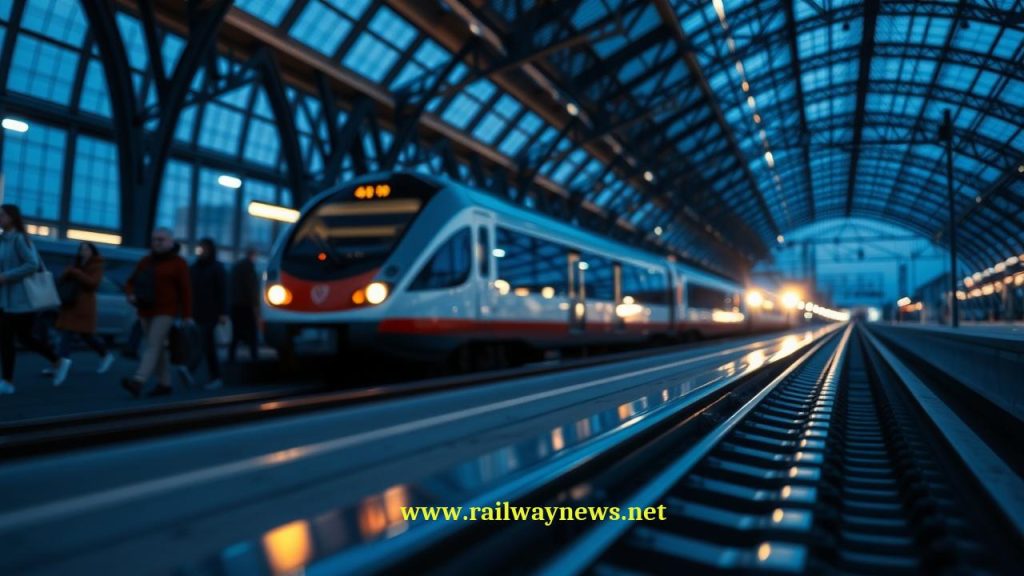
A direct rail service between Swindon and Birmingham could be reinstated for the first time in over 20 years, a move projected to add over two million extra seats annually. The proposal is a key component of the £1.75bn Midlands Rail Hub project, which has now secured funding for its first phase and appointed a major delivery alliance, signalling a significant step forward for regional connectivity in the UK.
| Category | Details |
|---|---|
| Project | Midlands Rail Hub |
| Total Scheme Budget | £1.75 billion |
| Key Proposal | New hourly direct service: Swindon – Kemble – Birmingham |
| Projected Capacity Increase | Over 2 million extra passenger seats per year |
| Economic Impact | 12,750+ construction jobs |
| Delivery Alliance Partners | VolkerRail, Laing O’Rourke, AtkinsRéalis, Siemens Mobility, Network Rail |
Transport body Midlands Connect has outlined plans that could re-establish a direct rail link between Swindon and Birmingham via Kemble, a route dormant since the early 2000s. The proposal, contingent on capacity unlocked by the wider Midlands Rail Hub scheme, was hailed as a potential “gamechanger” for passengers who currently face inconvenient changes at Cheltenham or Gloucester. At a recent meeting at Kemble station attended by South Cotswolds MP Roz Savage and officials from Gloucestershire County Council and Great Western Railway, stakeholders emphasized the plan’s alignment with research from Transport Focus, which highlights strong passenger preference for direct services. The first phase of the Hub is now officially funded following an announcement by Chancellor Rachel Reeves in the latest spending review.
The project has taken a major step towards delivery with the recent identification of a preferred alliance of industry heavyweights to construct the scheme. The consortium includes VolkerRail, Laing O’Rourke, AtkinsRéalis, and Siemens Mobility, who will work alongside Network Rail to deliver the upgrades. This development provides significant momentum for the project, which promises not only enhanced passenger services but also a substantial economic boost, with projections of over 12,750 jobs created during its construction phase. MP Roz Savage welcomed the investment, noting that the Midlands Rail Hub could bring up to 130 extra trains a week to her constituency and make rail a “far more convenient option for our rural communities.”
The advancement of the Midlands Rail Hub is particularly significant in the context of the UK’s wider rail infrastructure landscape. With recent updates confirming that the original 2033 completion target for HS2’s London-to-Birmingham link cannot be met, the strategic importance of robust, regional rail enhancement projects has been thrown into sharp relief. While HS2 undergoes a “detailed reset” to prioritize the Old Oak Common-Birmingham section, projects like the Midlands Rail Hub are positioned to deliver more immediate and tangible benefits to the existing network, improving inter-regional connectivity and addressing long-standing service gaps for communities across the Midlands, South Wales, and the Southwest.
Key Takeaways
- Restored Connectivity: A direct rail service between Swindon and Birmingham, absent for over two decades, is now a viable proposal under the Midlands Rail Hub scheme.
- Major Capacity Boost: The new hourly service would create over two million additional seats per year, significantly improving travel options and reducing journey complexity.
- Project Momentum: With Phase 1 funding secured and a powerful alliance of construction and engineering partners appointed, the project is moving firmly from blueprint to delivery.
Editor’s Analysis
While national mega-projects like HS2 continue to dominate headlines with their shifting timelines and budgets, the steady progress of the Midlands Rail Hub underscores a critical truth for the global rail market: targeted, regional upgrades are the engine of near-term network improvement. This project serves as a powerful case study in addressing specific, historical connectivity deficits to unlock immediate economic and social value. For international observers, the Hub’s advancement, especially as HS2 faces delays, highlights a pragmatic and increasingly vital approach to national infrastructure strategy—one that prioritizes incremental, high-impact schemes that can deliver tangible benefits to passengers and regional economies without the multi-decade timelines of high-speed new builds.
Frequently Asked Questions
- What is the primary goal of the Midlands Rail Hub?
- The Midlands Rail Hub is a £1.75bn transport improvement plan designed to deliver faster, more frequent, and higher-capacity rail connections across the Midlands region and beyond, connecting to the Southwest and South Wales.
- When did the last direct train service run between Swindon and Birmingham?
- The last direct service on this route ran in the early 2000s, meaning it has been over 20 years since passengers could make the journey without changing trains.
- Who are the main partners selected to deliver the Midlands Rail Hub?
- A preferred alliance has been identified, which includes major industry players such as VolkerRail, Laing O’Rourke, AtkinsRéalis, Siemens Mobility, who will work in partnership with Network Rail.

Railway infrastructure, rolling stock and transport technologies specialist focused on global rail industry developments, high-speed rail systems, signaling technologies and freight transportation. Covering railway investments, public transport modernization, rail operations and international mobility projects across Europe, Asia and North America.
RELATED POSTS

October 1, 2026 7:09 am
United States regulators confirmed a September 30 deadline for the...

October 8, 2026 1:15 pm
Alstom secured a €1bn contract to build 13 automated trains,...

October 4, 2026 5:14 pm
Alstom secured a CA$4.7 billion order from VIA Rail Canada...

October 1, 2026 12:13 am
Illinois approved $1.5 billion annually for the Northern Illinois Transit...

October 6, 2026 2:14 am
Union Pacific launched export rail shipments with Ferromex to deliver...

October 1, 2026 6:10 am
Amtrak approved a System Expansion Committee on July 30 to...