
UIC 430-2 – Coach Transfer Conditions for France-Spain Bogie Change
UIC 430‑2 Chapter 4 has successfully standardized the technical aspects of bogie change, but the economic model underpinning cross‑gauge services remains fragile.
⚡ IN BRIEF
- Gauge Change as a Historical Bottleneck: The French–Spanish border at Hendaye/Irún has long been a critical interoperability point because France uses standard gauge (1,435 mm) while Spain uses Iberian gauge (1,668 mm). UIC 430‑2 Chapter 4 was developed to standardize the complex process of lifting coaches, changing bogies, and ensuring all systems (brakes, electrics, pneumatics) remain functional after the transition.
- Dimensional Envelope & Gauge Compatibility: The leaflet specifies strict dimensional limits for coaches to be eligible for bogie change. Maximum height: 4,280 mm; width: 3,150 mm; length between bogie centers: ≤ 19,000 mm. These ensure that coaches with new bogies do not conflict with platforms, overhead lines, or structures on either network.
- Lifting Points & Structural Integrity: Coaches must have designated, reinforced lifting points capable of supporting the full vehicle weight (up to 55 t for a loaded coach) during bogie swap. The leaflet mandates a safety factor of 3.0 for lifting brackets and requires that lifting be possible without damaging underfloor equipment (e.g., transformers, air tanks).
- Brake System Interoperability: The bogie change also involves swapping brake components. UIC 430‑2 requires that coaches be fitted with brake systems that can be easily connected to either standard‑gauge or Iberian‑gauge bogies, with compatible pneumatic connections (10‑bar main reservoir line) and automatic load‑proportional braking. The leaflet references UIC 540 (brake regulations) for compatibility.
- Electrical & Data Connections: Modern coaches require continuity of electrical supply (3‑phase 400 V, 50 Hz trainline) and data buses (e.g., WTB for multiple units) across the bogie change. The leaflet mandates standardized connectors located in protected positions to allow quick reconnection without rewiring.
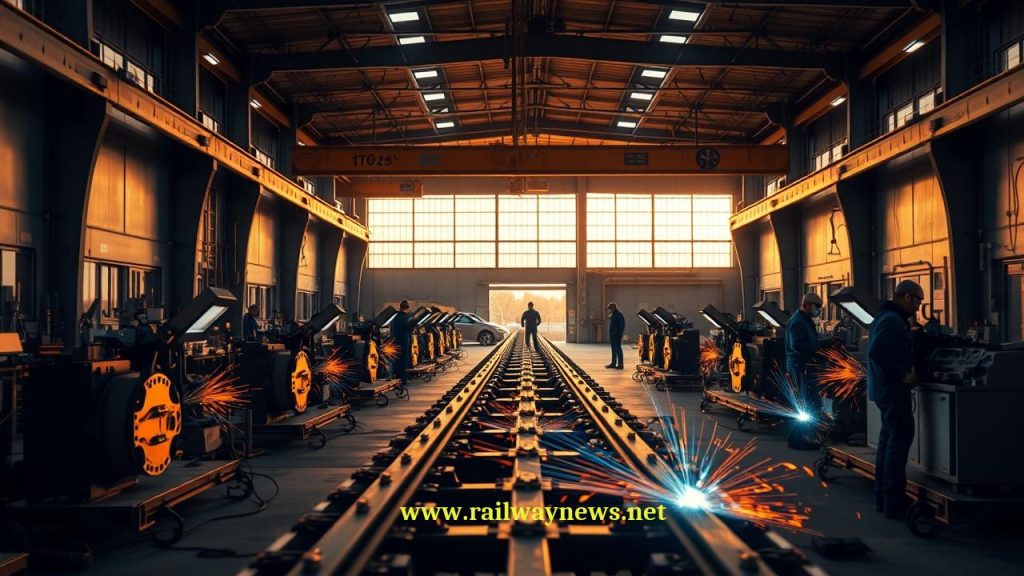
At the border town of Hendaye, straddling the river Bidassoa between France and Spain, a curious ritual plays out daily. Passenger coaches arriving from Paris on standard‑gauge tracks are slowly hoisted in a purpose‑built shed, their bogies unbolted and rolled away, while new bogies—wider‑gauged to match Spain’s 1,668 mm track—are slid beneath. In 1970, this operation was a logistical nightmare: coaches often required hours of manual adjustment, brake hoses had to be rerouted, and electrical systems were frequently incompatible, leading to delays that stretched into days. The need for a harmonized set of rules became undeniable, leading to the creation of UIC Leaflet No: 430‑2 – Chapter 4. This standard codifies the exact conditions that a coach must meet to be accepted for transfer between France and Spain with a bogie change at the transit point. It transformed what was once a manual, error‑prone process into a streamlined, repeatable procedure that today allows a Talgo train to cross the border in under 20 minutes—a testament to the power of standardized interoperability.
What Is UIC Leaflet 430‑2 Chapter 4?
UIC Leaflet 430‑2 – Chapter 4 is an operational and technical specification developed by the International Union of Railways (UIC) to define the conditions that passenger coaches must satisfy to be transferred between France and Spain when a bogie change is required at the transit point (historically Hendaye/Irún, but applicable to any gauge‑change facility). The leaflet addresses the fundamental interoperability challenge posed by the differing track gauges (standard vs. Iberian) by standardizing the design and operational requirements for rolling stock that undergoes bogie exchange. It covers dimensional constraints (height, width, length) to ensure clearance on both networks; structural requirements (lifting points, underframe rigidity) to facilitate safe lifting; mechanical interfaces (bogie attachment, brake compatibility) to enable rapid swapping; and electrical/pneumatic connections to maintain train integrity. The leaflet is a critical document for rolling stock manufacturers, infrastructure managers, and railway undertakings operating cross‑border services between France and Spain, and its principles have been extended to other gauge‑change operations globally (e.g., Switzerland–Italy–Spain, China–Europe).
1. Dimensional Envelope & Gauge Compatibility
The most fundamental requirement is that the coach, when fitted with either standard‑gauge or Iberian‑gauge bogies, must fit within the respective loading gauges of France (GC – Gauge of the Grandes Lignes) and Spain (Gauge 7 for conventional lines, Gauge 16 for high‑speed). UIC 430‑2 Chapter 4 specifies absolute maximum dimensions for the coach body:
- Maximum height: 4,280 mm above top of rail (measured at the highest point, including pantographs or roof equipment).
- Maximum width: 3,150 mm (for conventional lines; high‑speed may permit 3,350 mm with clearance studies).
- Maximum length between bogie centers: 19,000 mm (to ensure the coach does not overhang beyond the lifting jacks and to maintain acceptable curve negotiation).
- Minimum floor height: 1,200 mm ± 20 mm (to align with platforms in both countries, which range from 760 mm to 1,200 mm depending on station).
The leaflet also requires that any protruding equipment (e.g., steps, door handles, drainage pipes) be retractable or positioned to remain within the body profile to avoid interference during bogie change or gauge crossing.
2. Lifting Points & Structural Design for Bogie Change
The bogie change process involves lifting the entire coach (up to 55 t for a loaded sleeper) off its bogies. The leaflet mandates specific design features to enable this safely and efficiently:
- Lifting points: Four reinforced positions, two on each side of the underframe, located symmetrically near the bogie centers. Each lifting point must be designed for a vertical load of at least 150 kN (15 t) with a safety factor of 3.0 relative to yield strength.
- Lifting pad dimensions: A flat, horizontal surface of at least 120 mm × 120 mm, positioned to be accessible from the side without removing any underfloor equipment.
- Underframe rigidity: The underframe must be torsionally stiff enough to maintain alignment when lifted on three points (in case of uneven jacking). The leaflet specifies a maximum diagonal deflection of 10 mm when lifted at all four corners with a 10% load imbalance.
- Clearance for bogie extraction: The coach must have sufficient underframe clearance (minimum 250 mm between the lowest body component and the top of the bogie) to allow the bogie to be rolled out laterally after lifting.
These requirements are verified during type testing and on the first production units before series approval.
3. Mechanical & Brake System Compatibility
The bogie change also involves swapping the brake components. UIC 430‑2 Chapter 4 requires that coaches be equipped with brake systems that can interface seamlessly with either set of bogies. Key aspects include:
| System | Requirement |
|---|---|
| Pneumatic brake connections | Standardized quick‑connect couplings (UIC 540 compliant) for main reservoir (10 bar), brake pipe (5 bar), and control line. Couplings must be located within 500 mm of the bogie center and protected from contamination. |
| Brake cylinder compatibility | The coach’s brake rigging must accept either type of brake cylinder (mounted on the bogie) with a standard interface: four M20 bolts on a 180 mm × 180 mm pattern, and a pushrod stroke of 70–90 mm. |
| Load‑proportional braking | The coach must be equipped with a load sensor (either mechanical or electronic) that automatically adjusts brake force based on passenger load, with a standardized output signal compatible with both bogie types. |
| Parking brake | A manual or spring‑applied parking brake must be operable from the bogie or from the coach side, with a force sufficient to hold the coach on a 30‰ grade. |
The leaflet also mandates that all brake components be designed for easy access and quick connection/disconnection, with color‑coded hoses and labeled connections to reduce human error.
4. Electrical & Data Systems Continuity
Modern coaches require uninterrupted electrical power and data communication across the bogie change. UIC 430‑2 Chapter 4 specifies the following:
- Main power supply: 3‑phase 400 V AC, 50 Hz trainline. Coaches must have standardized power jumpers (HE/DE connectors) located near the bogie area that can be disconnected and reconnected without specialized tools. Maximum power capacity per coach: 200 kVA (for heating, ventilation, air conditioning, and auxiliary loads).
- Low‑voltage supply: 110 V DC control circuit (UIC 550 compliant) for lighting, door controls, and emergency systems. Batteries must maintain critical systems for at least 30 minutes during bogie change.
- Data communication: Coaches equipped with train‑wide data buses (e.g., WTB – Wire Train Bus per IEC 61375‑1) must have standardized couplers that allow the bus to be broken and re‑established without configuration. The leaflet requires that the bus be automatically reconfigured within 10 seconds after reconnection.
- Electrical safety: All electrical connections must be rated for at least 1,500 V isolation (to protect against transient surges) and be equipped with automatic grounding switches that activate when the bogie change sequence begins, preventing accidental arcing.
Compliance with these electrical provisions is verified by a combination of type testing (dielectric strength, continuity) and functional tests during the first bogie change operations.
Comparison: Bogie Change vs. Variable‑Gauge Systems
Two main approaches exist for cross‑gauge operation: the bogie change method (as covered by this leaflet) and variable‑gauge wheelset systems (e.g., Talgo RD, CAF BRAVA). The table below compares them:
| Parameter | Bogie Change (UIC 430‑2) | Variable‑Gauge Wheelset (e.g., Talgo, CAF) |
|---|---|---|
| Time to change gauge | 10–20 minutes per train (with dedicated lifting facility) | 1–3 minutes per train (rolling through gauge‑change unit) |
| Infrastructure required | Lifting shed with jacks, overhead crane, bogie storage tracks, personnel | Specially designed gauge‑change unit (tracks with movable rails) + roller guides |
| Rolling stock complexity | Moderate; requires standardized bogie interfaces and lifting points | High; wheelsets with locking/unlocking mechanisms, specific axle geometry |
| Maintenance burden | Two separate bogie fleets to maintain; bogie swap adds wear on attachment points | Single fleet, but moving parts in wheelset require regular servicing (e.g., every 300,000 km) |
| Passenger experience | May require detraining or a wait during change; interior remains accessible | Passengers remain on board; seamless, no noticeable stop |
| Initial cost | Lower rolling stock cost, but infrastructure investment (lifting shed) needed | Higher rolling stock cost, specialized gauge‑change units |
Editor’s Analysis: The Economic Case for Standardization
UIC 430‑2 Chapter 4 has successfully standardized the technical aspects of bogie change, but the economic model underpinning cross‑gauge services remains fragile. The infrastructure required—a lifting shed with multiple jacks, a dedicated workforce, and the need to maintain two fleets of bogies—represents a significant sunk cost. For a typical night train service (e.g., Paris–Madrid), the bogie change adds at least 30 minutes of dwell time, reducing asset utilization by 10‑15%. The leaflet does not address the operational economics; it assumes that the benefits of interoperability outweigh the costs. However, with the rise of variable‑gauge technologies (Talgo RD, CAF BRAVA) and the gradual expansion of high‑speed lines to standard gauge in Spain (e.g., Madrid–Barcelona), the bogie change method is increasingly seen as a legacy solution.
The next revision of UIC 430‑2 should incorporate provisions for mixed‑fleet operations, where some trains use bogie change and others use variable‑gauge, ensuring that station and maintenance facilities can accommodate both without conflict. Additionally, the leaflet would benefit from updated requirements for automatic coupling and uncoupling of electrical and pneumatic systems, reducing the manual labor currently required. As cross‑border rail traffic grows under the EU’s Green Deal objectives, the investment in bogie‑change facilities may be justified for niche routes, but only if the standard evolves to minimize operational friction.
— Railway News Editorial
Frequently Asked Questions (FAQ)
1. Why do France and Spain have different track gauges, and why is bogie change still necessary?
The difference in track gauge dates to the 19th century. France adopted the Stephenson gauge (1,435 mm, later known as standard gauge) as part of its early railway expansion. Spain, for military defense reasons, chose a wider gauge (1,668 mm) to hinder invasion from France. Today, Spain’s high‑speed network (AVE) is built to standard gauge to allow through‑running with France, but the conventional network—still extensive for regional and freight—remains Iberian gauge. Bogie change is necessary for trains that use both the conventional Iberian‑gauge network (e.g., accessing cities like A Coruña, Salamanca) and the French standard‑gauge network. For routes that only use the high‑speed lines, variable‑gauge or new standard‑gauge trains are viable, but the majority of cross‑border night and freight trains still require bogie change to access the wider conventional network.
2. How is the coach lifted during bogie change, and what safety systems are in place?
The bogie change facility uses synchronized hydraulic jacks that lift the entire train or individual coaches simultaneously. Each jack has a capacity of at least 150 kN and is equipped with overload protection and position sensors. The jacks are interlocked via a PLC (programmable logic controller) to ensure they raise and lower at the same rate, preventing twisting of the underframe. Before lifting, all pneumatic and electrical connections are manually disconnected by trained personnel. The lifting sequence is: (1) train is positioned over the pit; (2) jacks engage the lifting pads; (3) coach is raised 300‑400 mm; (4) bogies are unbolted and rolled out on rails; (5) new bogies are rolled in; (6) coach is lowered onto the new bogies; (7) bolts are torqued, and connections are reattached. Safety systems include mechanical locking pins that engage if hydraulic pressure is lost and a backup generator for the hydraulic pumps. The entire process is supervised by a certified bogie change supervisor.
3. What happens to the braking system when the bogies are swapped?
During a bogie change, the brake cylinders, brake discs (or blocks), and the associated piping are swapped with the bogie. The coach body contains the brake control equipment (e.g., distributor valve, load‑proportional valves, main reservoir). At the interface, there are standardized quick‑connect couplings for the main air supply (10 bar), the brake pipe (5 bar), and the control line (for electro‑pneumatic brakes). After the new bogie is in place, these couplings are reconnected, and a brake test is performed. The test includes a check of brake continuity (all wheels release and apply), a leakage test (pressure drop < 0.2 bar in 5 minutes), and a function test of the load‑proportional brake (simulating empty and loaded conditions). Only after the brake test is successfully completed is the train cleared to depart. The leaflet requires that the brake test be performed by qualified personnel using calibrated test equipment.
4. Can freight wagons also use the bogie change procedure under this leaflet?
UIC 430‑2 Chapter 4 is specifically written for passenger coaches, but the general principles (lifting points, dimensional constraints, brake compatibility) are applied analogously to freight wagons through other UIC leaflets (e.g., UIC 571‑4 for wagon dimensions). For freight, the bogie change process is more complex because wagons often have different brake systems (e.g., single‑pipe vs. dual‑pipe), variable loading conditions, and may not have standardized lifting points. However, cross‑border freight between France and Spain does occur with bogie change, particularly for specialized cargo (e.g., automobiles, perishables). In practice, freight operators use a set of standardized “gauge‑changeable” wagons that comply with UIC 571‑4 and related leaflets. These wagons have reinforced lifting points, standardized brake connections, and are dimensioned to fit both gauges. The operating process is similar to passenger coaches, though the test criteria may be adjusted for the lower safety requirements of freight (e.g., lower brake test frequency).
5. How does the leaflet ensure that electrical systems remain safe during the changeover?
Electrical safety is critical because coaches may have live 400 V, 50 Hz power and 110 V control circuits even when stationary (for auxiliary systems). The leaflet requires that the entire train’s electrical system be put into a “bogie change mode” before disconnection. This mode is activated by the driver or maintenance staff and performs the following: (1) disconnects the train’s main power supply from the overhead line via the pantograph; (2) isolates the battery charger to prevent back‑feeding; (3) switches lighting and emergency systems to battery power; (4) engages ground switches to discharge any stored capacitive charge. After these steps, the power and data connectors near the bogies are physically unlocked (often with a mechanical interlock that prevents disconnection while energized). Only then can personnel disconnect the jumpers. During reconnection, the process is reversed, and a ground‑fault test is performed before re‑energizing the train. The leaflet also requires that all electrical connectors be rated for at least 500 connect/disconnect cycles and be protected against moisture (IP65 minimum).

Railway infrastructure, rolling stock and transport technologies specialist focused on global rail industry developments, high-speed rail systems, signaling technologies and freight transportation. Covering railway investments, public transport modernization, rail operations and international mobility projects across Europe, Asia and North America.