
New Orleans Public Belt Launches Oversized Rail Digital Platform
New Orleans Public Belt launched its Q1 2025 digital platform automating oversized cargo routes to six Class I railroads.
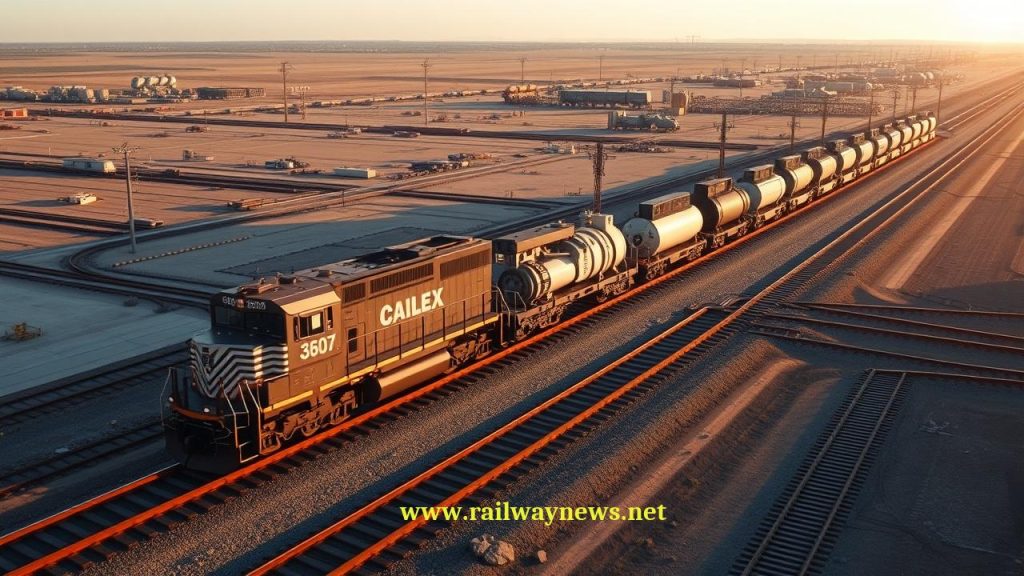
⚡ In Brief: The Port of New Orleans and New Orleans Public Belt Railroad have partnered with UTC Transoceanic to deploy a digital routing platform streamlining oversized rail cargo logistics across NOPB’s connections to all six Class I railroads.
NEW ORLEANS, UNITED STATES – The Port of New Orleans (Port NOLA) and the New Orleans Public Belt Railroad (NOPB) announced a partnership in February 2025 with newly launched logistics company UTC Transoceanic to deploy a digital routing platform for oversized rail shipments. This digital initiative directly connects NOPB’s network to all 6 Class I railroads, aiming to compress logistics planning timelines that historically took several months. The platform automates clearance analysis for massive industrial shipments, including power transformers and wind turbine components, arriving at the Gulf gateway.
What Are the Technical Specifications?
The digital platform developed by UTC Transoceanic automates rail routing decisions by matching cargo dimensions, weight, and rail-car specifications against physical network constraints. The system analyzes bridge clearances, tunnel restrictions, track geometry, and routing limitations across the NOPB network and its Class I interchanges. Traditionally, these oversized dimensional shipments required manual engineering reviews spanning weeks or months to clear a single route. By digitizing the physical parameters of both the infrastructure and the rolling stock, the platform calculates viable routes in a fraction of the time, reducing administrative bottlenecks for heavy-industries like data centers and energy projects.
Key Technical Data
| Parameter | Value |
|---|---|
| Technology / System Name | UTC Transoceanic Digital Routing Platform |
| Total Value | Not disclosed |
| Parties Involved | Port of New Orleans (Port NOLA), New Orleans Public Belt Railroad (NOPB), UTC Transoceanic |
| Timeline / Completion | Deployment initiated in Q1 2025; full rollout timeline not disclosed |
| Country / Corridor | United States / New Orleans Rail Gateway |
Where Does This Technology Stand in the Market?
The Port NOLA and NOPB digital strategy represents a shift toward software-enabled port community integration, contrasting sharply with physical-first capital projects. For example, Port Mansfield implemented a shared physical community staging dock model to enhance regional maritime capabilities without requiring tenants to build dedicated infrastructure from scratch (Source: Port Mansfield, 2024). Instead of constructing physical layout tracks or staging areas, NOPB is utilizing digital optimization to lower the barrier of entry for heavy shippers.
In the specialized rail technology market, UTC Transoceanic’s platform enters a niche occupied by established infrastructure gauging systems. Balfour Beatty’s ClearRoute 2 software offers automated 3D clearance simulation and infrastructure gauging for complex rail networks, primarily focusing on passenger and freight clearance safety (Source: Balfour Beatty, 2023). In contrast, Wabtec’s Movement Planner focuses on real-time network traffic dispatching optimization rather than specialized oversized dimensional routing (Source: Wabtec Corporation, 2024). NOPB’s deployment is unique in its direct integration of port-of-entry maritime logistics with multi-Class I rail routing.
Editor’s Analysis
Integrating automated clearance routing at the port-of-entry level directly addresses the logistics bottlenecks of the ongoing North American industrial manufacturing boom. This digital deployment aligns with a broader global trend where the railway signalling and modernization market is projected to grow at a CAGR of 4.7% from 2026 to 2036, reaching USD 75.6 billion, driven by regulatory compliance and procurement modernization (Source: IndexBox, 2024). By modernizing its digital interface, NOPB secures its position as a preferred gateway for high-value, heavy-transit energy infrastructure projects that cannot utilize highway networks.
FAQ
Q: How does the NOPB and UTC Transoceanic partnership improve oversized cargo shipping?
A: The partnership introduces a digital platform that automates the routing process for oversized cargo moving through the Port of New Orleans. By analyzing cargo dimensions and rail-car specifications against NOPB’s network constraints, it replaces manual planning processes that previously took weeks or months.
Q: What types of cargo will utilize this digital routing platform?
A: The platform is designed for heavy and oversized industrial cargo, such as wind turbine components, power transformers, and refinery vessels. These large-scale shipments arrive via ocean vessels and must transition directly to rail because regional highway networks cannot support their weight and dimensions.
Q: Which major rail networks can be accessed through this new system?
A: The platform facilitates direct connections from the New Orleans Public Belt Railroad to all six Class I railroads operating in North America. The specific integration timelines for each Class I partner’s clearance database have not been officially disclosed.

Railway industry analyst and transport media specialist focused on railway infrastructure, rolling stock, signaling systems and global mobility developments. Covering high-speed rail projects, railway modernization, freight transportation and smart rail technologies across international markets.With a strong interest in transport innovation and sustainable mobility, he follows major railway investments, urban transit expansion projects and next-generation rail technologies shaping the future of transportation.His editorial approach combines industry-focused reporting with accessible technical analysis, delivering clear and reliable insights for railway professionals, transport stakeholders and rail enthusiasts worldwide.
RELATED POSTS

October 8, 2026 1:15 pm
Alstom secured a €1bn contract to build 13 automated trains,...

October 1, 2026 7:09 am
United States regulators confirmed a September 30 deadline for the...

October 4, 2026 5:14 pm
Alstom secured a CA$4.7 billion order from VIA Rail Canada...

October 1, 2026 12:13 am
Illinois approved $1.5 billion annually for the Northern Illinois Transit...

October 5, 2026 1:13 pm
New York MTA confirmed a late 2026 DEIS release for...

October 6, 2026 9:17 am
Illinois approved $1.1M in state funds to upgrade two McHenry...