
Northern Rail Revolution: Local Control, Investment, Trends
Northern England’s rail network poised for revolution with government investment and local control. New funding, infrastructure upgrades, and rolling stock slated to improve services.
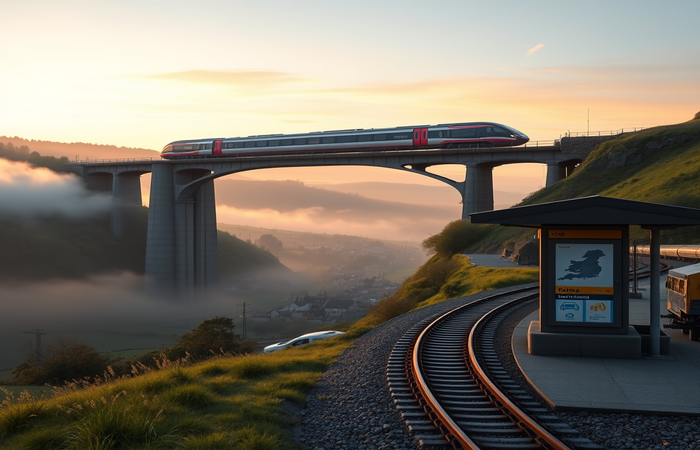
Northern England Poised for Rail Revolution with Government Investment and Local Control
The North of England is on the cusp of a significant transformation of its railway network, propelled by a confluence of government investment, local authority empowerment, and the promise of streamlined operations. This shift, discussed at the Rail North Committee meeting in Bradford on June 10th, hinges on a detailed railway reform package and substantial funding aimed at aligning rail services with regional priorities. The ‘who’ is the collective of Northern politicians, rail operators, and Transport for the North. The ‘what’ is a new blueprint for improved rail services, including infrastructure upgrades and simplified ticketing. The ‘when’ is unfolding now, with announcements of funding and the anticipation of the Railways Bill. The ‘where’ is the North of England, specifically focusing on West Yorkshire, Greater Manchester, and the North East. The ‘why’ is to create an accessible, reliable, and modern railway system, catering to local needs and boosting economic development. The ‘how’ involves strategic investment, local decision-making, and the introduction of Great British Railways, a single public body. This article explores the key components of this rail revolution, its implications for the industry, and the expected outcomes for passengers and the region.
Shaping the Future: Local Control and Strategic Vision
A core tenet of the proposed reforms is the delegation of greater control over rail services to local authorities. Northern politicians are actively involved in developing a detailed blueprint, paving the way for a railway network that directly addresses regional requirements. This includes aligning rail infrastructure with local housing developments and simplifying ticketing systems, both crucial elements for enhancing accessibility and passenger experience. Transport for the North (TfN), a statutory sub-national transport body, plays a pivotal role in shaping decisions and ensuring that ambitious targets are translated into tangible realities, including working in tandem with central government agencies. The aim is to move away from decisions being made centrally, with minimal input from those who both use the system, and best understand the regional needs.
Funding Fuels Transformation: Infrastructure Investment and Modernization
Chancellor Rachel Reeves’s anticipated funding announcements and the subsequent 10-year national infrastructure investment plan are the cornerstones of the railway overhaul. Building on the existing £18.5 billion investment in light rail systems in Northern cities, the funding influx promises significant improvements to the region’s transport infrastructure. One key element is the £2 billion investment for a new mass transit system in West Yorkshire, with works expected to commence by 2028. This includes extending Greater Manchester’s Metrolink tram system, bringing the Metro Link to Washington in the North East, and renewing South Yorkshire’s Supertram. In addition to these major projects, the plan includes rapid bus routes in the Liverpool city region and new bus stations in Wakefield and Bradford. These initiatives are designed to enhance connectivity and create a more integrated and efficient transport ecosystem across the North.
Rolling Stock Renewal: Modernizing the Fleet
The commitment to upgrade the existing fleet is also central to the modernisation effort. Hundreds of new trains are planned for purchase. Northern, a major operator in the region, will acquire 450 new trains, effectively replacing two-thirds of its existing fleet over the next decade. This represents a significant investment in passenger comfort, service reliability, and operational efficiency. TransPennine, another key operator, will buy an additional 29 trains. The new rolling stock will incorporate the latest technologies and accessibility features, enhancing the overall rail travel experience for passengers. The scale of the investment underscores the determination of the Government and local authorities to create a state-of-the-art rail network.
Operational Excellence: Lessons from Public Ownership
The meeting in Bradford also highlighted the positive performance of TransPennine since its entry into public ownership. Following a period of poor performance, the move to public control has brought improvements. The company recorded significant improvements in March, with cancellations dropping to just 2% and a 12% year-on-year increase in passenger numbers. This example suggests that when done well, public ownership can translate into direct benefits for the passenger. The improved performance provides a positive case study for the incoming Great British Railways (GBR) system, which will consolidate the management of passenger train services and infrastructure under a single public entity.
Conclusion
The rail reforms being implemented in the North of England represent a pivotal moment for the industry. The convergence of government investment, localized control, and operational improvements holds the potential to transform the region’s rail network into a model of efficiency, accessibility, and sustainability. The anticipated introduction of the Railways Bill and the creation of Great British Railways, in conjunction with the funding allocated for infrastructural improvements and the acquisition of modern rolling stock, will lay the foundation for a more integrated and passenger-focused transport system. The success of these initiatives will have significant implications for the broader railway sector, possibly influencing approaches to public ownership and local government’s ability to shape transport infrastructure. The industry can learn from the successes of the TransPennine’s public ownership, by observing how it can improve the overall performance of rail networks. Looking ahead, the effectiveness of the new systems will depend on the continued commitment of all stakeholders to ensure the region’s railway network thrives, driving economic growth and providing an enhanced experience for the traveling public.

Railway infrastructure, rolling stock and transport technologies specialist focused on global rail industry developments, high-speed rail systems, signaling technologies and freight transportation. Covering railway investments, public transport modernization, rail operations and international mobility projects across Europe, Asia and North America.
RELATED POSTS

October 1, 2026 7:09 am
United States regulators confirmed a September 30 deadline for the...

October 8, 2026 1:15 pm
Alstom secured a €1bn contract to build 13 automated trains,...

October 4, 2026 5:14 pm
Alstom secured a CA$4.7 billion order from VIA Rail Canada...

October 1, 2026 12:13 am
Illinois approved $1.5 billion annually for the Northern Illinois Transit...

October 6, 2026 2:14 am
Union Pacific launched export rail shipments with Ferromex to deliver...

October 1, 2026 6:10 am
Amtrak approved a System Expansion Committee on July 30 to...