
Singapore’s JRL: MRT Expansion & Urban Growth
The Land Transport Authority of Singapore has awarded two major civil contracts for the construction of five stations along the Jurong Region Line (JRL), totaling approximately S$740 million, including modifications at an existing station to integrate it with new JRL stations. Shanghai Tunnel Engineering and a joint venture between Eng Lee Engineering and Wai Fong Construction have been selected as the prime contractors for these projects, demonstrating Singapore’s commitment to working with experienced firms in delivering complex railway infrastructure.
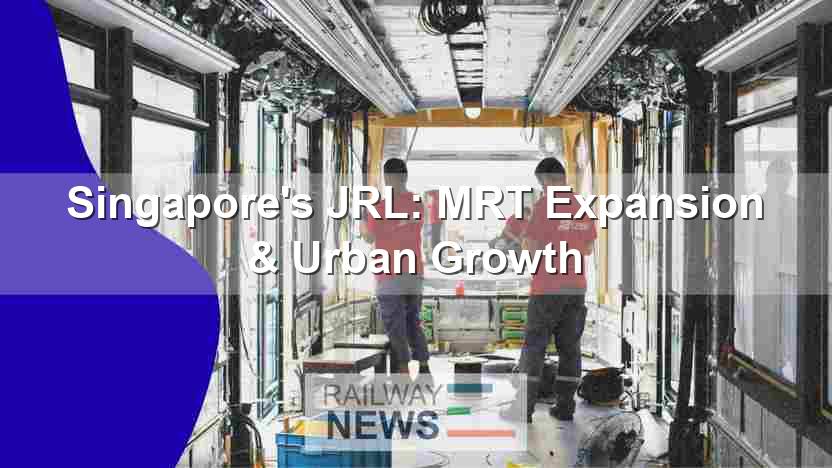
This article explores the significant infrastructure development underway in Singapore, specifically focusing on the construction of the Jurong Region Line (JRL), a crucial addition to the country’s expanding mass rapid transit (MRT) network. The JRL project represents a substantial investment in Singapore’s public transportation system, aiming to enhance connectivity and alleviate traffic congestion within the Jurong region and its surrounding areas. This analysis will examine the awarded contracts, the involved companies, the projected timeline, and the broader implications of this project for Singapore’s urban development and economic growth. The discussion will further highlight the complexities of large-scale infrastructure projects, including the integration of new lines with existing systems and the challenges of managing such endeavors within a densely populated urban environment. The strategic importance of efficient and reliable public transport in a thriving metropolis like Singapore will also be explored, along with the technological advancements and engineering expertise necessary to execute such projects successfully. The future potential impact on urban planning and economic development in the Jurong Region will also be analyzed, highlighting the importance of well-planned infrastructure for sustainable urban growth.
JRL Contract Awards and Contractors
The Land Transport Authority (LTA) of Singapore has awarded two major civil contracts for the construction of five stations along the JRL. Shanghai Tunnel Engineering (Singapore) secured a S$465.2 million (approximately US$337 million) contract for the design and construction of Choa Chu Kang, Choa Chu Kang West, and Tengah stations, along with a 4.3km viaduct. This contract also includes crucial modification works at the existing Choa Chu Kang station on the North-South Line (NSL) to seamlessly integrate it with the new JRL station. Simultaneously, a joint venture between Eng Lee Engineering and Wai Fong Construction won a S$274.3 million (approximately US$198.7 million) contract for the design and construction of Corporation and Hong Kah stations, including a 3.4km viaduct. The selection of these contractors reflects the LTA’s commitment to working with experienced firms with a proven track record in delivering complex railway infrastructure projects. Shanghai Tunnel Engineering’s involvement in other significant projects, such as the Circle Line, Tuas West Extension, and the Thomson-East Coast Line (TEL), underscores its expertise in this domain.
Project Scope and Timeline
The JRL, Singapore’s seventh MRT line, is a 24km long system encompassing 24 stations, including three crucial interchange stations at Boon Lay, Choa Chu Kang, and Jurong East. These interchanges are vital for seamless transfers between the JRL and other existing MRT lines, maximizing the line’s overall utility and passenger convenience. Construction on the awarded contracts is expected to commence in the coming year, with completion slated for 2026. This ambitious timeline requires precise project management, efficient resource allocation, and close coordination among all stakeholders. The successful implementation of this schedule will demonstrate Singapore’s ability to effectively manage large-scale infrastructure projects within stringent deadlines.
Integration with Existing Infrastructure
A key challenge in any major MRT expansion is the seamless integration of new lines with existing systems. The JRL project expertly demonstrates this through the planned integration at Choa Chu Kang station, where the new JRL station will be seamlessly integrated with the existing NSL station. This type of integration requires careful planning and execution to minimize disruption to existing services and passenger flow during construction. The detailed engineering required ensures a smooth transition for commuters, minimizing inconvenience and maximizing the efficiency of the integrated transport hub. This careful integration is a crucial element of successful urban planning in a dense, highly utilized transport network.
Economic and Urban Development Implications
The JRL project is not merely a transport infrastructure project; it is a catalyst for economic and urban development in the Jurong region. Improved connectivity facilitated by the JRL is expected to stimulate economic activity, attract investment, and enhance the overall quality of life for residents. The increased accessibility to employment centers, educational institutions, and recreational facilities will significantly benefit the region’s population. The strategically planned stations are positioned to support the future growth and development of residential and commercial areas, encouraging balanced and sustainable urban expansion. This underscores the crucial role of well-planned infrastructure in driving economic prosperity and social progress.
Conclusion
The construction of the Jurong Region Line (JRL) signifies a significant step forward in enhancing Singapore’s public transportation network. The awarding of contracts to experienced firms like Shanghai Tunnel Engineering and the Eng Lee Engineering-Wai Fong Construction joint venture demonstrates a commitment to quality and timely execution. The project’s scope, encompassing the construction of five stations and substantial viaducts, along with the strategic integration with existing lines such as the North-South Line, highlights the complexity and importance of this undertaking. The projected completion date of 2026 underscores the ambitious timeline and the efficient project management required for successful implementation. Beyond the immediate impact of improved connectivity and reduced traffic congestion, the JRL is poised to act as a catalyst for economic growth and urban development in the Jurong region. The integration of the JRL with existing transport infrastructure will further enhance the efficiency and convenience of Singapore’s public transport system. The project serves as a model of strategic infrastructure development, showcasing how well-planned transport networks can contribute significantly to a city’s economic prosperity and enhance the quality of life for its citizens. The successful completion of the JRL will solidify Singapore’s reputation as a global leader in efficient and sustainable urban planning, setting a benchmark for other cities facing similar challenges of managing rapid urbanization and the need for enhanced public transport infrastructure. The project’s success will depend on continued collaboration between the LTA, contractors, and other stakeholders to navigate potential challenges and ensure the timely delivery of this crucial infrastructure project.

Railway infrastructure, rolling stock and transport technologies specialist focused on global rail industry developments, high-speed rail systems, signaling technologies and freight transportation. Covering railway investments, public transport modernization, rail operations and international mobility projects across Europe, Asia and North America.
RELATED POSTS

October 8, 2026 1:15 pm
Alstom secured a €1bn contract to build 13 automated trains,...

October 1, 2026 7:09 am
United States regulators confirmed a September 30 deadline for the...

October 8, 2026 12:18 pm
Siemens Mobility signed an agreement with VinSpeed to supply 350...

October 4, 2026 5:14 pm
Alstom secured a CA$4.7 billion order from VIA Rail Canada...

October 5, 2026 6:12 pm
AECOM and Jacobs secured a contract in September 2026 to...

October 4, 2026 11:08 pm
Sound Transit confirmed the September 30 opening of Seattle Pinehurst...