
Siemens Vectron Approved: 230 km/h Train Service OK in Europe
Siemens Vectron locomotives are now certified for 230 km/h passenger service, revolutionizing European rail. Czech Railways will deploy these high-speed locomotives in 2026.
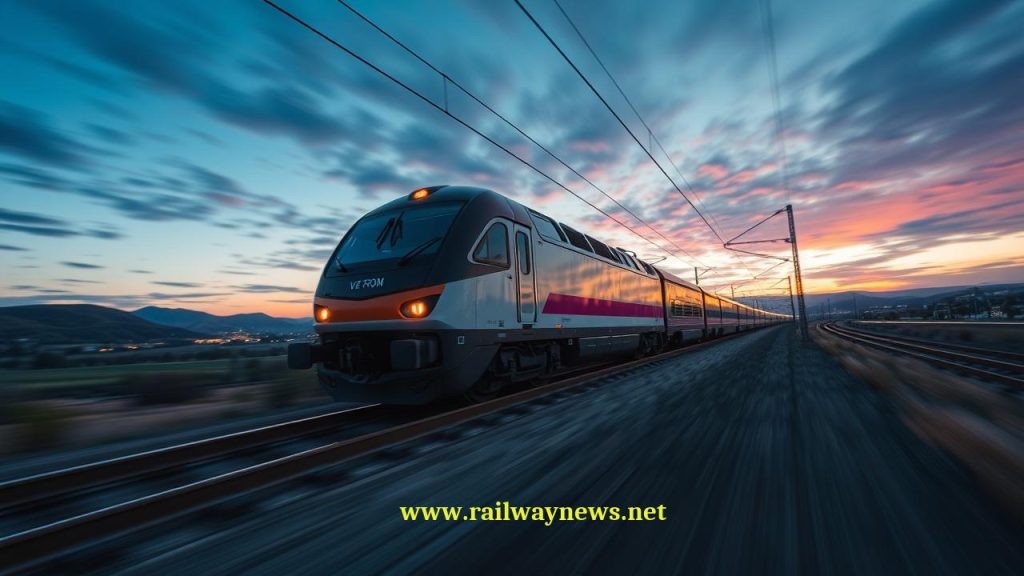
Siemens Mobility’s Vectron locomotives have received a landmark authorization from the European Union Agency for Railways (ERA) to operate passenger services at up to 230 km/h, making it the first modern locomotive platform to achieve this certification. This strategic approval significantly enhances the capabilities of the already successful platform, with Czech Railways (České dráhy) poised to become the first operator to deploy these high-speed locomotives on international routes from 2026.
| Category | Details |
|---|---|
| Authorization Body | European Union Agency for Railways (ERA) |
| New Maximum Speed | 230 km/h (Commercial Passenger Service) |
| Launch Customer | České dráhy (ČD) – 50 Vectron MS units ordered |
| Signaling System | ETCS Baseline 3.6 (Siemens Trainguard 200) + National Systems |
| Initial Approved Countries | Germany, Austria, Czech Republic, Slovakia, Poland, Hungary |
Main Body:
In a significant development for European passenger rail, the European Union Agency for Railways (ERA) has officially certified the Siemens Vectron locomotive for a top speed of 230 km/h. This approval sets a new benchmark, establishing the Vectron as the first contemporary locomotive to be authorized for such speeds in commercial passenger transport. The initial authorization covers a crucial central European corridor, including Germany, Austria, the Czech Republic, Slovakia, Poland, and Hungary, with Denmark expected to be added shortly. The first beneficiary of this certification is the Czech national carrier, České dráhy (ČD), which has an order for 50 Vectron MS multisystem locomotives. Deliveries are currently in progress, with the new high-speed services scheduled to commence on January 1, 2026.
The speed enhancement was achieved with remarkable efficiency, leveraging the Vectron’s inherent modular architecture. Instead of a costly and time-consuming redesign, Siemens engineers focused on adjusting the transmission gear ratio, a testament to the platform’s forward-thinking design. The certified locomotives are the Vectron MS (multisystem) variant, capable of operating seamlessly across Europe’s different electrification systems. For safety and interoperability on cross-border routes, the locomotives are equipped with the latest European Train Control System (ETCS) Baseline 3.6, using Siemens’ own Trainguard 200 onboard unit, which is supplemented by the required national train protection systems for each country of operation.
This authorization elevates an already dominant platform into a new market segment. To date, Siemens Mobility has sold over 2,800 Vectron locomotives to more than 110 customers across 20 European countries, where the fleet has accumulated approximately 1.3 billion kilometers in both freight and passenger roles. By extending its operational envelope to 230 km/h, the Vectron now offers a flexible and cost-effective alternative to fixed high-speed trainsets, particularly for operators looking to upgrade key international corridors. This allows railway undertakings like ČD to utilize a single, versatile locomotive type for a wider range of services, from conventional InterCity trains to high-speed cross-border expresses, optimizing fleet management and maintenance.
Key Takeaways
- New High-Speed Capability: The Vectron is the first modern locomotive certified for 230 km/h passenger service, opening a new market for locomotive-hauled high-speed trains.
- Enhanced Cross-Border Interoperability: The combination of multisystem technology, ETCS, and high-speed approval creates a powerful solution for international routes in Central and Eastern Europe.
- Modular Design Pays Off: The speed upgrade was achieved with minimal technical modifications, proving the economic and technical benefits of the Vectron’s modular platform.
Editor’s Analysis
This ERA certification is more than a simple speed increase; it’s a strategic repositioning of the entire Vectron platform that challenges the conventional wisdom of high-speed rail procurement. By enabling a proven, mass-produced locomotive to reach 230 km/h with minor adjustments, Siemens offers operators unprecedented flexibility. Railway undertakings no longer face a binary choice between 200 km/h conventional trains and expensive, dedicated 250 km/h+ trainsets. This “sweet spot” capability allows for the incremental upgrading of services on key corridors, maximizing the potential of existing infrastructure without the massive capital outlay for a full high-speed fleet. This will likely accelerate fleet modernization across Europe, making high-speed international travel more accessible and economically viable for a broader range of operators.
Frequently Asked Questions
Q: Which countries are covered by the new 230 km/h authorization for the Vectron?
A: The initial authorization is valid for Germany, Austria, the Czech Republic, Slovakia, Poland, and Hungary. Approval for operation in Denmark is expected to follow at a later date.
Q: What technical changes were needed to increase the Vectron’s speed?
A: The primary modification was an adjustment to the transmission gear ratio. The core platform, including the bogies and traction systems, remained largely unchanged, which highlights the advanced modularity of the locomotive’s design.
Q: Who is the first railway operator to use these new high-speed Vectrons?
A: The Czech national carrier, České dráhy (ČD), is the launch customer for this high-speed variant. They have ordered 50 Vectron MS units and plan to introduce them into service starting January 1, 2026.

Railway infrastructure, rolling stock and transport technologies specialist focused on global rail industry developments, high-speed rail systems, signaling technologies and freight transportation. Covering railway investments, public transport modernization, rail operations and international mobility projects across Europe, Asia and North America.