
Siemens Secures SBB 116 Double-Decker Train Contract Switzerland
Siemens Mobility secured a legally final contract for 116 SBB double-decker trains in Switzerland after Stadler withdrew its appeal.
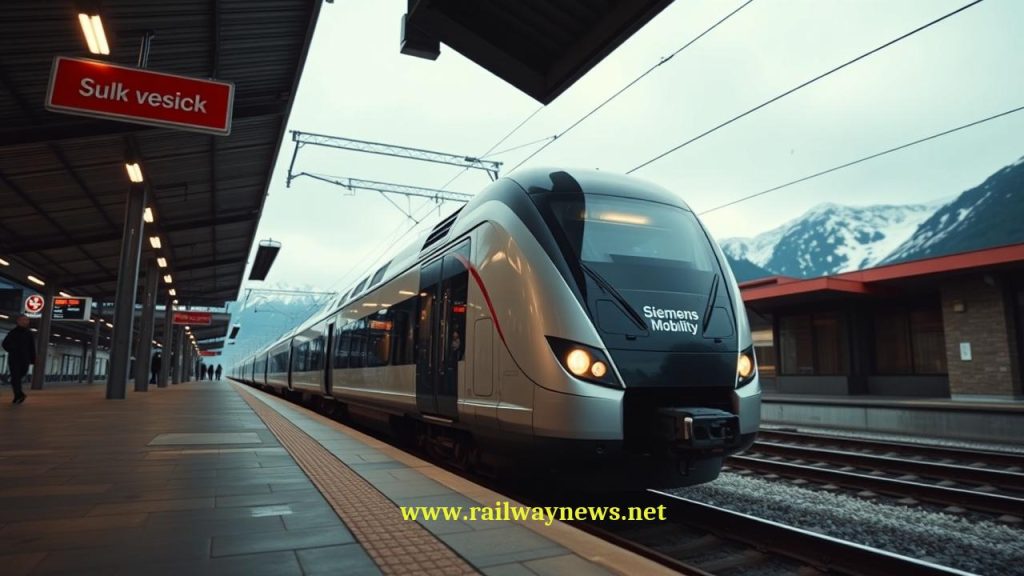
⚡ In Brief: Swiss manufacturer Stadler has withdrawn its legal appeal, making the Swiss Federal Railways (SBB) contract award to Siemens Mobility for 116 new double-decker trains legally final, with passenger service scheduled to begin in 2031.
BERN, SWITZERLAND – Stadler officially withdrew its appeal on April 7, 2026, against the decision by Swiss Federal Railways (SBB) to award a major rolling stock contract to Siemens Mobility. The withdrawal makes the procurement of 116 double-decker trains legally binding, allowing SBB to proceed with signing the final contract. Stadler cited heavily redacted court documents as the primary reason for being unable to continue its legal challenge.
What Does This Contract Cover?
The framework agreement awarded to Siemens Mobility Switzerland covers a firm order for 116 double-decker multiple units, with an option for an additional 84 trains. SBB states the new fleet will provide approximately 540 seats per train, eight multifunctional areas, and expanded standing room. The initial order will see 95 trains deployed on the Zurich S-Bahn network and 21 in western Switzerland, with the first units entering passenger service in 2031.
Key Contract Data
| Parameter | Value |
|---|---|
| Contract Name | SBB Double-Decker Train Procurement |
| Total Value | Not disclosed (projected savings of “hundreds of millions” over 25 years) |
| Parties Involved | Swiss Federal Railways (SBB), Siemens Mobility, Stadler Rail |
| Timeline / Completion | Contract signing April 2026; first passenger service 2031 |
| Country / Corridor | Switzerland (Zurich S-Bahn, Western Switzerland) |
How Does This Compare to Similar Contracts?
The withdrawal of a high-value procurement appeal due to procedural reasons is not unique to the rail industry. Coincidentally, on the same date of April 7, 2026, Severn Trent Water in the UK withdrew its legal challenge to a £1.2bn tunnelling framework tender, allowing that major infrastructure project to proceed (Source: Construction News, 2026). While the SBB contract value was not disclosed, its scale of up to 200 trainsets places it among Europe’s significant rolling stock procurements. The dispute highlights a common conflict in public tenders between an incumbent’s proven platform—Stadler’s KISS, with 153 units already in Swiss service—and a challenger’s bid based on projected performance and lower lifecycle costs.
Editor’s Analysis
SBB’s selection of Siemens’ unproven design over Stadler’s established KISS platform demonstrates a strategic prioritization of projected long-term operational savings over existing in-fleet performance data. This decision reflects a calculated risk, betting on future efficiencies in energy, maintenance, and route costs to deliver value over a 25-year lifespan. This large-scale fleet renewal is a key component of Switzerland’s wider national strategy to invest heavily in modernizing its rail infrastructure to increase capacity and maintain its high standards of service (Source: Market Context, 2025).
FAQ
Q: Why did Stadler withdraw its legal appeal?
A: Stadler concluded it lacked sufficient grounds to continue litigation after reviewing case files from the Federal Administrative Court. The company stated the documents were heavily redacted, preventing a transparent assessment of SBB’s award decision.
Q: How many trains are being ordered and what is the total contract value?
A: The initial firm order is for 116 trains, with a framework agreement that includes an option for 84 more. SBB has not publicly disclosed the total financial value of the contract.
Q: What is the main difference between the Stadler and Siemens bids?
A: Stadler’s bid was based on its KISS double-decker train, a platform already widely used by SBB and other operators. SBB described the winning bid from Siemens as a “new and untested” model that was evaluated as more advantageous on economic and qualitative grounds, including lower projected operating costs.

Railway infrastructure, rolling stock and transport technologies specialist focused on global rail industry developments, high-speed rail systems, signaling technologies and freight transportation. Covering railway investments, public transport modernization, rail operations and international mobility projects across Europe, Asia and North America.
RELATED POSTS

October 8, 2026 1:15 pm
Alstom secured a €1bn contract to build 13 automated trains,...

October 1, 2026 7:09 am
United States regulators confirmed a September 30 deadline for the...

October 8, 2026 12:18 pm
Siemens Mobility signed an agreement with VinSpeed to supply 350...

October 4, 2026 5:14 pm
Alstom secured a CA$4.7 billion order from VIA Rail Canada...

October 5, 2026 6:12 pm
AECOM and Jacobs secured a contract in September 2026 to...

October 1, 2026 12:13 am
Illinois approved $1.5 billion annually for the Northern Illinois Transit...