
Alstom Wins PKP Intercity Double-Decker Train Contract
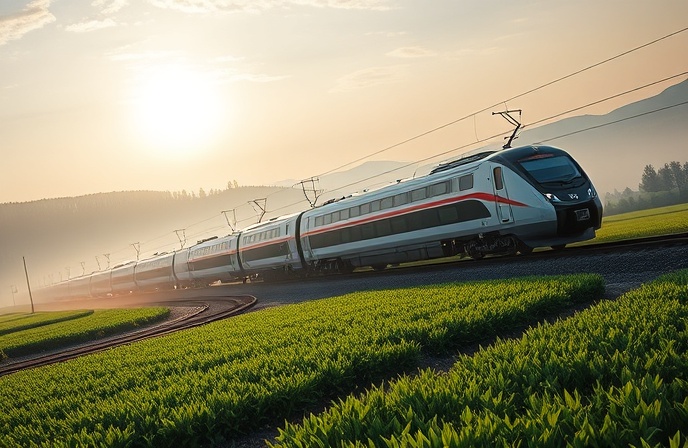
Alstom Polska wins PKP Intercity’s double-decker EMU contract, valued at €1.6 billion. 42 trains, plus options, are planned for domestic routes.
Introduction
Alstom Polska submitted the most favorable bid for the new PKP Intercity’s double-decker train fleet, with the contract covering 42 EMUs and an option for an additional 30 vehicles, as well as a 30-year maintenance period. The total value of Alstom’s offer is PLN 6.9 billion (EUR 1.6 billion).
Contract Details and Financial Aspects
The contract awarded to Alstom includes the delivery of 42 double-decker EMUs, with an option for an additional 30 vehicles. The financial breakdown of Alstom’s offer indicates that PLN 4.1 billion (EUR 963 million) is allocated for the delivery of the new EMUs, while nearly PLN 2.8 billion (EUR 657.6 million) is designated for maintenance services. The value of Stadler Polska’s bid was PLN 7.3 billion (EUR 1.7 billion), with PLN 4 billion (EUR 939.5 million) for the vehicles and PLN 3.3 billion (EUR 775 million) for maintenance services. The chosen offer is nearly PLN 400 million (EUR 94 million) cheaper overall.
Manufacturing and Procurement History
Alstom Polska will manufacture the trains at its factory in Chorzów, near Katowice. Stadler Polska, the second bidder, proposed manufacturing at its facility in Siedlce. Tenders for 38 push-pull double-decker trainsets were announced in 2021 and 2023, but both were cancelled. The most recent procedure saw a single bid exceed the budget by over PLN 2 billion (EUR 470 million), reaching PLN 6.5 billion (EUR 1.5 billion).
Last June 2025, we published an article about Renfe building a cutting-edge maintenance hub in Aranjuez, boosting Cercanías efficiency. Click here to read – Future of Rail: Renfe’s Railway Technology Hub, Aranjuez: Essential Guide
Operational Specifications and Routes
The new PKP Intercity’s double-decker train fleet will be capable of operating at speeds up to 200 km/h and will be deployed on domestic routes in the economy category. These vehicles are planned for popular routes, including Warsaw–Gdańsk, Łódź, Olsztyn, Wrocław, Kraków, Białystok, and Terespol. PKP Intercity anticipates that the first passengers will travel on the new trains in approximately three and a half years.
Train Features and Passenger Amenities
The new EMUs will be equipped with ETCS L1 and L2, onboard diagnostic systems, GPS, and internal and external camera systems. The trains will offer reclining seats with individual tables, armrests, footrests, and adjustable lighting. Passengers will also have access to Wi-Fi, power sockets, and USB ports. The trains will have both 1st and 2nd class sections, a quiet zone, a children’s area, vending machines with a designated eating space, bicycle and large luggage storage with secure fastening options, and be fully accessible for passengers with reduced mobility. The trains are expected to be approved for operation on the Czech railway network. The trains will be designed for long-distance services and will offer a comfortable journey for over 500 passengers. Comfort will be further enhanced by air conditioning and an onboard passenger information system displayed on digital screens.
Conclusion
Alstom Polska’s bid for the new PKP Intercity double-decker train fleet, encompassing 42 EMUs with an option for 30 additional vehicles and a 30-year maintenance agreement, was accepted. The contract is valued at PLN 6.9 billion (EUR 1.6 billion), with the trains set to operate on various domestic routes.
Company Summary
Alstom Polska: The company submitted the winning bid to manufacture the new double-decker train fleet for PKP Intercity. The trains will be manufactured at their factory in Chorzów, near Katowice.
PKP Intercity: PKP Intercity is the company ordering the new double-decker train fleet, with the first passengers expected to travel in about three and a half years.
Stadler Polska: Stadler Polska was the second manufacturer who submitted its bid, with the new trains proposed to be manufactured at its facility in Siedlce.
Technology
ETCS L1 and L2: The new EMUs will be equipped with European Train Control System (ETCS) Level 1 and Level 2.
GPS: The new EMUs will be equipped with Global Positioning System.

Railway infrastructure, rolling stock and transport technologies specialist focused on global rail industry developments, high-speed rail systems, signaling technologies and freight transportation. Covering railway investments, public transport modernization, rail operations and international mobility projects across Europe, Asia and North America.
RELATED POSTS

October 8, 2026 1:15 pm
Alstom secured a €1bn contract to build 13 automated trains,...

October 1, 2026 7:09 am
United States regulators confirmed a September 30 deadline for the...

October 8, 2026 12:18 pm
Siemens Mobility signed an agreement with VinSpeed to supply 350...

October 4, 2026 5:14 pm
Alstom secured a CA$4.7 billion order from VIA Rail Canada...

October 5, 2026 6:12 pm
AECOM and Jacobs secured a contract in September 2026 to...

October 4, 2026 11:08 pm
Sound Transit confirmed the September 30 opening of Seattle Pinehurst...