
Siemens Mobility Wins 300 km Mexico ETCS Level 1 Signaling
Siemens Mobility secured a 300 km ETCS Level 1 signaling contract for Mexico’s City–Querétaro–Irapuato rail corridor.
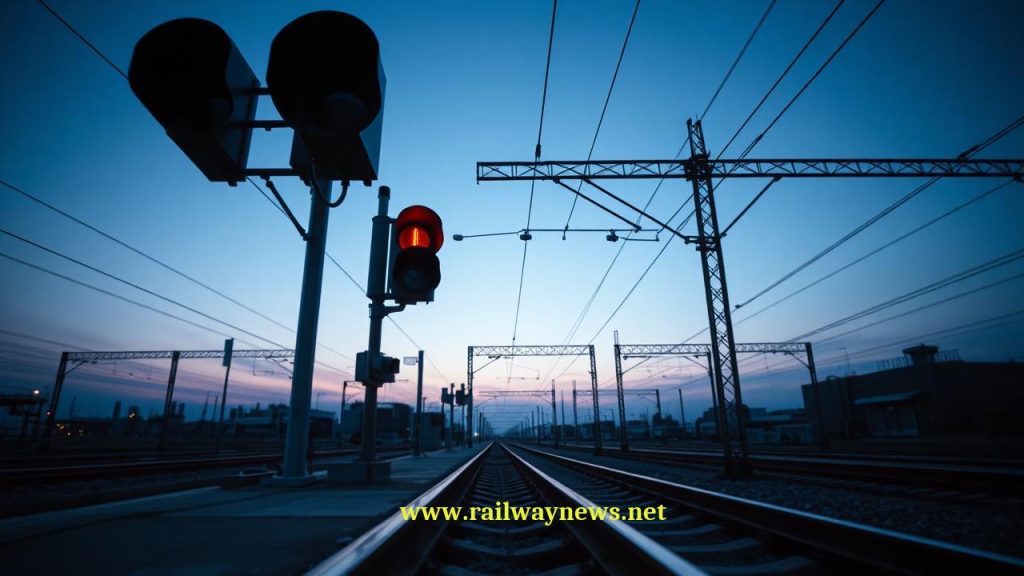
⚡ In Brief: A Siemens Mobility and Sonda México consortium has won a contract to install ETCS Level 1 signaling along the 300 km City–Querétaro–Irapuato rail corridor in Mexico, marking Siemens’ first ETCS project in the country.
MEXICO CITY – A consortium comprising Siemens Mobility and Sonda México SA de CV has secured a contract to install European Train Control System (ETCS) Level 1 signaling on the 300 km City–Querétaro–Irapuato rail corridor. The project, which includes equipping 11 passenger stations, is part of Mexico’s federal initiative to modernize its passenger rail infrastructure. The agreement represents Siemens Mobility’s first ETCS contract award in Mexico.
What Does This Contract Cover?
The contract scope includes the supply and installation of trackside ETCS Level 1 equipment, an operational control center with a backup system, and Supervisory Control and Data Acquisition (SCADA) systems. Siemens Mobility will also deliver its HaCon-developed TPS.plan software for train scheduling, while partner Sonda México will provide telecommunications components, CCTV systems, and associated civil works.
Key Contract Data
| Parameter | Value |
|---|---|
| Contract Name | ETCS Level 1 Signalling for City–Querétaro–Irapuato Corridor |
| Total Value | Not disclosed |
| Parties Involved | Siemens Mobility, Sonda México SA de CV, Government of Mexico |
| Timeline / Completion | Not disclosed |
| Country / Corridor | Mexico / City–Querétaro–Irapuato (300 km) |
How Does This Compare to Similar Contracts?
The selection of ETCS Level 1 for this corridor contrasts with Mexico’s stated national railway plans for 2024-2025, which include the adoption of the more advanced ETCS Level 2 technology. ETCS Level 2 uses a continuous radio link (GSM-R) for train-to-trackside communication, enabling higher speeds and capacity, whereas Level 1 relies on intermittent data transmission from trackside balises. The decision to implement Level 1 on this line may reflect a strategy for faster, more cost-effective modernization of existing infrastructure, reserving the more complex and expensive Level 2 for new high-speed or high-density routes.
Editor’s Analysis
This contract secures a key foothold for Siemens Mobility in Mexico’s rail revival, but the choice of ETCS Level 1 technology indicates a pragmatic, rather than pioneering, approach to modernization. While the global signaling market is advancing with 5G and satellite integration for enhanced operations (Source: Developing Telecoms), this project prioritizes establishing a baseline of modern safety and control. The decision likely balances immediate budget and deployment-speed requirements against the higher long-term performance benefits of a full Level 2 implementation.
FAQ
Q: What is the difference between ETCS Level 1 and Level 2?
A: ETCS Level 1 transmits movement authority to the train intermittently via trackside beacons called balises, and typically works as an overlay with existing lineside signals. ETCS Level 2 uses a continuous radio connection (GSM-R) for communication, which allows for in-cab signaling and can increase network capacity.
Q: What is the financial value of this contract?
A: The total financial value of the contract for either Siemens Mobility or Sonda México has not been publicly disclosed by the involved parties or the Mexican government.
Q: Does this project revive the canceled Mexico-Querétaro high-speed line?
A: No, this project focuses on upgrading the existing conventional rail corridor for passenger services. It is a separate initiative from the previously postponed high-speed rail project, which would require entirely new infrastructure and more advanced signaling systems.

Railway infrastructure, rolling stock and transport technologies specialist focused on global rail industry developments, high-speed rail systems, signaling technologies and freight transportation. Covering railway investments, public transport modernization, rail operations and international mobility projects across Europe, Asia and North America.
RELATED POSTS

October 1, 2026 7:09 am
United States regulators confirmed a September 30 deadline for the...

October 1, 2026 12:13 am
Illinois approved $1.5 billion annually for the Northern Illinois Transit...

October 1, 2026 6:10 am
Amtrak approved a System Expansion Committee on July 30 to...

October 4, 2026 5:14 pm
Alstom secured a CA$4.7 billion order from VIA Rail Canada...

October 6, 2026 2:14 am
Union Pacific launched export rail shipments with Ferromex to deliver...

October 1, 2026 3:12 am
Greenbrier confirmed Brian Comstock as new president and CEO effective...