
Siemens Mobility Delivers First Sydney Airport Metro
Siemens Mobility delivered the first of 12 driverless metro trains for the new 23km Western Sydney Airport metro line after a 23,000km voyage from Vienna.
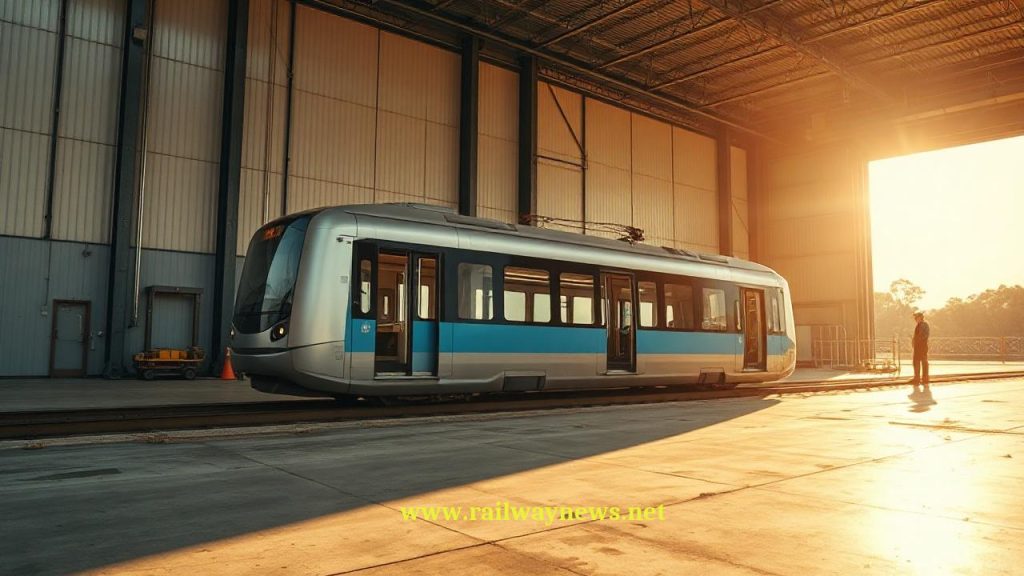
⚡ In Brief: The first of 12 Siemens Mobility driverless metro trains for the 23km Sydney Metro–Western Sydney Airport line arrived at Port Kembla after a 23,000km sea voyage from Vienna and was assembled at the new Orchard Hills maintenance facility.
SYDNEY, AUSTRALIA – The first three-car Inspiro-series metro train for the Sydney Metro–Western Sydney Airport line reached the Orchard Hills maintenance facility in late July 2026 following a 45-to-61-day maritime shipment from Siemens Mobility’s Vienna manufacturing plant, covering approximately 23,000 km. The train is the inaugural unit of a 12-strong fleet ordered under a turnkey public-private partnership contract awarded to the Parklife Metro consortium. Each train seats 194 passengers with a total capacity of 645, and the fleet will serve a 23km corridor linking St. Marys to the new Western Sydney Airport and Bradfield City Centre across six stations.
What Is the Full Scope of This Project?
The Sydney Metro–Western Sydney Airport line is a 23km driverless metro corridor with six stations, connecting the existing suburban rail network at St. Marys to the new Western Sydney Airport terminal and the planned Bradfield City Centre. Siemens Mobility is supplying 12 three-car Inspiro-platform trains alongside signalling, electrification, telecommunications, and digital infrastructure systems under a 15-year maintenance agreement using the Railigent X digital fleet-management platform. The Parklife Metro consortium—comprising Plenary Group, Webuild, Siemens, and RATP Dev—holds the contract for train delivery, digital infrastructure, and ongoing operations and maintenance. Each train features aisles approximately 30cm wider than existing Sydney Metro stock, dedicated under-seat luggage storage, high-resolution flight-information screens connected directly to airport systems, wheelchair spaces, hearing loop systems, and bicycle storage. Upholstery designs were created by Dharug artists, reflecting Indigenous connections to land, water, and traditional route networks. The project represents Siemens Mobility’s first public-private partnership and first turnkey contract in Australia.
Key Project Data
| Parameter | Value |
|---|---|
| Project / Contract Name | Sydney Metro–Western Sydney Airport Line |
| Total Value | Not disclosed |
| Parties Involved | Parklife Metro consortium (Plenary Group, Webuild, Siemens Mobility, RATP Dev); Siemens Mobility (rolling stock, signalling, electrification, telecoms, digital infrastructure, 15-year maintenance) |
| Timeline / Completion | Commercial service launch date not officially disclosed; Western Sydney Airport passenger flights commence October 2026; Qantas cargo trials underway July 2026 with formal freight launch July 26, 2026 (Source: FlightGlobal, July 2026) |
| Country / Corridor | Australia / St. Marys to Western Sydney Airport and Bradfield City Centre, New South Wales |
How Does This Compare to Similar Projects?
At 23km with six stations and 12 driverless trains, the Western Sydney Airport metro is modest in scale compared to large-diameter tunnelled airport rail links such as London’s 30km Elizabeth Line (41 stations, 70 trains) or the 19km Delhi Airport Express (six stations, six trains), but its rolling stock specification—wider aisles, dedicated luggage storage, and direct airport flight-information integration—aligns it more closely with purpose-built airport express systems than general urban metro lines. Elsewhere in the Asia-Pacific region, Taiwan’s 35.5km Taoyuan Airport MRT operates 20 four-car trains with 216 seats per train and similar luggage-focused interiors, serving five stations at 100km/h (Source: Taoyuan Metro, 2023). By contrast, the concurrent Warsaw–Łódź high-speed rail project in Poland—covering a 4km tunnel section alone with a €34m preparatory contract awarded to Budimex in 2023—demonstrates how Australian metro procurement costs remain opaque: no total contract value for the 12-train Inspiro fleet or the 23km corridor has been publicly released by the Parklife Metro consortium or the New South Wales government. The Poland HSR section will accommodate speeds up to 350km/h and requires 55 bridges and viaducts plus 30km of ancillary roads (Source: Global Construction Review, 2025), highlighting the contrast between greenfield surface-level airport metro construction and tunnelled high-speed intercity corridors in dense European urban environments.
Editor’s Analysis
The arrival of the first train at Orchard Hills signals that the physical delivery phase of the Western Sydney Airport metro is on track, but the absence of a confirmed revenue-service date—combined with the airport’s phased activation starting with freight in July 2026 and passenger operations in October 2026—suggests metro commissioning will likely trail the airport’s initial passenger flights by several months. The Railigent X predictive-maintenance platform bundled into Siemens’s 15-year service agreement positions this as a test case for full-lifecycle digital fleet management in Australian public-private partnerships, a model that IndexBox data indicates is being driven by broader investment in advanced signalling and automation technologies across the Australian rail sector through 2025 and beyond (Source: IndexBox, 2025). Whether the wider-aisle, luggage-optimised interior design proves sufficient for airport passenger volumes will depend heavily on first-mile/last-mile connectivity at St. Marys and the pace of development at Bradfield City Centre, both of which remain under construction.
FAQ
Q: When will the Sydney Metro–Western Sydney Airport line open to passengers?
A: No official opening date has been announced. Western Sydney Airport begins passenger flights in October 2026, and Qantas cargo operations launch July 26, 2026, but metro commissioning timelines have not been confirmed by the Parklife Metro consortium or Transport for NSW.
Q: How many trains will run on the Western Sydney Airport metro line?
A: Siemens Mobility is supplying 12 three-car driverless Inspiro-platform trains. Each train seats 194 passengers with a total capacity of 645, and the fleet will be maintained for 15 years under a contract using the Railigent X digital platform.
Q: What makes these metro trains different from existing Sydney Metro stock?
A: The Western Sydney Airport trains feature centre aisles approximately 30cm wider than current Sydney Metro trains, dedicated under-seat luggage storage, high-resolution screens displaying live flight information linked directly to airport systems, wheelchair spaces, hearing loop systems, bicycle storage, and upholstery designed by Dharug Indigenous artists reflecting traditional routes and journeys. These modifications are intended to accommodate high volumes of passengers travelling with luggage between the airport and suburban rail connections.

Railway infrastructure, rolling stock and transport technologies specialist focused on global rail industry developments, high-speed rail systems, signaling technologies and freight transportation. Covering railway investments, public transport modernization, rail operations and international mobility projects across Europe, Asia and North America.
RELATED POSTS

October 8, 2026 1:15 pm
Alstom secured a €1bn contract to build 13 automated trains,...

October 1, 2026 7:09 am
United States regulators confirmed a September 30 deadline for the...

October 8, 2026 12:18 pm
Siemens Mobility signed an agreement with VinSpeed to supply 350...

October 4, 2026 5:14 pm
Alstom secured a CA$4.7 billion order from VIA Rail Canada...

October 1, 2026 12:13 am
Illinois approved $1.5 billion annually for the Northern Illinois Transit...

October 5, 2026 6:12 pm
AECOM and Jacobs secured a contract in September 2026 to...