
African Development Bank Approves $878M Algeria Rail Link
Algeria secured $878 million in ADB financing for the 230-km Ghardaïa–El Meniaa rail section, phase two of a 495-km trans-Saharan rail line in the south.
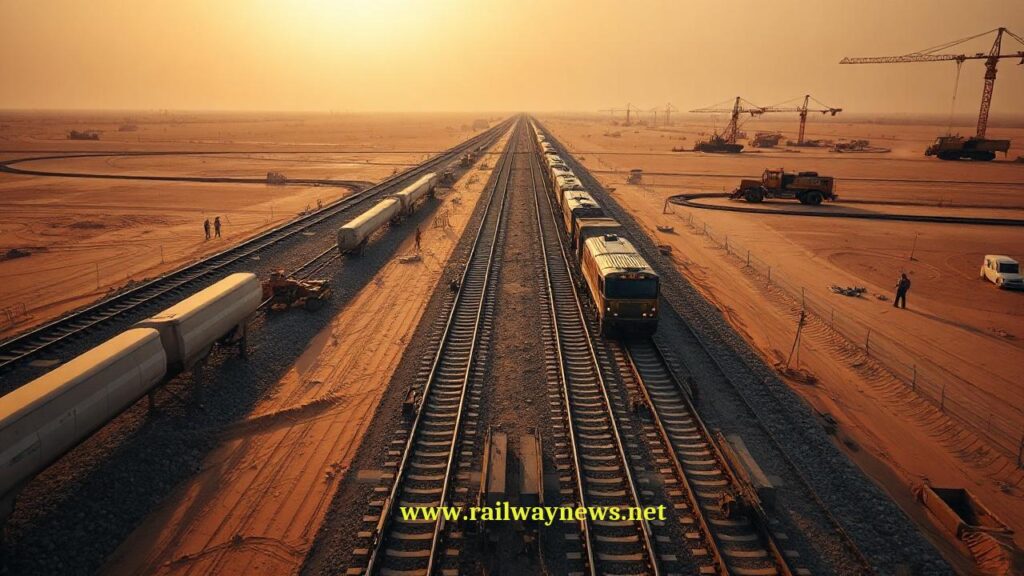
⚡ In Brief: The African Development Bank approved USD 878 million in financing for the 230-km Ghardaïa–El Meniaa railway section, the second phase of Algeria's 495-km Laghouat–Ghardaïa–El Meniaa line forming part of the trans-Saharan corridor linking Algiers to Tamanrasset.
ALGIERS, ALGERIA – The African Development Bank (ADB) board approved USD 878 million in financing for the second phase of the Laghouat–Ghardaïa–El Meniaa railway line in July 2026. The funding covers construction of the 230-km Ghardaïa–El Meniaa section, implemented by Algeria's Ministry of Public Works and Basic Infrastructure. The 495-km project extends the national rail network into Saharan regions rich in natural resources but currently underconnected to Algeria's main economic centers.
How Is the Funding Structured?
The USD 878 million ADB package finances the 230-km Ghardaïa–El Meniaa segment plus associated infrastructure and institutional strengthening measures. The funding also includes vocational training programs for young people and women in rail transport, logistics, tourism, and crafts. The specific loan terms—including interest rate, repayment period, and whether the financing falls under ADB's concessional or sovereign lending window—were not disclosed at the time of approval.
Key Funding Data
| Parameter | Value |
|---|---|
| Fund / Programme Name | ADB Financing – Laghouat–Ghardaïa–El Meniaa Railway (Phase 2) |
| Total Value | USD 878 million |
| Parties Involved | African Development Bank (lender); Algeria's Ministry of Public Works and Basic Infrastructure (implementing agency) |
| Timeline / Completion | Not disclosed |
| Country / Corridor | Algeria / Trans-Saharan Railway Corridor (Algiers–Tamanrasset) |
How Does This Compare to Similar Funding Programs?
This USD 878 million single-phase rail investment in Algeria exceeds the combined value of Chile's two 2024 Melipilla train project contracts, which totaled USD 813 million for sections connecting Melipilla and Santiago (Source: Railway Pro, 2024). In 2025, Chile awarded an additional USD 470 million contract to the Gran Andes SPA consortium for the Santiago–Batuco rail line—the largest civil and railway works agreement in state-owned EFE Trenes de Chile's history (Source: Railway News, 2025). The Algerian funding, directed at a single 230-km segment, reflects a higher per-kilometer investment than the Chilean commuter rail projects and underscores the ADB's capacity to underwrite large-scale trans-national corridor infrastructure in North Africa. Globally, the rail freight market is projected to reach between USD 534.6 billion and EUR 567.3 billion by 2035, expanding at a compound annual growth rate of 5.5% from 2025 to 2034 (Source: Market.us, 2025; Market Research Future, 2025), driven by modal shifts from road to rail and adoption of electric and hydrogen-powered locomotives.
Editor's Analysis
The ADB's USD 878 million commitment signals that multilateral development banks view Saharan rail connectivity as bankable infrastructure with measurable economic returns, not merely a political aspiration. Algeria's push to extend rail into phosphate and mineral-rich southern provinces aligns with a broader continental pattern: African governments are securing external financing for rail corridors that serve extractive industries while simultaneously building domestic logistics capacity. The inclusion of vocational training for women and youth in the ADB package indicates funders now require social development components as a condition of infrastructure lending—a shift from the purely civil-works financing model that dominated African rail investment a decade ago. With the global rail freight market projected to grow at 5.5% CAGR through 2034, the trans-Saharan corridor positions Algeria as a potential freight gateway between Mediterranean ports and sub-Saharan markets (Source: Market.us, 2025).
FAQ
Q: Where exactly is the Laghouat–Ghardaïa–El Meniaa railway line?
A: The line runs through central Algeria, starting in Laghouat province and extending south through Ghardaïa to El Meniaa, covering 495 km in total. The newly funded 230-km second phase connects Ghardaïa to El Meniaa, pushing the rail network deeper into the Sahara toward the eventual Tamanrasset terminus.
Q: When will the Ghardaïa–El Meniaa section be completed?
A: No completion date has been officially disclosed by the African Development Bank or Algeria's Ministry of Public Works and Basic Infrastructure. Construction timelines for the first Laghouat–Ghardaïa phase were also not publicly confirmed at the time of the ADB's second-phase approval.
Q: What economic impact will this railway have on Algeria's southern provinces?
A: Agricultural producers and mining operations in the Ghardaïa and El Meniaa provinces will gain faster rail access to Algerian ports and domestic markets, reducing transportation costs and travel times. The ADB expects the line to stimulate agribusiness, logistics, construction, and public works sectors along the route.

Railway infrastructure, rolling stock and transport technologies specialist focused on global rail industry developments, high-speed rail systems, signaling technologies and freight transportation. Covering railway investments, public transport modernization, rail operations and international mobility projects across Europe, Asia and North America.
RELATED POSTS

October 8, 2026 1:15 pm
Alstom secured a €1bn contract to build 13 automated trains,...

October 1, 2026 7:09 am
United States regulators confirmed a September 30 deadline for the...

October 8, 2026 12:18 pm
Siemens Mobility signed an agreement with VinSpeed to supply 350...

October 4, 2026 5:14 pm
Alstom secured a CA$4.7 billion order from VIA Rail Canada...

October 5, 2026 6:12 pm
AECOM and Jacobs secured a contract in September 2026 to...

October 1, 2026 12:13 am
Illinois approved $1.5 billion annually for the Northern Illinois Transit...