
Poland Rail Freight Speeds Up: PLK Modernization, Time Savings
Polish rail freight speeds up, cutting journey times dramatically. Modernization of Polish railway infrastructure boosts efficiency and competitiveness.
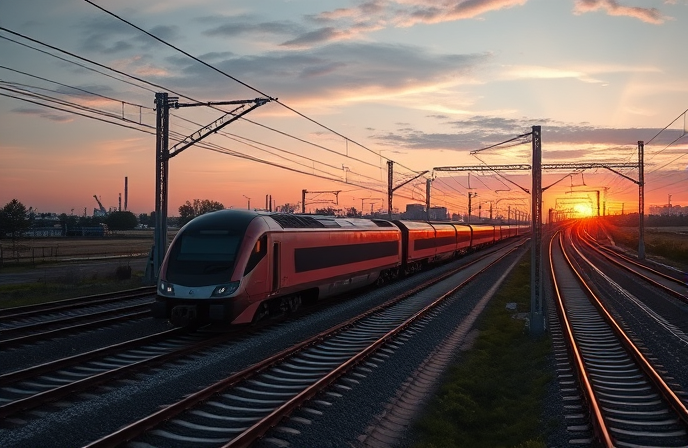
Polish Rail Freight Speeds Up: Modernization Drives Dramatic Journey Time Reductions
Across Poland, a significant transformation is underway in rail freight operations. PKP Polskie Linie Kolejowe (PLK), the Polish national railway infrastructure manager, has implemented a detailed modernization program resulting in substantially reduced journey times for freight trains. These improvements are not only enhancing transport fluidity but also bolstering the competitiveness of rail freight within the Polish logistics landscape. This article examines the extent of these improvements, the key infrastructure upgrades driving them, and the broader implications for the industry.
The upgrades, primarily focused on track replacement, freight hub improvements, and the deployment of modern traffic control systems, are delivering tangible results. Data from early 2025 reveals substantial reductions in journey times across numerous routes, benefiting both bulk cargo and intermodal traffic. The modernization initiative, part of a long-term strategy to enhance Poland’s rail network, is significantly improving efficiency and capacity. These improvements are being felt by a variety of freight operators across the country.
Enhanced Efficiency: Dramatic Time Savings Across Key Freight Corridors
The modernization efforts are yielding impressive results across several key freight corridors. The most dramatic improvement is seen on the Smardzów Wrocławski – Kłodzko Główne route, where average journey times in 2025 are now 2 hours and 29 minutes, a remarkable 2 hours and 28 minutes faster than the previous year. Further significant reductions include the Poznań Franowo – Szczecin Central Port line, which has seen an average reduction of 1 hour and 52 minutes, and the Warszawa Wschodnia Towarowa – Białystok route, with journey times cut by 40 minutes. Even shorter routes are seeing measurable benefits, as evidenced by the 9-minute reduction on the Poznań Franowo – Inowrocław line, underscoring the importance of even small time savings for optimized train turnaround and precise logistics planning. These gains are being achieved in a variety of regions across Poland.
Intermodal Gains: Streamlining Supply Chains
Intermodal freight services are also experiencing notable improvements, with significant reductions in journey times enhancing the efficiency of container transport. The Brzeg Dolny – Stara Wieś near Kutno line demonstrates the greatest gain, with average freight train service times reduced by 60 minutes. Additional notable reductions are evident on routes such as Pruszków – Poznań Franowo (50 minutes), Gdańsk North Port – Stara Wieś near Kutno (24 minutes), and Swarzędz – Mockava (35 minutes). For logistics operators, these reductions are highly significant, as they lead to shorter delivery times from ports, accelerating the synchronization across the entire supply chain and contributing to a more competitive and reliable logistics system.
Infrastructure Upgrades: Powering the Transformation
The cornerstone of these improvements lies in the detailed modernization of Poland’s rail infrastructure, spearheaded by PLK. Key initiatives include track replacement, upgrades to freight hubs, and the integration of modern traffic control systems. Simultaneously, the raising of maximum speeds on 1,709 km of track for passenger trains and 1,542 km for freight trains, coupled with increased permitted axle loads on 690 km of track, are contributing to the improved operational capabilities. These upgrades enable faster and heavier trains, directly translating to greater network capacity, shorter journey times, and enhanced overall efficiency of the railway system. These improvements are being carefully tracked via the Network Servicing Planning System (POS) reports.
Industry Impact: Operational Optimizations and Cost Savings
These advancements are not just about speed; they unlock significant operational benefits for railway operators and their customers. Shorter journey times translate to faster train turnaround, better utilization of rolling stock, and more efficient driver working hours, leading to cost optimization and a built-in buffer for potential delays. As Ireneusz Kluczyk, Managing Director of Metrans Rail, points out, these improvements represent “real improvements in rail line capacity and the efficiency of rail transport operations.” According to Sebastian Miller, Management Board Member for Operations at PKP Cargo, Poland’s largest freight operator, time savings on regional lines can be substantial, with improvements of up to half an hour on routes where even a few minutes mattered, translating into thousands of hours saved annually.
Conclusion
The modernization program undertaken by PLK is delivering tangible results, fundamentally reshaping the landscape of rail freight in Poland. The significant reductions in journey times across key routes, benefiting both bulk cargo and intermodal traffic, are a direct consequence of strategic investments in infrastructure upgrades. These improvements, encompassing track enhancements, hub upgrades, and advanced traffic control systems, are enhancing the efficiency of rail transport. As a result, the Polish rail freight network is gaining a competitive edge. These modernization efforts are not only reducing transit times but also optimizing operational costs and improving the overall reliability of freight services, directly benefiting logistics operators and supply chains. Looking forward, ongoing enhancements and continued investment in infrastructure will be crucial for sustaining this momentum. The shift towards a more efficient and competitive rail freight system has the potential to contribute significantly to Poland’s economic growth and enhance its position in the European logistics market.
Company Summary (Optional)
PKP Polskie Linie Kolejowe (PLK): The state-owned infrastructure manager responsible for the maintenance and modernization of Poland’s national railway network. PLK plays a critical role in creating a modern, efficient, and safe rail transport system, facilitating both passenger and freight operations.
PKP Cargo: The largest freight operator in Poland, providing transportation services for a wide range of goods. With a fleet of locomotives and freight cars, PKP Cargo is a key player in the Polish freight industry, utilizing infrastructure upgrades to improve efficiency and service delivery.

Railway infrastructure, rolling stock and transport technologies specialist focused on global rail industry developments, high-speed rail systems, signaling technologies and freight transportation. Covering railway investments, public transport modernization, rail operations and international mobility projects across Europe, Asia and North America.
RELATED POSTS

October 8, 2026 1:15 pm
Alstom secured a €1bn contract to build 13 automated trains,...

October 1, 2026 7:09 am
United States regulators confirmed a September 30 deadline for the...

October 4, 2026 5:14 pm
Alstom secured a CA$4.7 billion order from VIA Rail Canada...

October 1, 2026 12:13 am
Illinois approved $1.5 billion annually for the Northern Illinois Transit...

October 5, 2026 1:13 pm
New York MTA confirmed a late 2026 DEIS release for...

October 6, 2026 9:17 am
Illinois approved $1.1M in state funds to upgrade two McHenry...