
PJM Confirms WaggonTracker as Only Approved Brake Test
PJM confirmed its WaggonTracker, the only approved automated brake test system worldwide, has been in use on thousands of freight wagons across Europe since 2017.
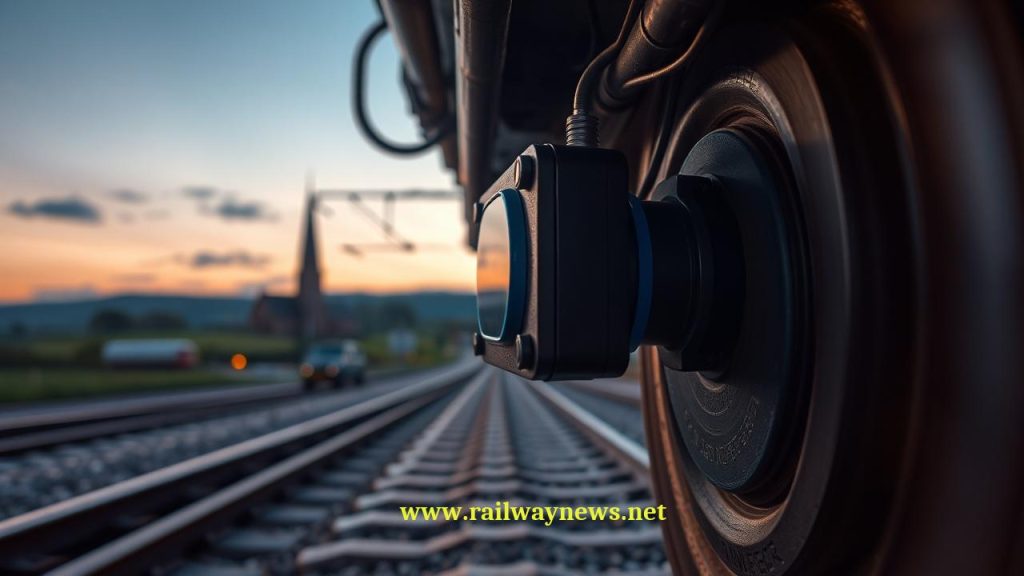
⚡ In Brief: PJM’s WaggonTracker—the only approved automated brake test system for rail freight worldwide—has been deployed on several thousand freight wagons across Europe since 2017, with operators from Scandinavia to southern Italy using its digital monitoring functions.
GRAZ, AUSTRIA – PJ Monitoring GmbH (PJM) has confirmed its WaggonTracker digital freight monitoring system, incorporating the only globally approved Automated Brake Test (ABT) for freight wagons, has been in continuous operational use since 2017 across several thousand installations. Customers include SBB Cargo, FS LogistiX, Mercer, TRANSWAGGON, VTG, and Tatravagónka, with the system also deployed on Plasser & Theurer maintenance machines.
What Are the Technical Specifications?
The WaggonTracker system delivers autonomous power via an axle box generator, eliminating dependency on external charging infrastructure. Core functions include real-time monitoring of wagon components, automated determination of train composition, train length, and train integrity, plus execution of the Automated Brake Test. Once technical prerequisites for the coupling are met, wagons can be automatically uncoupled from the driver’s cab. The system’s modular architecture allows operators to select monitoring features by requirement, and compatibility with Digital Automatic Coupling (DAC) has been demonstrated during the DAC4EU project trials on the Westfälische Landes-Eisenbahn. The system is deployable on both new-build and existing rolling stock across all wagon types.
Key Technical Data
| Parameter | Value |
|---|---|
| Technology / System Name | WaggonTracker with Automated Brake Test |
| Total Installations | Several thousand (exact figure not disclosed) |
| Parties Involved | PJ Monitoring GmbH; operators SBB Cargo, FS LogistiX, Mercer, Plasser & Theurer, TRANSWAGGON, VTG, Tatravagónka |
| Operational Since | 2017 (Automated Brake Test) |
| Country / Corridor | Europe (Scandinavia to southern Italy); also tested on DAC test trains in Germany |
Where Does This Technology Stand in the Market?
PJM’s WaggonTracker occupies a distinct position as the only system worldwide with an approved automated brake test function for freight operations. Competing digital freight monitoring platforms address adjacent needs but lack ABT capability. Knorr-Bremse’s iCOM platform provides condition-based monitoring with cloud-based analytics for brake systems and bogie components, but its brake assessment is diagnostic rather than a certified test procedure (Source: Knorr-Bremse, 2023). Amsted Digital’s IQ Series bogie-mounted sensors monitor bearing temperature, wheel condition, and derailment risks, while Nexxiot’s Globehopper device delivers GPS tracking and environmental sensors including shock, temperature, and humidity monitoring—neither includes automated brake testing (Source: Amsted Digital, 2022; Nexxiot, 2023). The broader digital rail market is seeing parallel investment: Wabtec is deploying Positive Train Control on Brazilian mixed-traffic railways, and Turntide Technologies received an initial battery production order from Hitachi Rail for Arriva’s Grand Central Intercity UK battery trains, indicating accelerating capital flows into rail digitalization and electrification (Source: Railway Gazette, July 2026; Manila Times/GlobeNewswire, July 2026). The Italy railway signalling market alone is projected to show steady growth driven by infrastructure modernization demand, reflecting the European trend toward digital rail system adoption that PJM’s technology targets (Source: IndexBox, 2025). The WaggonTracker’s compatibility with the European DAC Delivery Programme’s FP5 Trans4MR Basic Package—covering power and data supply, train composition, length, and integrity detection—positions the system within the EU’s broader interoperability roadmap.
Editor’s Analysis
PJM’s decade-long operational track record with the Automated Brake Test—predating the European DAC Delivery Programme by several years—gives the company a first-mover advantage in a market where regulatory approval timelines for safety-critical systems typically span multiple years. The ABT’s demonstrated interoperability with DAC test trains signals that the technology is not merely backward-compatible but forward-aligned with the EU’s freight digitalization agenda. However, the absence of a publicly disclosed total installation count beyond “several thousand” makes precise market penetration difficult to quantify against the estimated 400,000 freight wagons operating in the EU. With Network Rail Consulting’s $26 million management contract with Sound Transit and Wabtec’s PTC expansion into Brazil both underscoring the global appetite for digital rail solutions, the competitive window for PJM to scale beyond European corridors may be narrowing as competing platforms close the functionality gap.
FAQ
Q: What makes PJM’s Automated Brake Test different from other brake monitoring systems?
A: PJM’s ABT is the only system worldwide with full regulatory approval to replace manual brake testing on freight trains, having been in operational use since 2017. Competing systems from Knorr-Bremse and others offer diagnostic brake monitoring but do not perform certified automated brake tests.
Q: Is the WaggonTracker system compatible with Digital Automatic Coupling?
A: Yes. Compatibility has been demonstrated during DAC4EU project trials on the Westfälische Landes-Eisenbahn, and the system’s functionalities align with the FP5 Trans4MR Basic Package of the European DAC Delivery Programme. Automatic uncoupling from the driver’s cab is supported once the coupling’s technical requirements are met.
Q: How is the system powered on freight wagons that typically lack electrical supply?
A: The WaggonTracker uses an autonomous axle box generator that converts kinetic energy from the rotating wheelset into electrical power, making the system self-sufficient without external charging or wayside infrastructure.

Railway infrastructure, rolling stock and transport technologies specialist focused on global rail industry developments, high-speed rail systems, signaling technologies and freight transportation. Covering railway investments, public transport modernization, rail operations and international mobility projects across Europe, Asia and North America.
RELATED POSTS

October 8, 2026 1:15 pm
Alstom secured a €1bn contract to build 13 automated trains,...

October 1, 2026 7:09 am
United States regulators confirmed a September 30 deadline for the...

October 4, 2026 5:14 pm
Alstom secured a CA$4.7 billion order from VIA Rail Canada...

October 5, 2026 6:12 pm
AECOM and Jacobs secured a contract in September 2026 to...

October 1, 2026 12:13 am
Illinois approved $1.5 billion annually for the Northern Illinois Transit...

October 4, 2026 11:08 pm
Sound Transit confirmed the September 30 opening of Seattle Pinehurst...