
NTSB: CPKC Derailment, Hazardous Materials Release, Focus on Rail
NTSB investigates CPKC derailment near Bordulac, ND (July 5, 2024): 29 cars, hazardous methanol & anhydrous ammonia release, $3.6M damage. Rail safety implications & future trends.
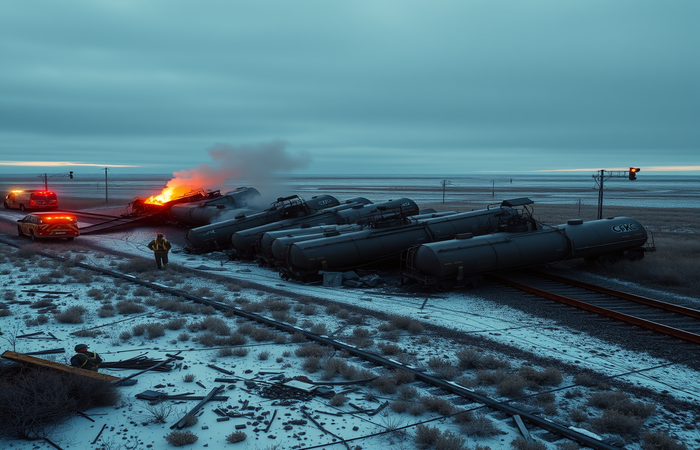
A significant railway incident involving a Canadian Pacific Kansas City (CPKC) train near Bordulac, North Dakota, is under intense scrutiny as the National Transportation Safety Board (NTSB) has opened its public docket. The derailment, which occurred on July 5, 2024, involved 29 rail cars, including tank cars carrying hazardous materials. The investigation aims to determine the cause of the incident, the extent of the damage, and to prevent future occurrences. The NTSB’s investigation focuses on what happened (a derailment), who was involved (CPKC), when it happened (July 5, 2024), where it happened (Bordulac, North Dakota, on the Carrington Subdivision), why it occurred (still under investigation), and how it unfolded (an automatic emergency brake application was initiated). This article will delve into the details of the derailment, the hazardous materials involved, and the potential implications for railway safety and operational procedures.
Incident Overview and Initial Response
The derailment occurred on CPKC’s main line within the Carrington Subdivision. The accident report within the docket details that 29 cars left the rails. Of particular concern was the involvement of 17 tank cars carrying hazardous materials. The nature of the materials led to a release of both methanol and anhydrous ammonia, followed by a pool fire at the site. Thankfully, initial reports indicate no injuries were sustained by the crew or any members of the public, a testament to the emergency response protocols in place. CPKC estimated damages to be approximately $3.6 million, which includes the cost of track repair, equipment replacement, and environmental remediation efforts.
Operational Context and Speed Restrictions
The train involved in the derailment was classified as a “key train.” This designation often necessitates stricter operational controls and safety measures. As such, the train’s maximum authorized speed was limited to 50 mph, as a result of a designated key train status. The investigation will likely examine if the train’s speed played a role in the accident or if other factors contributed to the derailment, regardless of speed. At the moment of the incident, an automatic emergency brake application was triggered, a standard safety protocol designed to quickly bring the train to a halt when anomalies are detected.
Signal System and Potential Contributing Factors
Train movements in the area are governed by wayside signals, vital for ensuring safe spacing between trains and managing traffic flow on the single-track main line. The investigation will undoubtedly examine the functionality and integrity of these signals, as well as their role, if any, in the derailment. Potential contributing factors that the NTSB will investigate include track conditions, wheel and rail interactions, equipment maintenance records, and the crew’s adherence to operating rules. The presence of hazardous materials elevates the scrutiny given the potential consequences for the environment and public safety, and thus, will be another important factor in the investigation.
Hazardous Materials and Environmental Concerns
The release of methanol and anhydrous ammonia during the derailment raises serious environmental concerns. Methanol is a flammable liquid, and anhydrous ammonia is a toxic gas. The pool fire that followed the release increased the complexity of the incident, potentially releasing additional harmful substances into the atmosphere. The NTSB will likely assess the effectiveness of the containment and cleanup efforts, as well as the potential long-term environmental impact. Additionally, the investigation will examine the types of safety equipment used on the tank cars and the effectiveness of those systems. These factors provide insights into the preparedness and response to incidents involving hazardous materials.
Conclusion
The NTSB’s investigation into the CPKC derailment near Bordulac, North Dakota, is critical for understanding the root causes of the incident and preventing similar events in the future. The involvement of hazardous materials necessitates a thorough examination of safety protocols, emergency response procedures, and the design of the tank cars themselves. The fact that the train was traveling at a reduced speed under key train status, governed by wayside signals, adds an additional layer of complexity to the investigation. The findings of the NTSB will have implications for railway safety standards, operational practices, and the handling of hazardous materials in transit. These findings will likely inform future regulations and safety recommendations designed to improve the overall safety of rail transportation, protecting both railway employees and the communities through which these trains travel. The industry will be watching this investigation closely to see what measures will be implemented and how the safety and efficiency of railway operations will be improved.

Transport and railway industry editor covering global rail infrastructure, sustainable mobility, urban transit systems and next-generation railway technologies with a focus on accessible and industry-focused reporting.
RELATED POSTS

October 1, 2026 7:09 am
United States regulators confirmed a September 30 deadline for the...

October 8, 2026 1:15 pm
Alstom secured a €1bn contract to build 13 automated trains,...

October 4, 2026 5:14 pm
Alstom secured a CA$4.7 billion order from VIA Rail Canada...

October 1, 2026 12:13 am
Illinois approved $1.5 billion annually for the Northern Illinois Transit...

October 6, 2026 2:14 am
Union Pacific launched export rail shipments with Ferromex to deliver...

October 1, 2026 6:10 am
Amtrak approved a System Expansion Committee on July 30 to...