
NS Ends Safety Train: 5,800+ First Responders Trained
Norfolk Southern ends its Safety Train program after a decade of training first responders. This vital initiative addressed hazmat safety, underscored by recent derailments.
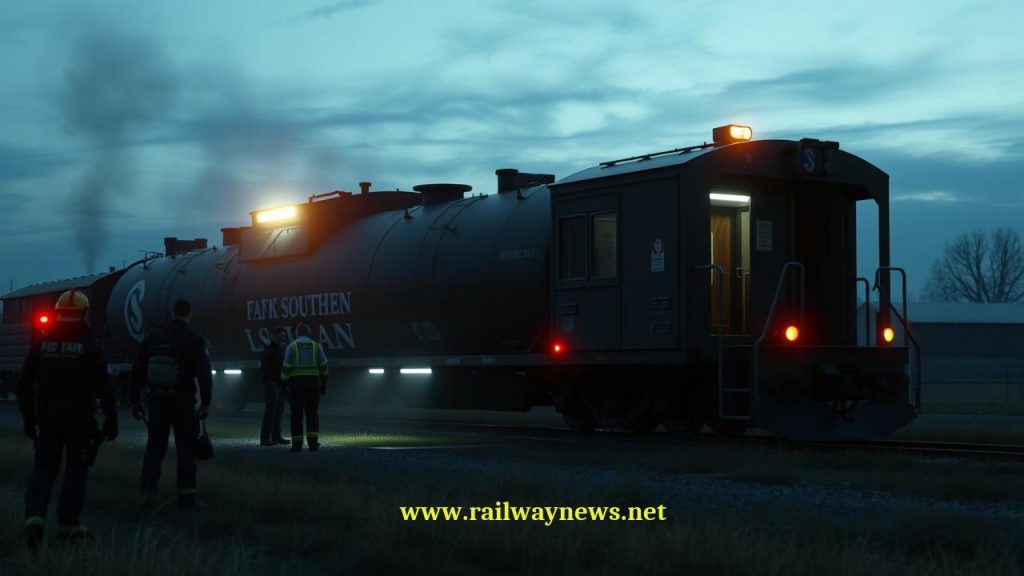
Norfolk Southern has concluded its decade-long Safety Train initiative after providing critical emergency response training to over 5,800 first responders in its final year of operation. The program’s end comes as the rail industry faces continued scrutiny over hazardous materials transport, underscored by a recent CSX chemical derailment in Kentucky that forced a local shelter-in-place order.
| Category | Details |
|---|---|
| Program Name | Norfolk Southern Safety Train |
| Operator | Norfolk Southern Railway |
| Operational Span | 2015 – 2025 (10 years) |
| 2025 Final Year Metrics | 16 stops; 5,800+ first responders trained |
| Training Assets | Mobile facility with boxcar classrooms and specialized tank cars |
| Industry Context | Heightened focus on hazmat safety following incidents like the Dec. 2025 CSX derailment |
ATLANTA, GA – Norfolk Southern (NS) announced the conclusion of its landmark Safety Train program at the end of 2025, marking a decade of dedicated, hands-on training for emergency personnel across its 22-state network. In its final year, the mobile training facility made 16 stops, equipping more than 5,800 first responders with the skills needed to manage rail-related emergencies. The initiative was a core component of the railroad’s Operation Awareness & Response (OAR) program, designed to build crucial partnerships between the railway and local community safety officials.
The Safety Train provided an immersive learning environment, featuring specially designed boxcar classrooms and dedicated tank cars. This setup allowed first responders to gain practical experience with the very equipment they might encounter in an incident. Training sessions focused on a detailed curriculum, including safe practices around tracks and rail equipment, the mechanics of tank car valves and fittings, and best practices for accessing information about the specific contents of rail cars during an emergency. “Norfolk Southern deeply values the relationships we have built with first responders across our network over the last decade,” said Robert Wood, NS Director of Hazardous Materials. “We are proud to work alongside them and are grateful for their partnership in keeping our railroad and communities safe.”
The conclusion of the program coincides with ongoing national attention on railroad safety, particularly concerning the transport of hazardous materials. The vital importance of such training was highlighted by a recent incident on a competitor’s network. In late December 2025, a CSX train derailed in Todd County, Kentucky, leaking molten sulfur and sparking a fire that prompted an emergency shelter-in-place order for nearby residents. While first responders successfully controlled the scene without injury, the event serves as a stark reminder of the potential risks and the necessity for well-prepared local emergency teams, validating the proactive training model championed by the NS Safety Train for the past ten years.
Key Takeaways
- Norfolk Southern has officially ended its 10-year Safety Train program, a key initiative for first responder training.
- In its final year, the program conducted 16 sessions, training over 5,800 emergency personnel in hazmat and rail incident response.
- The program’s value is emphasized by real-world events, such as the December 2025 CSX derailment in Kentucky, which required a significant first responder mobilization.
Editor’s Analysis
While Norfolk Southern’s conclusion of the Safety Train program marks the end of a significant chapter in proactive community safety engagement, it also raises questions about the future of such training across the industry. In an era of heightened public and regulatory scrutiny, the ability of Class I railroads to demonstrate a tangible commitment to preparing local communities for worst-case scenarios is paramount. The recent CSX incident in Kentucky is a clear signal that these are not theoretical risks. The burden now shifts to all major rail operators to either continue, replace, or enhance these types of hands-on programs. Investing in preparedness is no longer just good corporate citizenship; it is a critical component of risk management and maintaining the social license to transport essential, albeit hazardous, goods across the nation.
Frequently Asked Questions
What was the Norfolk Southern Safety Train?
The Safety Train was a mobile educational facility operated by Norfolk Southern from 2015 to 2025. It consisted of customized boxcar classrooms and specialized tank cars to provide hands-on training to first responders on how to safely manage rail-related emergencies.
How many people were trained in the program’s final year?
In 2025, the Safety Train program trained more than 5,800 first responders during 16 stops across the Norfolk Southern network.
Why is this type of first responder training important?
This training is critical for ensuring local emergency teams can respond effectively and safely to complex rail incidents, particularly those involving hazardous materials. Real-world events, like the CSX derailment in Kentucky in December 2025, demonstrate the need for specialized knowledge of rail equipment and emergency protocols to protect communities and the environment.

Railway infrastructure, rolling stock and transport technologies specialist focused on global rail industry developments, high-speed rail systems, signaling technologies and freight transportation. Covering railway investments, public transport modernization, rail operations and international mobility projects across Europe, Asia and North America.
RELATED POSTS

October 8, 2026 1:15 pm
Alstom secured a €1bn contract to build 13 automated trains,...

October 1, 2026 7:09 am
United States regulators confirmed a September 30 deadline for the...

October 8, 2026 12:18 pm
Siemens Mobility signed an agreement with VinSpeed to supply 350...

October 4, 2026 5:14 pm
Alstom secured a CA$4.7 billion order from VIA Rail Canada...

October 5, 2026 6:12 pm
AECOM and Jacobs secured a contract in September 2026 to...

October 1, 2026 12:13 am
Illinois approved $1.5 billion annually for the Northern Illinois Transit...