
London’s Colindale Station Opens: Step-Free Access & Growth Boost
Colindale station unveils a major upgrade, now step-free, supporting 11,400 new homes, and showcasing sustainable design for London’s growth.
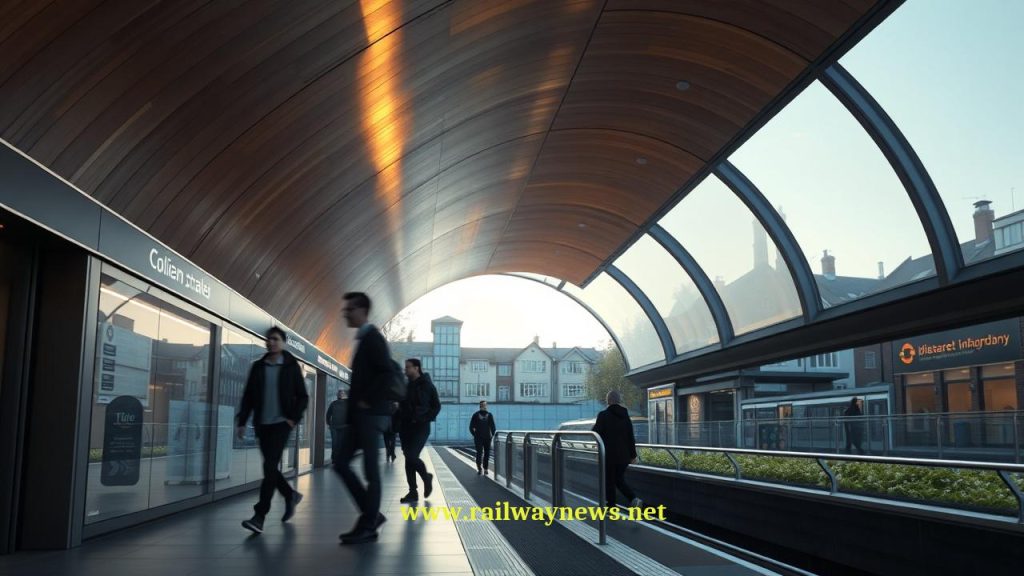
London, UK – Transport for London (TfL) has officially opened the new, larger ticket hall at Colindale Underground station, a critical infrastructure upgrade designed to support massive local growth and enhance network accessibility. The project makes Colindale the 94th step-free station on the Tube network, future-proofing a key Northern line hub that was projected to exceed passenger capacity by 2026.
| Category | Details |
|---|---|
| Project | Colindale Underground Station Major Upgrade |
| Accessibility Milestone | 94th Step-Free Station on the London Underground Network |
| Key Design Features | Laminated Timber Curved Ceiling; Sustainable ‘Blue-Green’ Roof |
| Capacity Driver | Supports 11,400 new homes; 70% local population growth since 2011 |
| Funding Partners | UK Government, Barnet Council, TfL, Local Developers |
The newly unveiled ticket hall at Colindale station marks a significant milestone in TfL’s ongoing efforts to modernise the capital’s transport network. Replacing the outdated 1960s entrance, the new facility provides essential additional capacity and, for the first time, step-free access from street to platform via a new lift. The project, which commenced major works in January 2024, was driven by urgent capacity needs, with passenger numbers threatening to overwhelm the station by 2026. According to Stuart Harvey, TfL’s Chief Capital Officer, the upgrade will “transform the journeys of thousands of our customers for many decades to come.”
Beyond its functional improvements, the station’s architecture incorporates advanced sustainable design principles. A distinctive curved ceiling clad in laminated timber creates a spacious and modern aesthetic, while the innovative ‘blue-and-green’ roof system serves a dual purpose. It is designed to capture and slowly release rainfall, mitigating pressure on local drainage systems, and is planted with wildflowers and shrubs to enhance biodiversity and create new wildlife habitats. The upgrade also includes wider pavements outside the station entrance, with further enhancements including an accessible toilet, new cycle parking, and retail space scheduled for completion by mid-2026.
The redevelopment of Colindale is a strategic investment central to one of London’s most significant urban regeneration zones. The area is the second-fastest growing ward in the city, and the station upgrade is a critical enabler for the construction of 11,400 new homes. This model of transport-led development reflects a broader trend across London, with major projects like the new subterranean ticket hall at Elephant & Castle also designed to integrate transport infrastructure with large-scale housing and commercial development. Rail Minister Lord Peter Hendy praised the project, noting the nearly £30 million in Government investment is “a testament to what delivering a modern, inclusive transport system can do for local communities,” by supporting new homes and boosting local growth.
Key Takeaways
- Enhanced Accessibility: Colindale is now the 94th step-free station on the Tube, a key part of the Mayor’s commitment to making London’s transport network more inclusive.
- Capacity for Growth: The upgrade was essential to accommodate a 70% population increase since 2011 and unlock the delivery of over 11,400 new homes in the area.
- Sustainable Architecture: The station features a laminated timber structure and a ‘blue-green’ roof, showcasing a commitment to environmentally conscious design in public infrastructure.
Editor’s Analysis
The Colindale station project is a prime example of the evolving role of urban rail infrastructure. It moves beyond the traditional remit of passenger transit to become a foundational pillar for sustainable urban development. The project’s success lies in its multi-faceted approach: it solves an immediate capacity crisis, delivers on crucial accessibility mandates, and acts as a catalyst for significant housing delivery. Additionally, the collaborative funding model—blending national and local government funds with private developer contributions—provides a valuable blueprint for delivering complex and costly infrastructure projects in high-growth urban corridors globally. This is no longer just a station; it’s a strategic asset for economic and community growth.
Frequently Asked Questions
Why was the Colindale station upgrade necessary?
The station needed a major upgrade to increase its capacity and provide step-free access. The local population has grown by 70% since 2011, and without the redevelopment, the station was expected to reach its passenger capacity limit by 2026.
What are the key sustainable features of the new station?
The new ticket hall features a distinctive curved ceiling made from sustainable laminated timber. It also includes a ‘blue-and-green’ roof that captures rainfall to prevent flooding and is planted with wildflowers and shrubs to increase local biodiversity.
Who funded the redevelopment of Colindale station?
The project was financed through a multi-party partnership, with funding provided by the UK Government, contributions from Barnet Council, Transport for London (TfL), and local property developers benefiting from the improved transport links.

Railway infrastructure, rolling stock and transport technologies specialist focused on global rail industry developments, high-speed rail systems, signaling technologies and freight transportation. Covering railway investments, public transport modernization, rail operations and international mobility projects across Europe, Asia and North America.
RELATED POSTS

October 8, 2026 1:15 pm
Alstom secured a €1bn contract to build 13 automated trains,...

October 1, 2026 7:09 am
United States regulators confirmed a September 30 deadline for the...

October 8, 2026 12:18 pm
Siemens Mobility signed an agreement with VinSpeed to supply 350...

October 4, 2026 5:14 pm
Alstom secured a CA$4.7 billion order from VIA Rail Canada...

October 5, 2026 6:12 pm
AECOM and Jacobs secured a contract in September 2026 to...

October 1, 2026 12:13 am
Illinois approved $1.5 billion annually for the Northern Illinois Transit...