
Netherlands Battery Trains Over Hydrogen: Groningen’s Railway Shift
Groningen abandons hydrogen **trains**, prioritizing **battery-electric locomotives** for its zero-emission railway goals after a failed tender, citing tech advancements.
Introduction
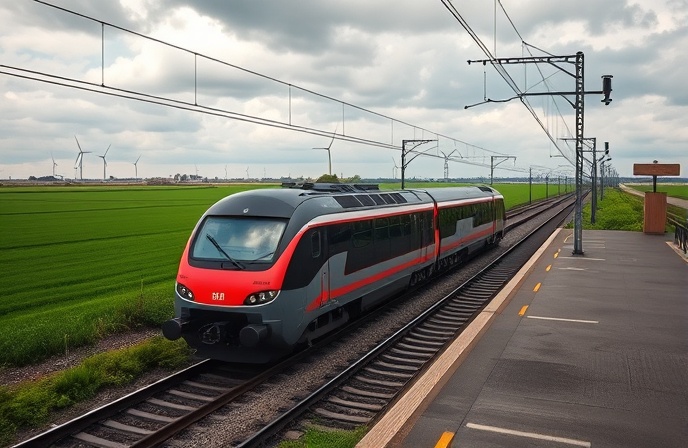
The Province of Groningen in the Netherlands has abandoned plans for hydrogen-powered trains, opting instead for battery-electric locomotives to achieve its zero-emission railway goals. This decision comes after a tender process for hydrogen trains failed to attract bids and follows over five years of work with Alstom.
Focus on Electrification
Arriva operates rail services in Groningen, currently using diesel-powered rolling stock. The northern region of the Netherlands will now focus on battery-electric locomotives, similar to its provincial neighbor Friesland. Friesland made €2.2m available earlier this year to “explore partial electrification” of its railways. This involves using battery-electric locomotives that can charge quickly when connected to catenary lines at stations, a process known as discontinuous electrification.
Collaboration and Planning
Wessel Feenstra, Groningen’s zero emission railways’ project leader, stated that the Province is collaborating with the Department for Infrastructure and Water Management and ProRail, the railway infrastructure manager. The aim is to plan the electrification of lines and the placement of cables. The current commissioning period in Groningen and Friesland runs until 2035.
Hydrogen Train Development and Tender Process
In 2020, Alstom conducted successful tests of the Coradia iLint hydrogen train. At the time, Alstom Benelux managing director Bernard Belvaux stated that the system was commercially and practically viable. However, the tender process for hydrogen-powered trains was unsuccessful, with no bids received. The proposed order was for only four trainsets. This contrasts with Deutsche Bahn, which ordered 27 units for €500m after running similar tests.
Market and Technological Considerations
Feenstra noted that the market for hydrogen trains is not expected to guarantee a stable and affordable service from 2035 onwards. He added that battery technology is developing rapidly. A provincial government document further explained the decision, citing the increasing range, falling costs, and increasing maturity of battery train technology as reasons for the shift. The document also noted that battery trains are often preferred over hydrogen trains in neighboring countries.
Conclusion
Last June 2025, we published an article about Renfe’s cutting-edge Aranjuez maintenance hub. Click here to read – Future of Rail: Renfe’s Railway Technology Hub, Aranjuez: Essential Guide
The Province of Groningen has decided to end its hydrogen rolling stock project and will instead focus on battery-electric locomotives. This decision was made after a failed tender process and due to advancements in battery technology.
Company Summary
Alstom: A company involved in the development of the Coradia iLint hydrogen train and collaborated with the Province of Groningen on the hydrogen project.
Arriva: The operator of rail services in Groningen, currently using diesel-powered rolling stock.
ProRail: The railway infrastructure manager, working with the Province of Groningen on electrification plans.
Deutsche Bahn: A company that ordered 27 hydrogen train units after running similar tests.
Technology
Coradia iLint: The hydrogen train developed and tested by Alstom.

Railway infrastructure, rolling stock and transport technologies specialist focused on global rail industry developments, high-speed rail systems, signaling technologies and freight transportation. Covering railway investments, public transport modernization, rail operations and international mobility projects across Europe, Asia and North America.
RELATED POSTS

October 1, 2026 7:09 am
United States regulators confirmed a September 30 deadline for the...

October 1, 2026 12:13 am
Illinois approved $1.5 billion annually for the Northern Illinois Transit...

October 1, 2026 6:10 am
Amtrak approved a System Expansion Committee on July 30 to...

October 4, 2026 5:14 pm
Alstom secured a CA$4.7 billion order from VIA Rail Canada...
October 1, 2026 3:12 am
Greenbrier confirmed Brian Comstock as new president and CEO effective...
October 1, 2026 4:10 am
DART launched two public ridership dashboards in March 2026 to...