
£780M ECML Upgrade: UK Rail’s Future
£780 million pours into East Coast Main Line upgrades, boosting capacity and signaling. Will it truly unlock the Northern Powerhouse’s potential?
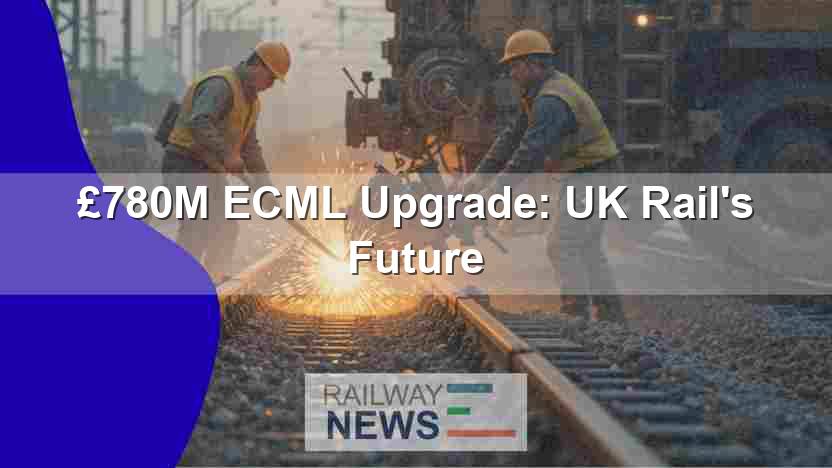
The UK Government’s announcement of a £780 million investment in upgrades to the East Coast Main Line (ECML) has sparked a mixed reaction within the railway industry. This significant funding aims to modernize the infrastructure, increasing passenger capacity, improving journey times, and enhancing service frequency by the early 2020s. This article will delve into the details of the proposed upgrades, analyze the positive and negative responses from key stakeholders, and assess the long-term implications of this investment for the Northern Powerhouse initiative and the UK’s overall rail network. The complexities of such large-scale infrastructure projects, including procurement strategies and regional disparities in funding, will be explored, ultimately examining whether this investment represents a sufficient step towards a truly modernized and efficient rail system in the North of England.
Modernizing the ECML: Infrastructure Upgrades
The £780 million investment is earmarked for a range of improvements centered around increasing the ECML’s capacity and efficiency. Key components include significant upgrades to the signaling system, moving from the current capacity of approximately 16 trains per hour to a projected 24 trains per hour on the busiest sections. This necessitates a complete overhaul of the existing signaling infrastructure, potentially involving the adoption of modern digital signaling technology. In addition, the investment will likely include enhancements to the rolling stock, potentially involving the procurement of new trains better suited to increased service frequency and passenger capacity. The success of these upgrades hinges on robust project management and the effective implementation of outcome-based procurement, ensuring suppliers are held accountable for delivering improved performance, reliability, and availability.
Positive Responses and the Northern Powerhouse
The Railway Industry Association (RIA) has voiced its strong support for the investment, highlighting its potential to significantly benefit the Northern Powerhouse region. The increased capacity and improved services are seen as crucial for boosting economic growth and connectivity across the north of England. The RIA’s endorsement also emphasizes the positive shift towards outcome-based procurement, focusing on measurable improvements in journey times and overall service performance rather than simply the completion of construction projects. This approach ensures a more user-centric outcome, prioritizing the needs and expectations of rail passengers.
The Railway Delivery Group (RDG), representing train operating companies, has also expressed approval, emphasizing the project’s benefits for passengers and its contribution to devolution efforts in the northeast.
Concerns and Criticisms: Regional Disparities and Capacity Bottlenecks
Despite the generally positive response, concerns have been raised regarding the scope of the upgrades. Specifically, the lack of planned capacity upgrades between York and Newcastle has drawn criticism. This section of the line is deemed crucial for realizing the full potential of HS2 (High-Speed 2) and the Northern Powerhouse Rail network. Without addressing capacity constraints along this critical stretch, the benefits of the ECML upgrades could be significantly limited, creating new bottlenecks and hindering the overall efficiency gains. Additionally, comparisons with transport funding in other regions, particularly London, highlight a perceived disparity in investment levels, fueling concerns about regional inequalities in infrastructure development.
Conclusion: A Step Forward, But Further Action Needed
The £780 million investment in the ECML represents a significant step towards improving rail services in the north of England. The focus on increased capacity, modernized signaling, and outcome-based procurement demonstrates a commitment to delivering tangible benefits for passengers. However, the project’s success hinges on addressing the identified concerns. The lack of planned upgrades between York and Newcastle needs immediate attention to prevent the creation of new capacity bottlenecks. Moreover, a more equitable distribution of transport funding across regions is essential to ensure balanced national development and prevent the marginalization of northern England. The long-term effectiveness of this investment must be viewed within a broader context of national transport strategy, encompassing projects like HS2 and Northern Powerhouse Rail, to achieve a truly integrated and efficient national rail network. Ultimately, while this investment is welcomed, it’s crucial that it forms part of a detailed and consistently funded long-term strategy that addresses the ongoing infrastructure challenges facing the North and ensures that the benefits of improved connectivity are felt across all regions of the UK.

Railway infrastructure, rolling stock and transport technologies specialist focused on global rail industry developments, high-speed rail systems, signaling technologies and freight transportation. Covering railway investments, public transport modernization, rail operations and international mobility projects across Europe, Asia and North America.
RELATED POSTS

October 1, 2026 7:09 am
United States regulators confirmed a September 30 deadline for the...

October 8, 2026 1:15 pm
Alstom secured a €1bn contract to build 13 automated trains,...

October 4, 2026 5:14 pm
Alstom secured a CA$4.7 billion order from VIA Rail Canada...

October 1, 2026 12:13 am
Illinois approved $1.5 billion annually for the Northern Illinois Transit...
October 6, 2026 2:14 am
Union Pacific launched export rail shipments with Ferromex to deliver...

October 8, 2026 12:18 pm
Siemens Mobility signed an agreement with VinSpeed to supply 350...