
NDB Funds Delhi-Meerut RRTS: Transforming India’s Transit
The New Development Bank has approved a $500 million loan to support India’s Delhi-Ghaziabad-Meerut Regional Rapid Transit System (RRTS), aiming to improve regional connectivity and alleviate traffic congestion in the National Capital Region, underscoring its role in promoting sustainable development through infrastructure investments.
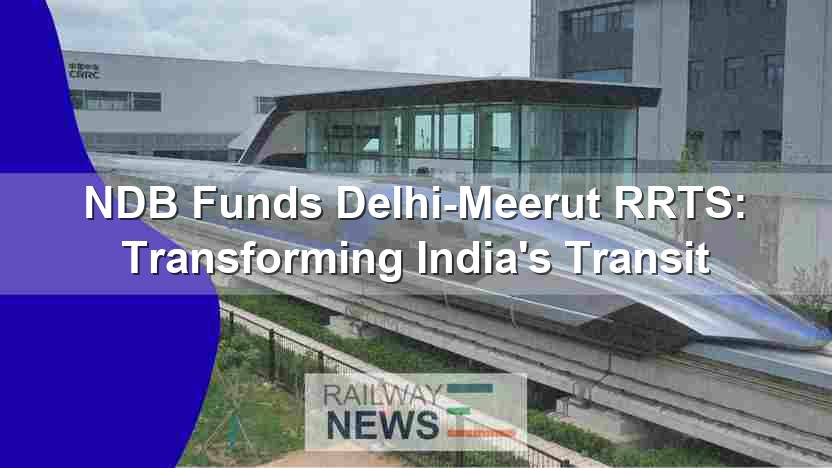
This article examines the significant financial contributions of the New Development Bank (NDB) to bolster India’s burgeoning rapid transit infrastructure. Specifically, we will delve into the $500 million loan approved for the Delhi-Ghaziabad-Meerut Regional Rapid Transit System (RRTS), a crucial project aimed at improving connectivity and alleviating traffic congestion in the National Capital Region (NCR). We will analyze the project’s scope, its projected impact on regional transportation, and the broader implications of such large-scale infrastructure investments. Additionally, we will consider the NDB’s role in supporting sustainable development initiatives within its member countries, as exemplified by this significant investment in India’s transportation network. The analysis will also touch upon the strategic importance of such rapid transit systems in urban planning and economic development within a rapidly growing metropolitan area. The financial aspects of the project, secured through international development banks, will be critically assessed, along with the potential challenges and opportunities associated with implementing a high-speed rail corridor in a densely populated region.
The Delhi-Ghaziabad-Meerut RRTS: A Regional Connectivity Solution
The 82.15 km Delhi-Ghaziabad-Meerut RRTS represents a substantial undertaking in modernizing India’s transportation infrastructure. Designed for a maximum operational speed of 160 km/h, it promises a significantly reduced travel time between Delhi and Meerut, decreasing the commute from potentially hours to a mere 60 minutes. This high-speed rail system, incorporating 25 stations, is intended to serve as a critical artery for the NCR, alleviating the immense pressure on existing road networks. This efficient, high-capacity transit system is directly addressing the urgent need to move large numbers of people effectively and efficiently. The project aims to reduce traffic congestion, improve air quality, and encourage a shift towards more sustainable modes of transportation, supporting economic growth within the region.
NDB’s Financial Commitment and its Broader Implications
The NDB’s approval of a $500 million loan underscores the bank’s commitment to supporting large-scale infrastructure projects in its member countries. This significant investment, coupled with a previous $1 billion loan from the Asian Development Bank (ADB) for the same project, highlights the international recognition of the RRTS’s importance. The loan demonstrates a belief in the project’s potential for positive social and economic returns, indicating a willingness to invest in sustainable development initiatives within a developing nation. This financial support is not isolated; the NDB also approved other substantial funding for other infrastructure projects within the region, confirming its commitment to infrastructural development as a key driver of economic progress.
Sustainable Development and Urban Planning: Intertwined Goals
The RRTS project aligns perfectly with principles of sustainable urban development. By providing a rapid, efficient, and environmentally friendly transportation alternative, the project aims to reduce reliance on private vehicles, thereby mitigating traffic congestion and air pollution. The strategic placement of stations and the project’s overall design consider factors such as accessibility, land-use planning, and the integration with existing transportation networks. The focus is on a holistic approach, intending to foster economic growth while simultaneously enhancing the overall quality of life within the NCR. Efficient public transport plays a vital role in sustainable urban planning, allowing for more sustainable urban growth and a greater quality of life for the people who live in the cities connected by this transit system.
Challenges and Opportunities in High-Speed Rail Development
While the RRTS project presents immense opportunities, it also faces challenges. These include navigating complex land acquisition processes, coordinating with multiple stakeholders, and managing the complexities of constructing a high-speed rail line in a densely populated area. Effective project management, robust environmental impact assessments, and inclusive community engagement are crucial for successful implementation. Overcoming these challenges will be vital not only for the successful completion of this specific project, but it will also act as a benchmark for future high-speed rail projects in India and elsewhere. The project presents an opportunity to showcase best practices in urban planning, construction management, and sustainable infrastructure development.
Conclusions
The NDB’s $500 million loan for the Delhi-Ghaziabad-Meerut RRTS signifies a crucial investment in India’s infrastructure development and underscores the bank’s commitment to sustainable growth. This high-speed rail corridor, designed to connect three major urban centers, aims to drastically reduce commute times, alleviate traffic congestion, and promote a more sustainable transportation system within the NCR. The project’s success hinges on effective project management, addressing logistical challenges, and ensuring integration with existing transportation networks. The project’s scale, coupled with the significant financial backing from both the NDB and ADB, highlights the international recognition of its potential to transform regional connectivity and contribute to the broader economic and social progress of the region. While challenges related to land acquisition and construction in a densely populated area need careful consideration, the potential benefits of enhanced connectivity, reduced pollution, and improved quality of life make the Delhi-Ghaziabad-Meerut RRTS a landmark project in India’s infrastructural development. Additionally, this project serves as a case study for future high-speed rail projects, demonstrating the complexities and potential rewards of investing in advanced transportation infrastructure for rapid economic growth and improved quality of life in urban areas.

Railway infrastructure, rolling stock and transport technologies specialist focused on global rail industry developments, high-speed rail systems, signaling technologies and freight transportation. Covering railway investments, public transport modernization, rail operations and international mobility projects across Europe, Asia and North America.
RELATED POSTS

October 8, 2026 1:15 pm
Alstom secured a €1bn contract to build 13 automated trains,...

October 1, 2026 7:09 am
United States regulators confirmed a September 30 deadline for the...

October 4, 2026 5:14 pm
Alstom secured a CA$4.7 billion order from VIA Rail Canada...

October 8, 2026 12:18 pm
Siemens Mobility signed an agreement with VinSpeed to supply 350...

October 5, 2026 6:12 pm
AECOM and Jacobs secured a contract in September 2026 to...

October 4, 2026 11:08 pm
Sound Transit confirmed the September 30 opening of Seattle Pinehurst...