
Moscow Opens Second Tram Diameter T2 79-Station Line
Moscow launched its second 79-station tram diameter line T2, serving over two million residents across 13 districts.
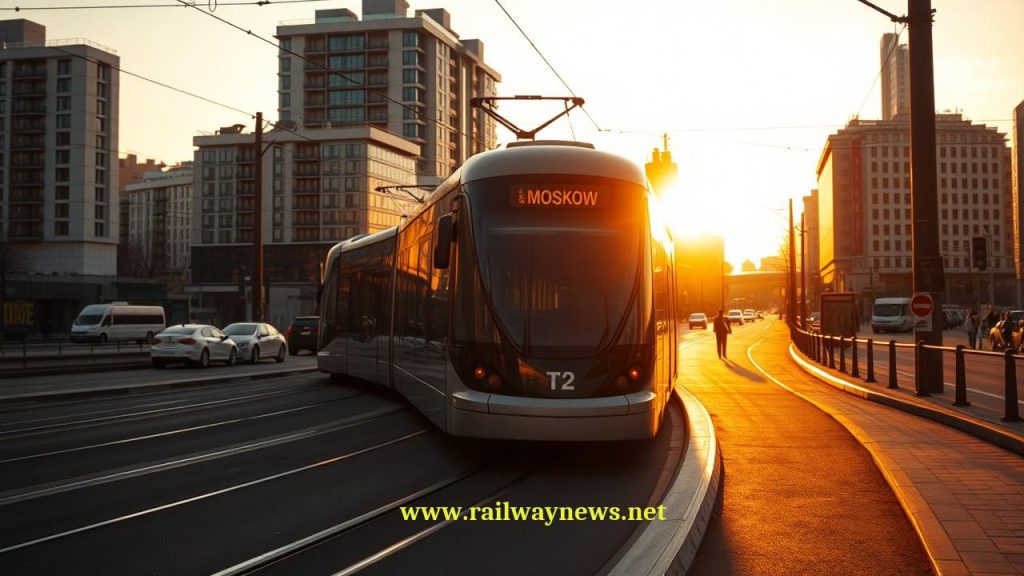
⚡ In Brief: Moscow has opened its second cross-city tram diameter line, T2, creating a 79-station route that provides new public transport connections for over two million residents across 13 districts.
MOSCOW, RUSSIA – Moscow has launched its second diametrical tram line, designated T2, connecting the Chertanovskaya metro station in the south with the Novogireevo station in the east. The new line, which features 79 stations, is designed to serve over two million residents and integrates with 31 metro stations and four major train stations. The project adapts the successful model of the Moscow Central Diameters (MCD) suburban rail network for surface tram transport.
What Is the Full Scope of This Project?
The T2 tram diameter is a major urban transit corridor that crosses five administrative districts of Moscow, connecting southern and eastern parts of the city through the center. The project involved transforming existing tram lines into a single, uninterrupted axis, eliminating the need for transfers for many cross-city journeys. The route provides direct connections to office centers, educational institutions like Bauman Moscow State Technical University, medical facilities, and recreational areas, integrating surface trams with the broader metro, Central Ring Railway, and MCD networks.
Key Project Data
| Parameter | Value |
|---|---|
| Project / Contract Name | Moscow Tram Diameter Line T2 |
| Total Value | Not disclosed |
| Parties Involved | Moscow Department of Transport |
| Timeline / Completion | Operational |
| Country / Corridor | Russia / Southern-Eastern Moscow |
How Does This Compare to Similar Projects?
The completion of Moscow’s T2 line contrasts with the extended timelines of other major linear urban and regional rail projects globally. In the UK, the East West Rail project, connecting Oxford and Cambridge, is being accelerated but is not expected to be fully operational until the mid to late 2030s (Source: Construction News). Similarly, the Tel Aviv metro project in Israel, a 150-kilometer, three-line network, has seen its projected launch pushed from 2025 to 2037 due to funding gaps and labor shortages (Source: Ynetnews). Moscow’s approach of integrating and upgrading existing surface infrastructure into a diametrical system appears to offer a faster implementation pathway compared to building entirely new, complex rail networks from scratch.
Editor’s Analysis
Moscow’s strategy of creating tram “diameters” represents a pragmatic and potentially more rapid model for enhancing urban mobility. By connecting and upgrading existing surface rail assets, the city can deliver significant connectivity gains without the multi-decade timelines and massive capital expenditure typical of new underground metro construction. This approach of leveraging existing infrastructure to create new, high-capacity corridors aligns with a broader industry trend toward integrated transport systems that prioritize efficient network enhancement over ground-up builds, especially in dense, established urban centers.
FAQ
Q: What is the main principle behind a “tram diameter” line?
A: The core concept is to connect existing tram lines from opposite ends of the city into a single, long route that crosses the city center. This eliminates the need for passengers to make transfers for cross-town journeys and integrates the tram system more effectively with other transport modes like the metro.
Q: How much travel time does the new line save for passengers?
A: According to Moscow’s Deputy Mayor, travel time has been significantly reduced for many. For example, students from Bauman Moscow State Technical University can now reach Chistye Prudy in 15 minutes, a 2.5 times reduction from the previous 35-minute journey.
Q: What was the total cost of the T2 tram line project?
A: The official announcement from the Moscow Department of Transport did not disclose the project’s total cost or financial details.

Railway infrastructure, rolling stock and transport technologies specialist focused on global rail industry developments, high-speed rail systems, signaling technologies and freight transportation. Covering railway investments, public transport modernization, rail operations and international mobility projects across Europe, Asia and North America.
RELATED POSTS

October 8, 2026 1:15 pm
Alstom secured a €1bn contract to build 13 automated trains,...

October 1, 2026 7:09 am
United States regulators confirmed a September 30 deadline for the...

October 8, 2026 12:18 pm
Siemens Mobility signed an agreement with VinSpeed to supply 350...

October 4, 2026 5:14 pm
Alstom secured a CA$4.7 billion order from VIA Rail Canada...

October 5, 2026 6:12 pm
AECOM and Jacobs secured a contract in September 2026 to...

October 1, 2026 12:13 am
Illinois approved $1.5 billion annually for the Northern Illinois Transit...