
Dijon Tramway Project: Sustainable Urban Rail Transport Case Study
Dijon’s new tramway system boasts 37 stations, transporting 87,000 daily riders and boosting the city’s railway sector.
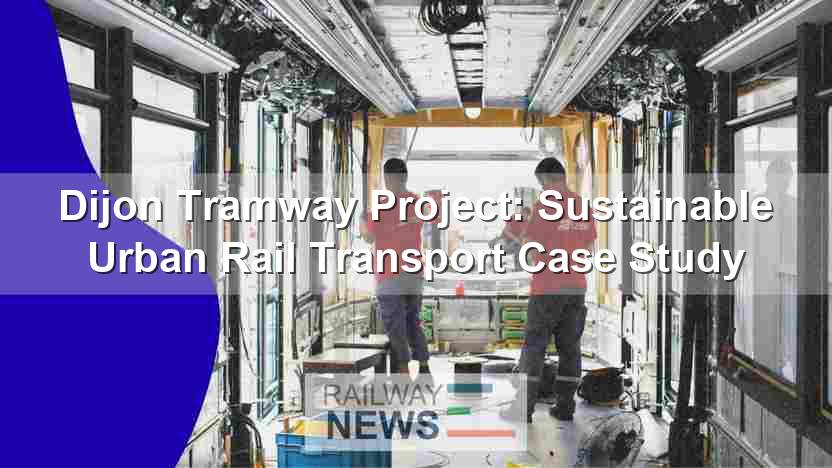
This article examines the Dijon Tramway project, a significant undertaking in sustainable urban transport infrastructure development. The project’s aims extended beyond simply providing a new transit system; it sought to revitalize urban areas, improve accessibility, reduce reliance on private vehicles, and establish a model for environmentally friendly public transit. The analysis will delve into the project’s planning, construction, operational aspects, economic impact, and its contribution to Dijon’s overall urban development strategy. The success of the Dijon tramway serves as a valuable case study for other cities facing similar challenges in balancing urban growth with environmental sustainability and efficient public transportation. This evaluation will consider various aspects, including ridership figures, environmental impact, economic benefits, and the integration of the tramway within the broader transport network of Dijon.
Project Overview and Planning
The Dijon Tramway system, a collaboration between the Grand Dijon Urban Authority and private sector partners, comprises two lines: T1 and T2. Line T1 spans 8.5 km, while Line T2 extends to 11.5 km. The entire system boasts 37 stations, strategically located to serve residential, commercial, and educational areas, including proximity to the Dijon Railway Station (Gare de Dijon-Ville), the University of Dijon, and the city’s main hospital. The design incorporated park-and-ride facilities to encourage modal shift from private cars to public transport, thus reducing traffic congestion in the city center. The lines converge at Place de la République, which has subsequently become a revitalized hub of commercial activity.
Construction and Technology
The construction of the Dijon Tramway involved a public-private partnership (PPP) model, with Cofely Ineo (now part of ENGIE Solutions) responsible for the design and construction of the electrical systems and long-term maintenance. Alstom supplied 33 Citadis trams, known for their low-noise operation and energy efficiency. These modern trams feature low floors for easy accessibility, closed-circuit television (CCTV) for security, and passenger information systems. The use of the Citadis tram, with its reduced noise pollution (5 decibels lower than average road traffic) and significantly lower energy consumption (ten times less than buses), highlights the project’s commitment to environmental sustainability. The European Investment Bank (EIB) provided substantial funding (€200 million, approximately $262 million at the time), underlining the project’s significance in terms of EU investment priorities in sustainable urban transport.
Operational Performance and Economic Impact
Keolis, a leading public transport operator, manages the day-to-day operations of the Dijon Tramway. Daily ridership estimates reach 87,000 passengers, demonstrating the system’s effectiveness in meeting the transportation needs of the Greater Dijon population, particularly students and employees. The project generated approximately 6,700 jobs during construction and continues to support numerous jobs in operation and maintenance. Additionally, the tramway has spurred commercial activity along its routes, revitalizing areas and creating new economic opportunities. The Place de la République, in particular, has experienced significant growth since the opening of the tramway.
Sustainability and Urban Integration
The Dijon Tramway project prioritizes sustainability. Beyond the environmentally friendly technology of the Citadis trams, the project contributes to reduced greenhouse gas emissions compared to car travel. The project’s success in attracting funding from the EIB and winning the 2012 Best Environmental Project Award underscores its adherence to environmental best practices. The integration of the tramway with the existing transportation network, including interchanges at the Dijon-Ville station, enhances its effectiveness and encourages multi-modal travel. The inclusion of bicycle parking facilities at key stations further supports sustainable transport options.
Conclusions
The Dijon Tramway stands as a successful example of a large-scale urban transport project that effectively balances economic development, social inclusion, and environmental sustainability. The project’s positive impact on various fronts – increased accessibility, revitalized urban areas, job creation, reduced traffic congestion, and lowered greenhouse gas emissions – is undeniable. The project’s success stems from its meticulous planning, the use of cutting-edge, environmentally friendly technology, a robust public-private partnership, and the strategic integration of the tramway into the broader urban landscape. The high ridership numbers demonstrate the project’s responsiveness to the city’s transport needs. Additionally, the financial backing from the EIB underscores the project’s alignment with broader European Union priorities concerning sustainable urban development. The Dijon tramway serves as a replicable model for cities worldwide seeking to enhance their public transport infrastructure while promoting sustainable urban growth. The project showcases the transformative potential of well-planned, environmentally conscious urban rail systems, not only in improving transportation but also in stimulating economic growth and revitalizing urban spaces. It highlights the importance of collaboration between public authorities and the private sector in delivering complex infrastructure projects effectively.
| Project Feature | Details |
|---|---|
| Line Length (T1) | 8.5 km |
| Line Length (T2) | 11.5 km |
| Total Number of Stations | 37 |
| Total Project Cost (approx.) | $550 million |
| Daily Ridership (approx.) | 87,000 |
| Number of Tram Sets | 33 |
| Tram Manufacturer | Alstom |
| Operator | Keolis |
| Electrical Systems Contractor | Cofely Ineo (now part of ENGIE Solutions) |
| EIB Funding (approx.) | €200 million ($262 million at the time) |
Company Information:
- Alstom: A global leader in rail transportation, providing rolling stock, signaling systems, and other railway infrastructure solutions.
- Keolis: A major public transport operator, managing various rail and bus systems worldwide.
- Cofely Ineo (ENGIE Solutions): A large energy and infrastructure services company providing engineering, construction, and maintenance services.
- European Investment Bank (EIB): The long-term lending institution of the European Union, financing projects across various sectors.

Railway infrastructure, rolling stock and transport technologies specialist focused on global rail industry developments, high-speed rail systems, signaling technologies and freight transportation. Covering railway investments, public transport modernization, rail operations and international mobility projects across Europe, Asia and North America.